
A core-shell type surface sizing enhancer and preparation method thereof
A surface sizing and strengthening agent technology, applied in the direction of water repellent addition, papermaking, coating, etc., can solve the problems of insufficient crosslinking network, low solid content of emulsion, and easy separation of chemical crosslinking, so as to improve film formation performance, improvement of surface strength, and improvement of flexibility
Patent Information
- Authority / Receiving Office
- CN · China
- Patent Type
- Patents(China)
- Current Assignee / Owner
- Publication Date
- 2021-11-23
Smart Images
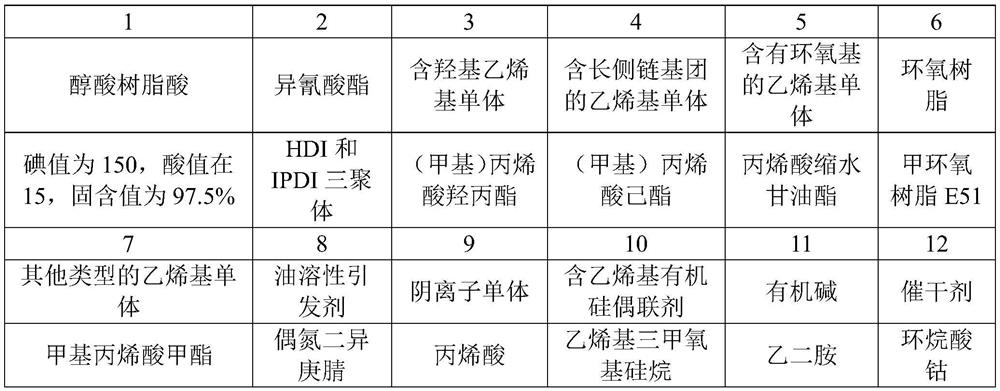
Figure 1 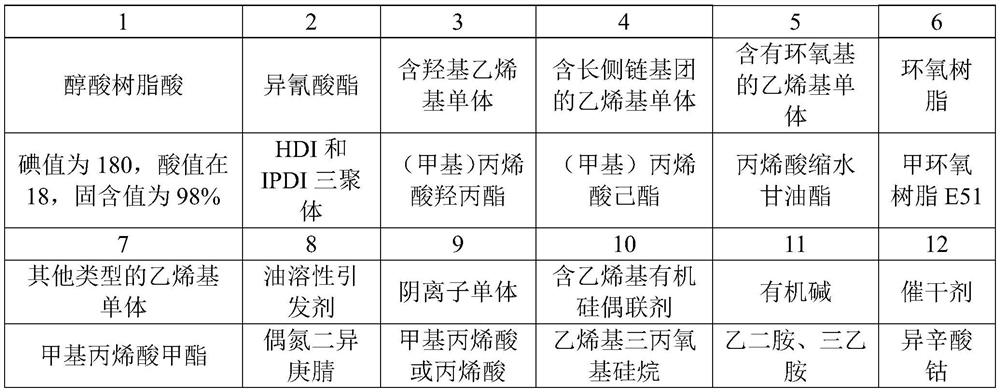
Figure 2 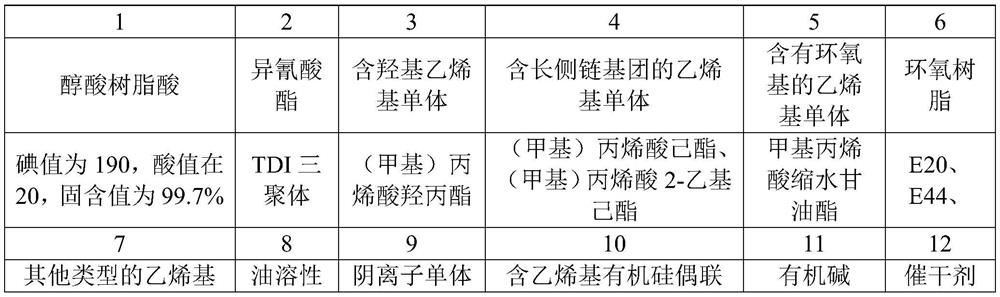
Figure 3
Abstract
Description
technical field
[0001] The invention relates to the field of paper surface sizing agents, in particular to a core-shell type surface sizing enhancer and a preparation method thereof. Background technique
[0002] Alkyd resin has excellent bonding strength and film-forming properties, and has been used in the field of coatings for a long time, but it is rarely used in paper surface sizing agents. Acrylic resin has long been used in the development and application of paper surface sizing agents due to its good waterproof performance, weather resistance and mechanical strength. At present, some studies have prepared cationic modified alkyd / acrylic resins by chemical modification methods, but there are still low solid content in the emulsion, insufficient crosslinking network, and good chemical crosslinking between alkyd resin and acrylic resin. As a result of its easy separation and other problems, the research on introducing vinyl monomers into alkyd molecular segments and ob...
Examples
preparation example Construction
[0036] A preparation method of a core-shell type surface sizing enhancer of the present invention comprises the following steps:
[0037] 1) mix the alkyd resin and diglyme in a mass ratio of 1:0.3-1 to obtain the alkyd resin diglyme solution;
[0038] 2) Heat up the alkyd resin diethylene glycol dimethyl ether solution (including 100 parts of alkyd resin) to 50-75° C., add 15-30 parts of isocyanate monomer, and react for 1-2 hours. Then add 1-3 parts of hydroxyl-containing vinyl monomers into the reaction solution, and continue the reaction for 1 hour to obtain component A.
[0039] 3) Mix 1-5 parts of vinyl monomers containing long side chain groups, 3-5 parts of vinyl monomers containing hydroxyl groups, 0.5-2 parts of vinyl monomers containing epoxy groups, 1-3 parts of ring Oxygen resin, 10-20 parts of other types of vinyl monomers and 1-3 parts of oil-soluble initiator are mixed to obtain mixed liquid B.
[0040] 4) Mix 1 / 2 of component A, 2-10 parts of anionic monomer...
Embodiment 1
[0058] 1) Mix alkyd resin (oleic acid iodine value 155, acid value 18, mass fraction 98%) and diglyme in a mass ratio of 1:0.5 to obtain alkyd resin diglyme solution;
[0059] 2) The alkyd resin diethylene glycol dimethyl ether solution (including 100 parts of alkyd resin) was heated to 60° C., 17.5 parts of MDI trimer was added, and reacted for 1 hour. Then, 1.5 parts of hydroxyethyl methacrylate was added into the reaction liquid, and the reaction was continued for 1 hour to obtain component A.
[0060] 3) 2 parts of vinyl monomer of isooctyl methacrylate, 3 parts of hydroxypropyl methacrylate, 1 part of glycidyl acrylate, 1.5 parts of epoxy resin E44, 12 parts of styrene and 2 parts of benzene peroxide Formyl is mixed to obtain a mixed liquid B.
[0061] 4) Mix 1 / 2 of component A, 4 parts of acrylic acid, 2 parts of isooctyl methacrylate, 2 parts of hydroxypropyl methacrylate, 1.5 parts of glycidyl acrylate, 2 parts of epoxy resin E44, 1.2 parts of ethylene Tripropoxysil...
Embodiment 2
[0066] 1) Mix alkyd resin (oleic acid iodine value 180, acid value 20, mass fraction 99%) and diglyme in a mass ratio of 1:0.7 to obtain alkyd resin diglyme solution;
[0067] 2) The alkyd resin diethylene glycol dimethyl ether solution (including 100 parts of alkyd resin) was heated to 70° C., 20 parts of HDI trimer was added, and reacted for 1.5 hours. Then, 3 parts of hydroxypropyl acrylate were added into the reaction solution, and the reaction was continued for 1 hour to obtain component A.
[0068] 3) Mix 4 parts of hexyl methacrylate, 5 parts of hydroxyethyl acrylate, 1.6 parts of glycidyl methacrylate, 2 parts of epoxy resin E51, 15 parts of methyl methacrylate and 2 parts of azobisisobutyronitrile Mix to obtain Mixture B.
[0069] 4) Mix 1 / 2 of component A, 5 parts of methacrylic acid, 3 parts of butyl methacrylate, 3 parts of hydroxyethyl acrylate, 1.5 parts of glycidyl acrylate, 2 parts of epoxy resin E44, 2 parts of vinyl Trimethoxysilane, 18 parts of styrene an...