
Diamine with antibacterial effect and preparation method thereof
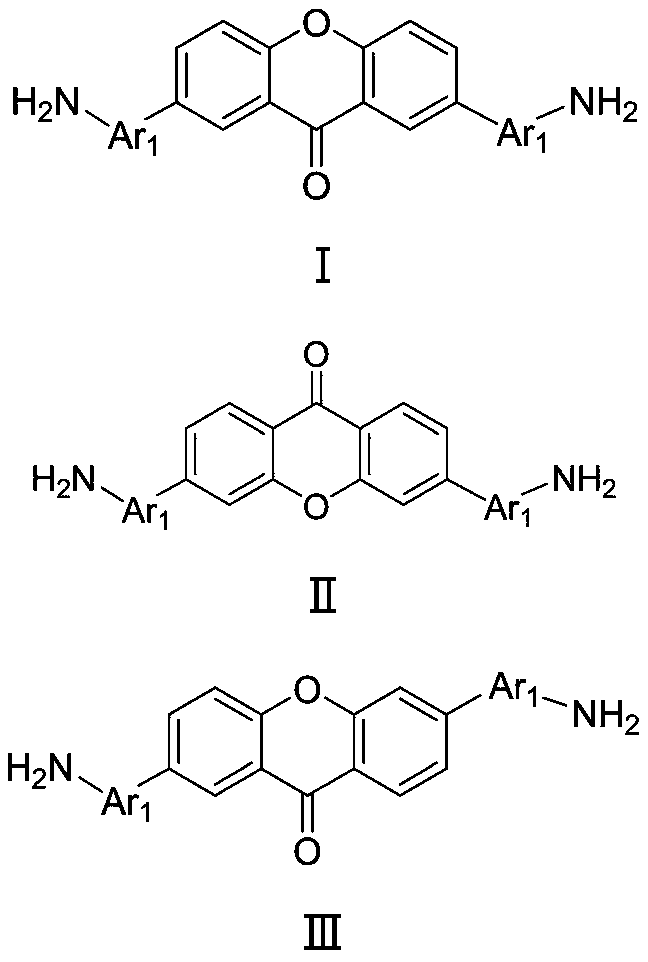
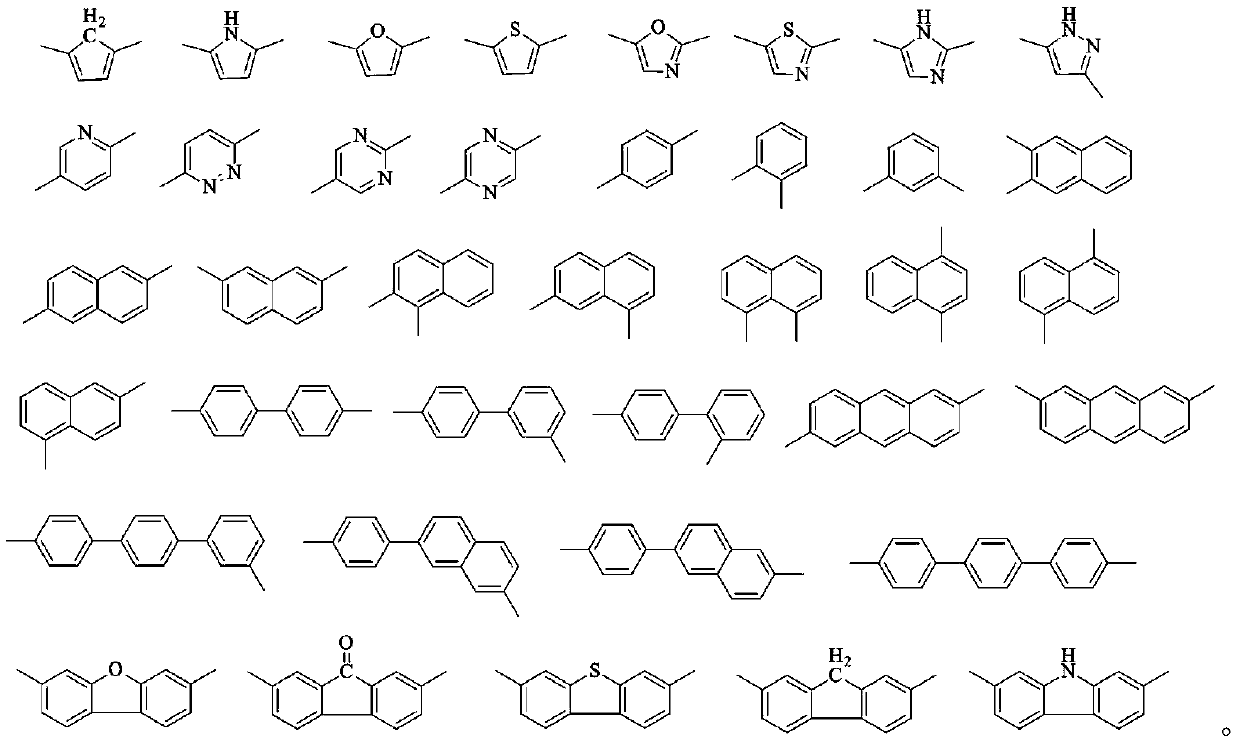
A technology of diamine and diamine monomer, which is applied in the field of material science, can solve the problems such as the adverse effects of polyimide on mechanical properties and thermal stability, the inability to meet the performance requirements of polyimide, and the limited improvement of barrier properties. Achieve high glass transition temperature and thermal stability, broad-spectrum antibacterial and antibacterial activity, and high electron density
- Summary
- Abstract
- Description
- Claims
- Application Information
AI Technical Summary
Problems solved by technology
Method used
Image


Examples
Embodiment 1
[0035] This example provides the synthesis of 2,7-bis(4-aminophenyl)-9H-xanthen-9-one:
[0036]
[0037] S1. Add 3.54g (0.01mol) 2,7-dibromo-9H-xanthen-9-one, 4.335g (0.025mol) p-aminophenyl borate hydrochloride into a 500ml three-necked flask, tetrahydrofuran (THF) as solvent , then add 37.5ml of 2mol / L potassium carbonate solution and an appropriate amount of Aliquat336, stir magnetically and pass argon, heat the oil bath to 50°C, add 0.020g tetrakistriphenylphosphine palladium, reflux for 48 hours, and then quench the reaction with water , and then extracted with an organic solvent, and then distilled off the solvent under reduced pressure.
[0038] S2. The product after the solvent is evaporated in step S1 is purified by column chromatography with dichloromethane:n-hexane=1:1 (volume ratio) as the mobile phase silica gel as the stationary phase, the product is collected and spin-dried, and dried in a vacuum at 120°C 6h, the product was obtained.
Embodiment 2
[0040] This example provides the synthesis of 2,6-bis(4-aminophenyl)-9H-xanthen-9-one:
[0041]
[0042]S1. Add 3.54g (0.01mol) 2,6-dibromo-9H-xanthen-9-one, 4.335g (0.025mol) p-aminophenyl borate hydrochloride into a 500ml three-necked flask, tetrahydrofuran (THF) as solvent , then add 37.5ml of 2mol / L potassium carbonate solution and an appropriate amount of Aliquat336, stir magnetically and pass argon, heat the oil bath to 75°C, add 0.020g tetrakistriphenylphosphine palladium, reflux reaction for 24h, add water to quench the reaction , and then extracted with an organic solvent, and then distilled off the solvent under reduced pressure.
[0043] S2. The product after the step S1 is evaporated to remove the solvent is purified by column chromatography with dichloromethane:n-hexane=1:2 (volume ratio) as the mobile phase silica gel as the stationary phase, and the product is collected and spin-dried, and dried in a vacuum at 80°C 24h, the product was obtained.
Embodiment 3
[0045] This example provides the synthesis of 2,7-bis(5-aminothiophen-2-yl)-9H-xanthen-9-one:
[0046]
[0047] S1. Add 3.54g (0.01mol) 2,7-dibromo-9H-xanthen-9-one, 3.574g (0.025mol) (5-aminothiophen-2-yl) boronicacid into a 500ml three-necked flask, tetrahydrofuran (THF) As a solvent, add 37.5ml of 2mol / L potassium carbonate solution and an appropriate amount of Aliquat336, stir magnetically and pass argon, heat the oil bath to 75°C, add 0.020g tetrakistriphenylphosphine palladium, reflux for 24h, add water to quench The reaction was quenched, then extracted with an organic solvent, and the solvent was distilled off under reduced pressure.
[0048] S2. the product after the solvent is evaporated in step S1 is purified by column chromatography with dichloromethane: normal hexane=2: 1 (volume ratio) as the mobile phase silica gel as the stationary phase, and the product is collected and spin-dried, and dried in a vacuum at 80°C 24h, the product was obtained.
PUM
 Login to View More
 Abstract
Description
Claims
Application Information
 Login to View More