

Interdigitated electrodes for in vitro analysis of cells
a cell and in vitro analysis technology, applied in the field of biomaterials, cells and tissue integration, can solve the problems of cell death, compound attrition, and high cost of bringing a drug to market, and achieve the effects of reducing undesired background noise, maximizing the targeted interaction of cells, and reducing the sensitivity of bioanalysis
- Summary
- Abstract
- Description
- Claims
- Application Information
AI Technical Summary
Benefits of technology
Problems solved by technology
Method used
Image

Examples
example 1
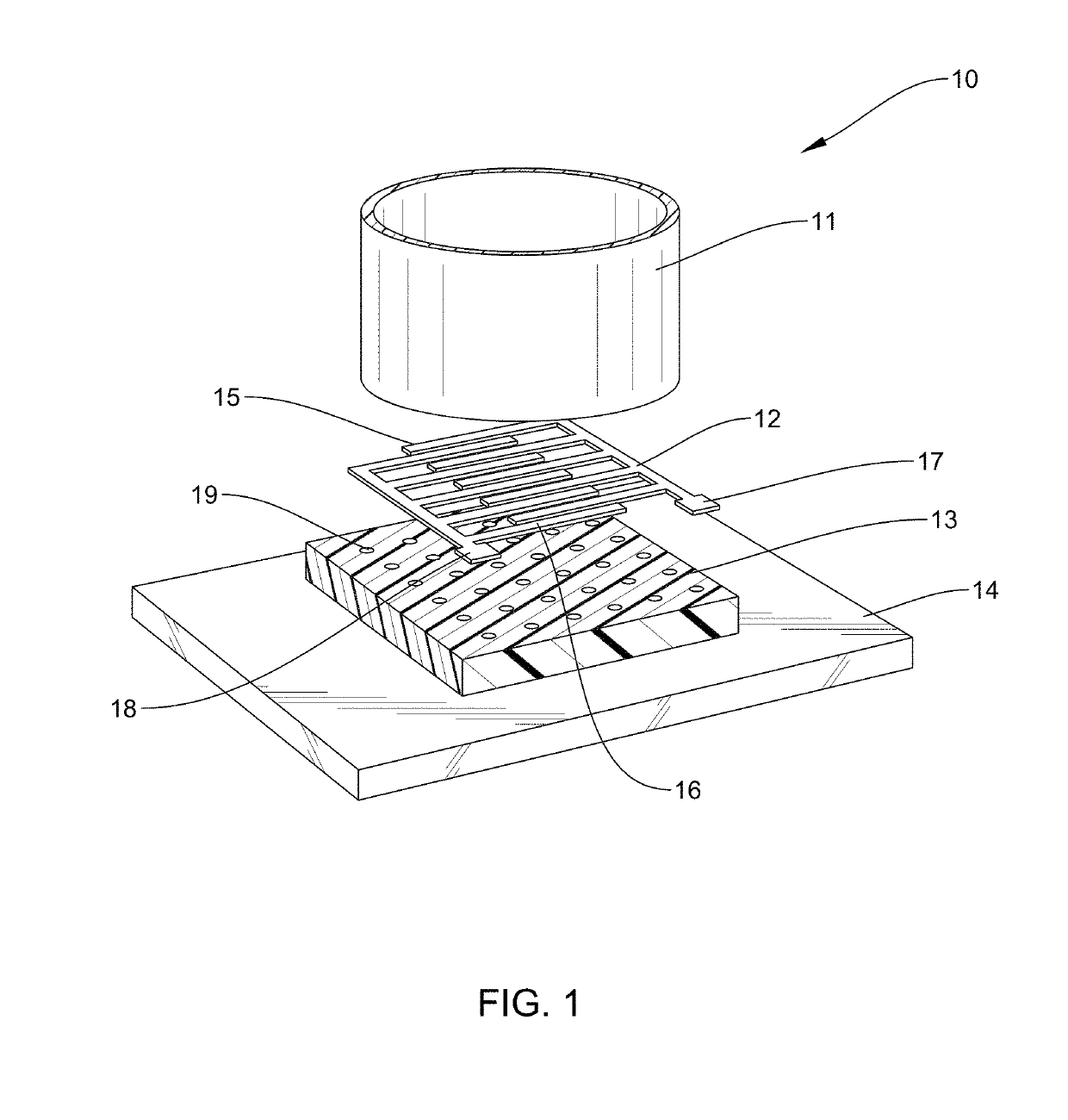
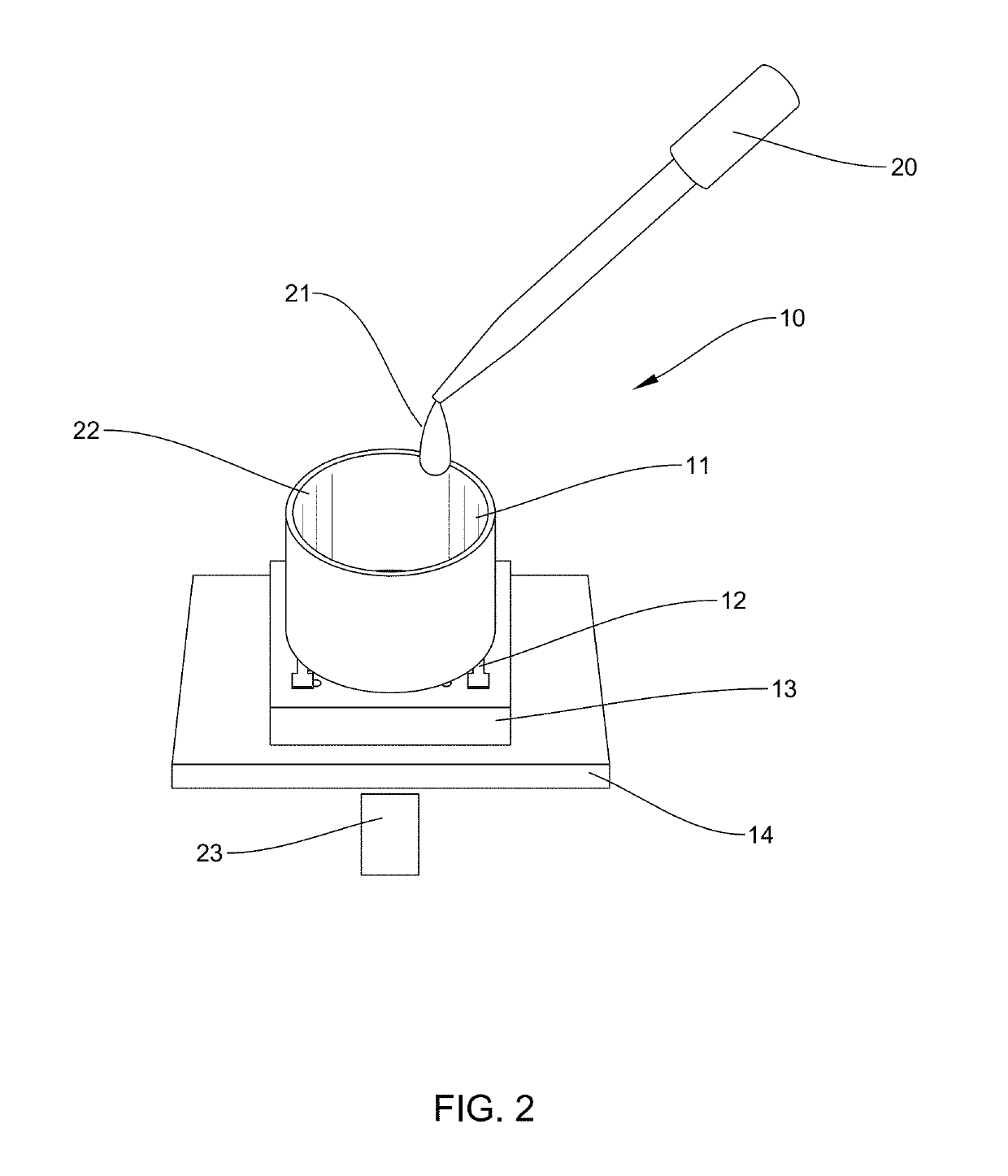
[0102]PAN plasmonic nanomachined layers (1 cm×1 cm; substrate 1: nanohole Ø: 100 nm, pitch: 200 nm; substrate 2: nanohole Ø: 50 nm, pitch: 200 nm; FIG. 1) were fabricated, tuned, and transferred onto a glass substrate. Gold IDEs (800 μm wide; 1 mm long; 1 mm pitch with thickness of 50 nm and 30 nm) were deposited on the plasmonic substrates through shadow masks fabricated with a micromilling process of metal sheets. A 3D printed hollow culture well (10 mm inner diameter; 10 mm tall) was printed and affixed with EpoTek 353ND epoxy to complete the PIDE device fabrication and assembly. Dulbecco's PBS (1×) was used as the electrolyte and polystyrene (PS) latex beads of 1.1 μm particle size and concentration of 0.1 mg / ml in DI water were used as a cell-like material for the impedance and optical analysis of the PIDEs.
[0103]FIG. 11 is an example according to various embodiments, showing an SEM image of printed plasmonic nanohole arrays. FIG. 12 is an example according to various embodimen...
example 2
[0104]This example relates to the development of cost effective, printed plasmonic substrates for real-time impedance and plexitonic studies. A reliable and cost-effective nanofabrication method to develop plasmonic structures for producing plasmonic substrates with exceptional quality is described.
Fabricating Printed Plasmonic Structures
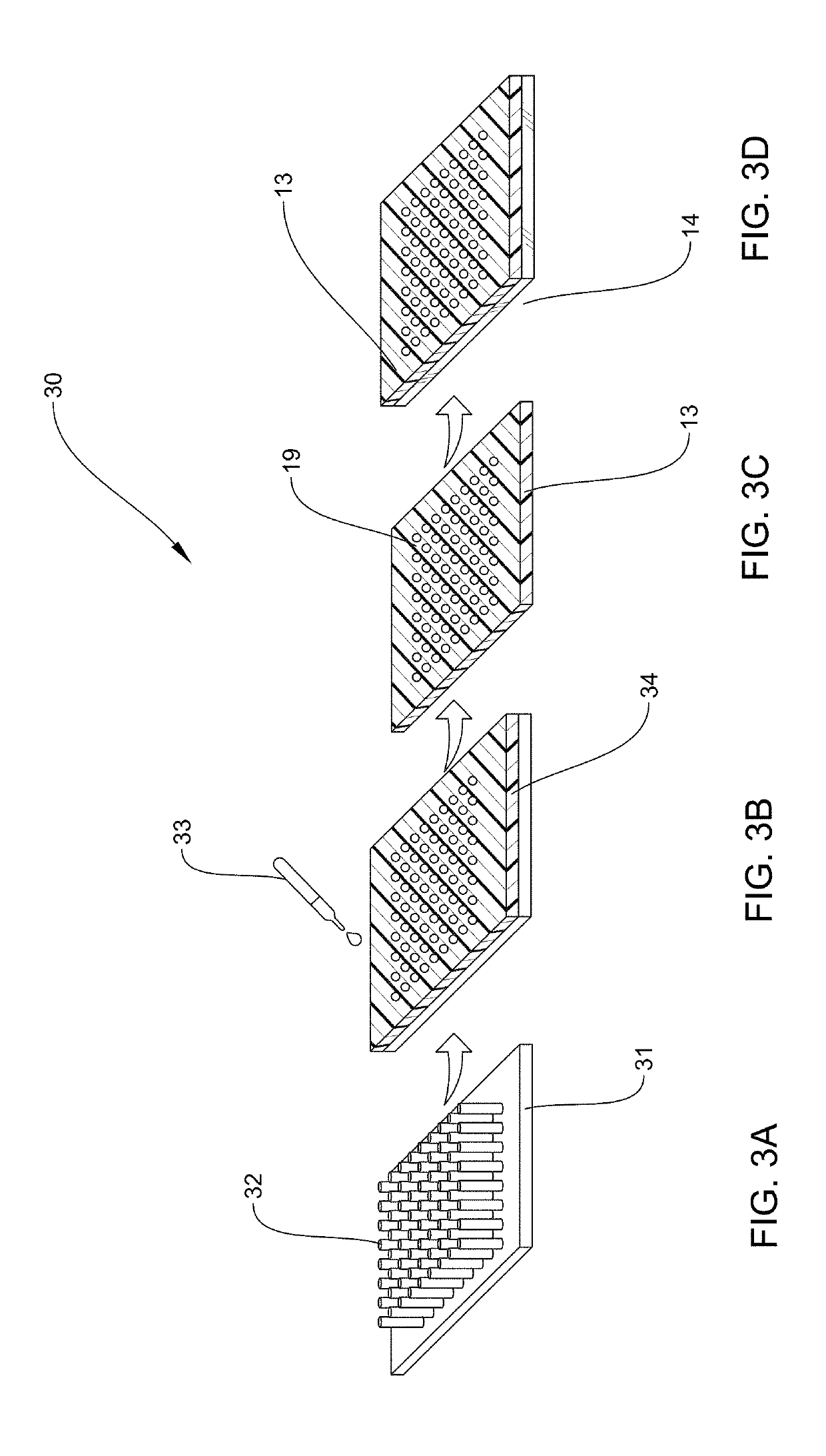
[0105]This example aims to perform FDTD simulation to optimize the plasmonic structures with more than 105 EF to achieve maximum signal from impedance measurements. The focus is to simulate a nanostructure which can provide maximum LSPR field as well as Mie scattering. Based on these simulations this example aims to fabricate a one-time required silicon mold by an e-beam technique. The polymer-based plasmonic nanostructures will be developed in four simple steps: spin coating, peeling off, and silver / gold deposition as schematically shown in FIGS. 3A, 3B, 3C, and 3D, which shows a fabrication process flow depicting the various steps in the definitio...
example 3
[0109]This example relates to the development of interdigitated microelectrodes and a demonstration of non-invasive single cell analysis.
[0110]Various embodiments relate to impedance based systems that may be utilized in the monitoring of cells that are cultured on top of the electrodes. Such embodiments are useful in biosensing, toxicity and pharmacological applications. This example shows the development of technologies to accomplish the following specific goals: (1) development of suitable metallization technologies for the definition of various interdigitated geometries for PIDEs; (2) package the PIDE sensors for cellular analysis; (3) evaluate the biocompatibility of the electrode arrays and the nanostructured materials with suitable cardiomyocyte cultures; (4) evaluate the electrical and plasmonic response of cardiotoxicity inducing compounds to develop a non-invasive analysis technology for single cells and networks of cells.
Development of Metallization Technologies for Inter...
PUM
| Property | Measurement | Unit |
|---|---|---|
| diameter | aaaaa | aaaaa |
| thickness | aaaaa | aaaaa |
| size | aaaaa | aaaaa |
Abstract
Description
Claims
Application Information
 Login to View More