
Nanocomposite catalyst for ethane oxidative dehydrogenation reaction and preparing method thereof
A nanocomposite and oxidative dehydrogenation technology is applied in the field of nanocomposite catalysts and their preparation, which can solve the problems of far-flung industrialization requirements of catalyst production capacity, loss of quality, and expensive chemical raw materials, etc. The effect of uniform distribution, improved catalytic activity and simple process
- Summary
- Abstract
- Description
- Claims
- Application Information
AI Technical Summary
Problems solved by technology
Method used
Image

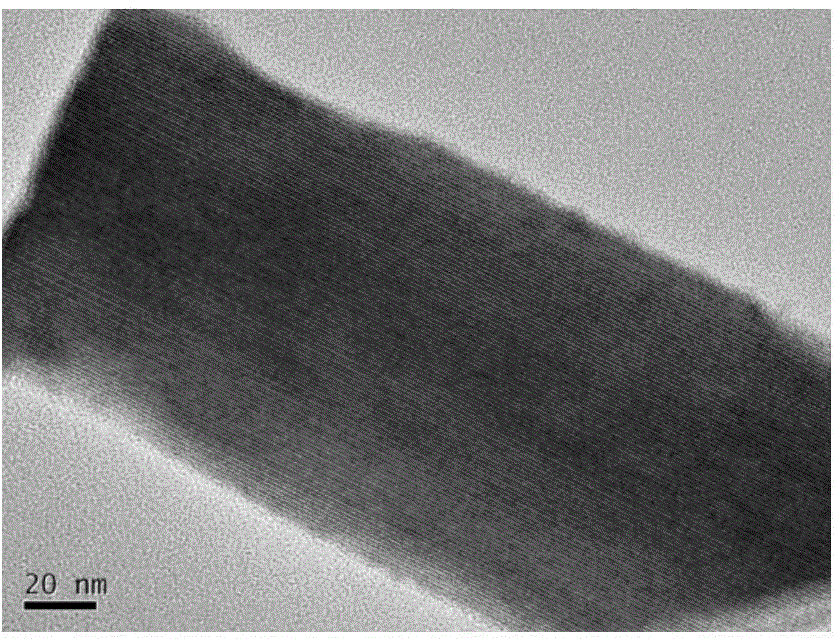
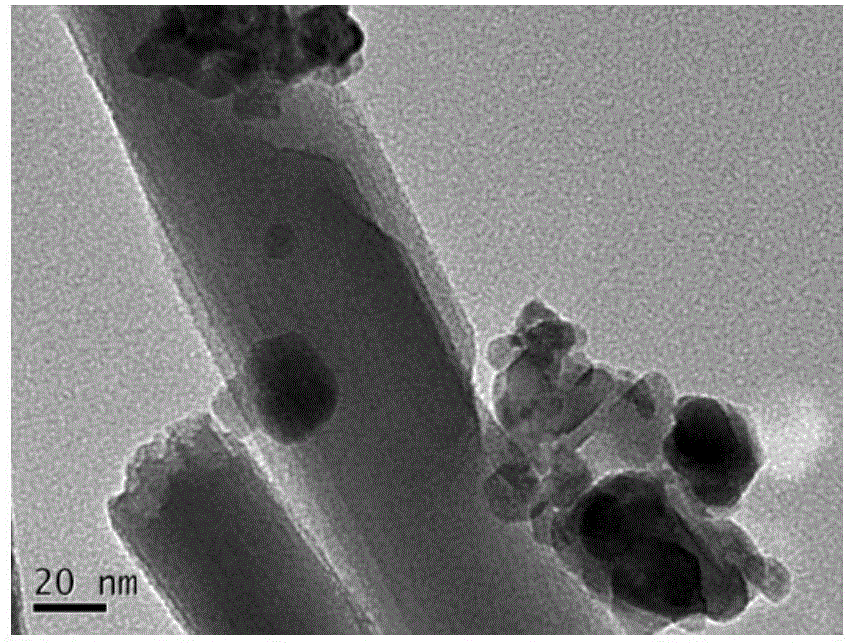
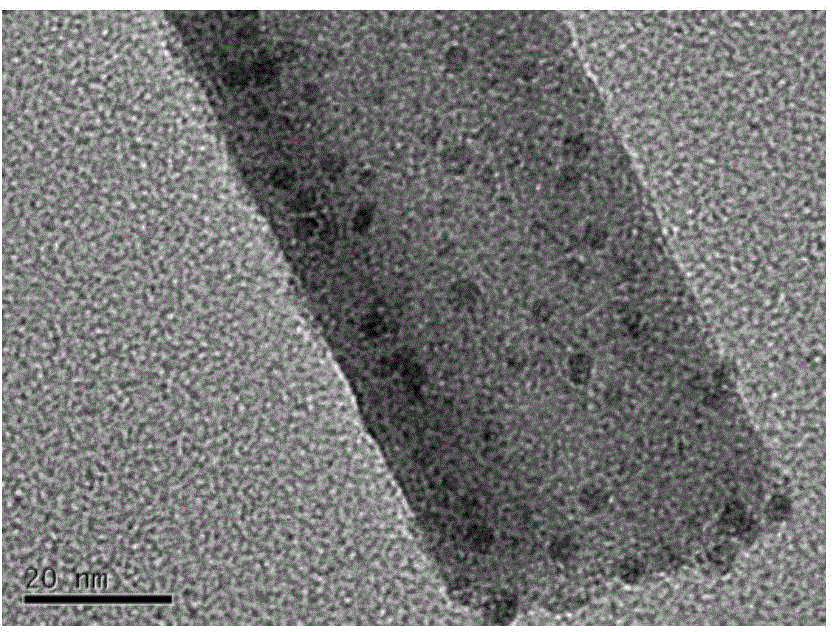
Examples
preparation example Construction
[0027] The preparation method of the nanocomposite catalyst provided by the present invention can be prepared by the following two methods: the sol-gel method and the physical mixing method.
[0028] The specific steps of preparing the ethane oxidation dehydrogenation reaction nanocomposite catalyst by the sol-gel method adopted in the present invention include:
[0029] 1) dissolving cerium nitrate and citric acid with a molar ratio of 1:1 to 1:4 in deionized water, and carrying out a constant temperature oil bath, the temperature of the oil bath is 50 to 80°C, and the oil bath time is 16 to 32 hours, Get CeO 2 Cerium oxide sol with a mass fraction of 5-30%;
[0030] 2) Put the M1 pure-phase compound in the molybdenum vanadium niobium tellurium multi-metal oxide system and the cerium oxide sol obtained in step 1) according to the mass ratio of 1:1 to 1:4 in a water bath at 50 to 70°C Mix evenly for 1 to 3 hours;
[0031] 3) Dry the mixture obtained in step 2), and bake it ...
Embodiment 1
[0044] M1 pure phase compound and CeO in a molybdenum vanadium niobium tellurium multi-metal oxide system 2 Nanocomposite catalyst, CeO in nanocomposite catalyst 2 The mass fraction of nanoparticles is 20wt.%, and its particle size is 20nm. The atomic ratio of molybdenum, vanadium, niobium, and tellurium in the molybdenum, vanadium, niobium, and tellurium multi-metal oxides in the catalyst is 1:0.20:0.30:0.10, and the particles The diameter is 75nm and the particle length is 225nm.
[0045] The M1 pure phase compound and CeO in the above molybdenum vanadium niobium tellurium multi-metal oxide system 2 The nanocomposite catalyst preparation method is as follows:
[0046] Under the condition of water bath at 80°C, mix and dissolve ammonium molybdate, vanadyl sulfate, and telluric acid in deionized water with the atomic ratio of molybdenum, vanadium, and tellurium being 1:0.26:0.25 to obtain solution A, and dissolve ammonium niobium oxalate in deionized water. Solution B is ob...
Embodiment 2
[0052] M1 pure phase compound and CeO in a molybdenum vanadium niobium tellurium multi-metal oxide system 2 Nanocomposite catalyst, CeO in nanocomposite catalyst 2 The mass fraction of nanoparticles is 20wt.%, and its particle size is 5nm. The atomic ratio of molybdenum, vanadium, niobium, and tellurium in the molybdenum, vanadium, niobium, and tellurium multi-metal oxides in the catalyst is 1:0.19:0.28:0.08, and the particles The diameter is 40nm and the particle length is 200nm.
[0053] The M1 pure phase compound and CeO in the above molybdenum vanadium niobium tellurium multi-metal oxide system 2 The nanocomposite catalyst preparation method is as follows:
[0054] Under the condition of water bath at 80°C, mix and dissolve ammonium molybdate, vanadyl sulfate, and telluric acid in deionized water with the atomic ratio of molybdenum, vanadium, and tellurium being 1:0.25:0.23 to obtain solution A, and dissolve ammonium niobium oxalate in deionized water. Solution B is obt...
PUM
| Property | Measurement | Unit |
|---|---|---|
| particle diameter | aaaaa | aaaaa |
| particle diameter | aaaaa | aaaaa |
| particle diameter | aaaaa | aaaaa |
Abstract
Description
Claims
Application Information
 Login to View More