Martensitic stainless steel wire rod and production method thereof

A technology of martensitic stainless steel and its manufacturing method, which is applied in the field of martensitic stainless steel wire rod and its manufacturing, can solve the problems of reducing the yield of stainless steel wire rod, inhibiting the popularization and application of materials, and increasing the manufacturing cost of wire rod, so as to reduce heat treatment process, reduce the occurrence rate of surface defects, and optimize the effect of cost

CN105525226AInactive Publication Date: 2016-04-27宝钢特钢有限公司
6 Cites 26 Cited by

Patent Information

Authority / Receiving Office
CN · China
Current Assignee / Owner
Publication Date
2016-04-27
Estimated Expiration
Not applicable · inactive patent

Smart Images

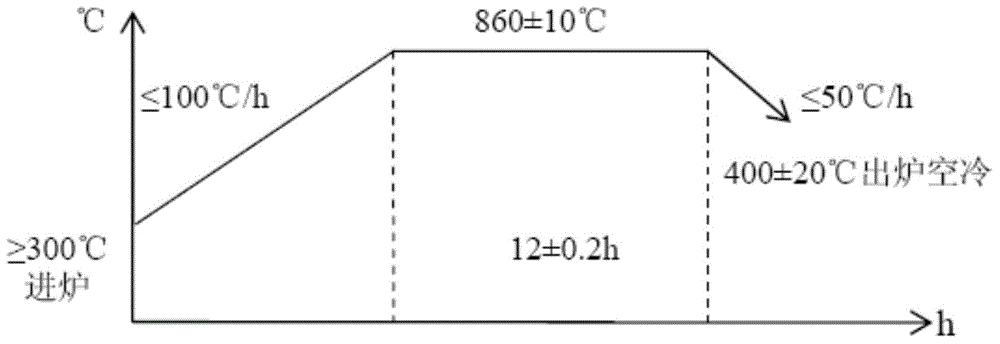
  • Figure 1
    Figure 1
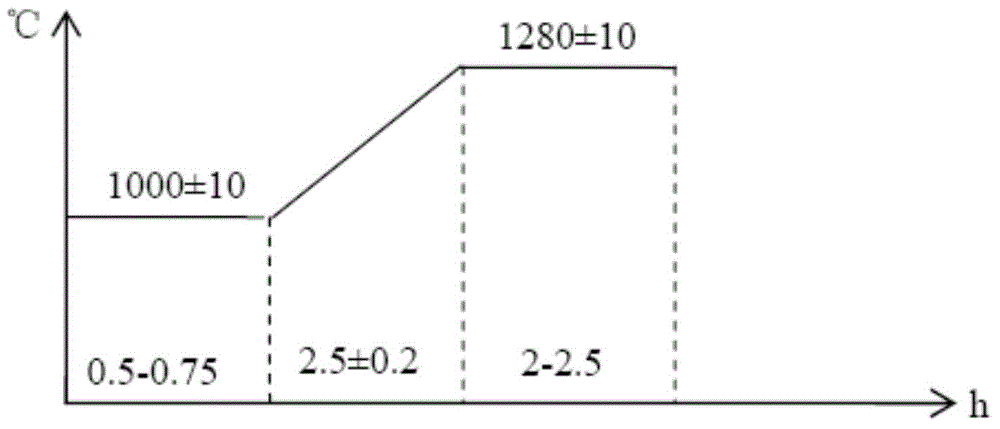
  • Figure 2
    Figure 2
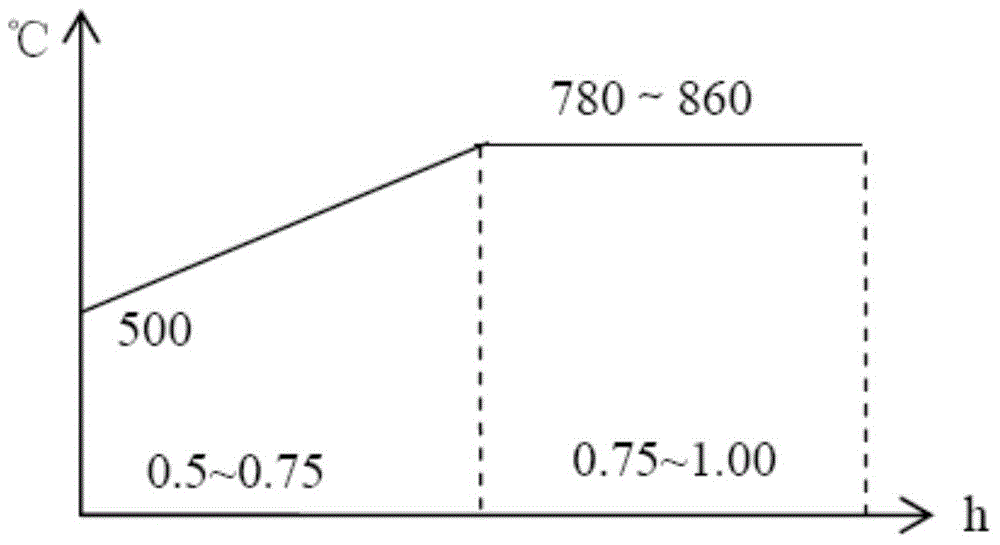
  • Figure 3
    Figure 3
Patent Text Reader

Abstract

The invention relates to a martensitic stainless steel wire rod and a production method thereof. The martensitic stainless steel wire rod is prepared from the following chemical components in weight percent: 0.30-0.65% of carbon, 0.20-0.50% of silicon, less than or equal to 0.60% of manganese, less than or equal to 0.30% of nickel, 11.50-17.00% of chromium, 0.20-0.50% of molybdenum, less than or equal to 0.25% of copper, less than or equal to 0.030% of sulfur, less than or equal to 0.040% of phosphorus, 0.02-0.20% of nitrogen, and the balance being ferrum and unavoidable impurities. The martensitic stainless steel wire rod which is excellent in surface, steady in performance and uniform in texture can be obtained by adopting the steps of smelting, casting, rolling, online hot charging annealing, salt bath, pickling, finishing to finished product inspecting and packaging, and the martensitic stainless steel wire rod has tensile strength of more than 600MPa, yield strength of more than 300MPa, elongation of more than 25%, percentage reduction of area of more than 50% and qualified product ratio of more than 85%. According to the invention, the comprehensive utilization performance of steel is improved, and the problem that surface stress cracking is easy to cause in annealing of high-carbon martensitic stainless steel in the prior art is solved on the basis of not increasing the smelting and rolling cost.
Need to check novelty before this filing date? Find Prior Art

Description

technical field

[0001] The invention relates to a martensitic stainless steel wire rod and a manufacturing method thereof. Background technique

[0002] Martensitic stainless steel is a class of stainless steel whose properties can be adjusted by heat treatment (quenching, tempering). This type of steel must meet two basic conditions: First, there must be an austenite phase region in the equilibrium phase diagram, and it must be heated for a long time within the temperature range of this region to make the carbide dissolve into the steel, and then quench to form Martensite, that is, the chemical composition must be controlled in the γ or γ+α phase region. Second, to make the alloy form a corrosion-resistant and oxidation-resistant passivation film, the chromium content must be above 10.5%. According to the difference of alloying elements, it can be divided into martensitic chromium stainless steel and martensitic chromium-nickel stainless steel.

[0003] Wire rod is also c...

Examples

Embodiment 1~6

[0044] Embodiment 1~6 adopts following technological process:

[0045] The first step: smelting and casting

[0046] Primary smelting of molten steel is carried out in a 60-ton (or 40-ton) electric arc furnace; refining is carried out with ladles of corresponding tonnage; continuous casting is used to produce 160-square-meter continuous casting billets (or 2.3-ton steel ingots are cast by die casting).

[0047] Among them, the EAF bottom stirring mode uses nitrogen gas, the sampling temperature is ≥1600°C, and ferrosilicon or silicon balls are used for reduction. After the reduction, the slag flow operation is performed, the tapping temperature is ≥1630°C, and the Cr content is controlled to the lower limit.

[0048] After mixing AOD with steel, blow oxygen to decarburize; add 800-1000Kg of lime and 400-1000Kg of lightly burned magnesium balls. Add alloy when T≥1680℃, then add lime in batches, add 1000-1500kg in the first batch, and 1000-1500kg in the second batch; control th...