
Lithium-rich anode material for lithium ion battery and preparation method thereof
A lithium-rich positive electrode material, lithium-ion battery technology, applied in battery electrodes, secondary batteries, circuits, etc., can solve the problems of limiting the application of high-energy lithium-ion batteries, high irreversible capacity loss, and poor cycle stability, etc. Small irreversible capacity for the first time, avoiding uneven concentration distribution of the system, and good consistency
Patent Information
- Authority / Receiving Office
- CN · China
- Patent Type
- Applications(China)
- Current Assignee / Owner
- Publication Date
- 2017-01-11
- Estimated Expiration
- Not applicable · inactive patent
Smart Images
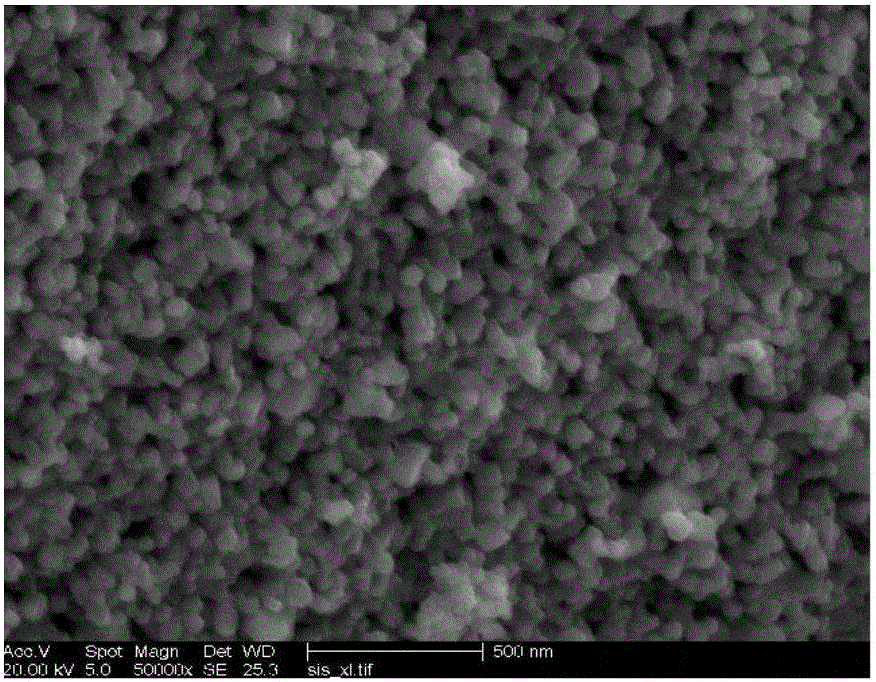
Figure 1 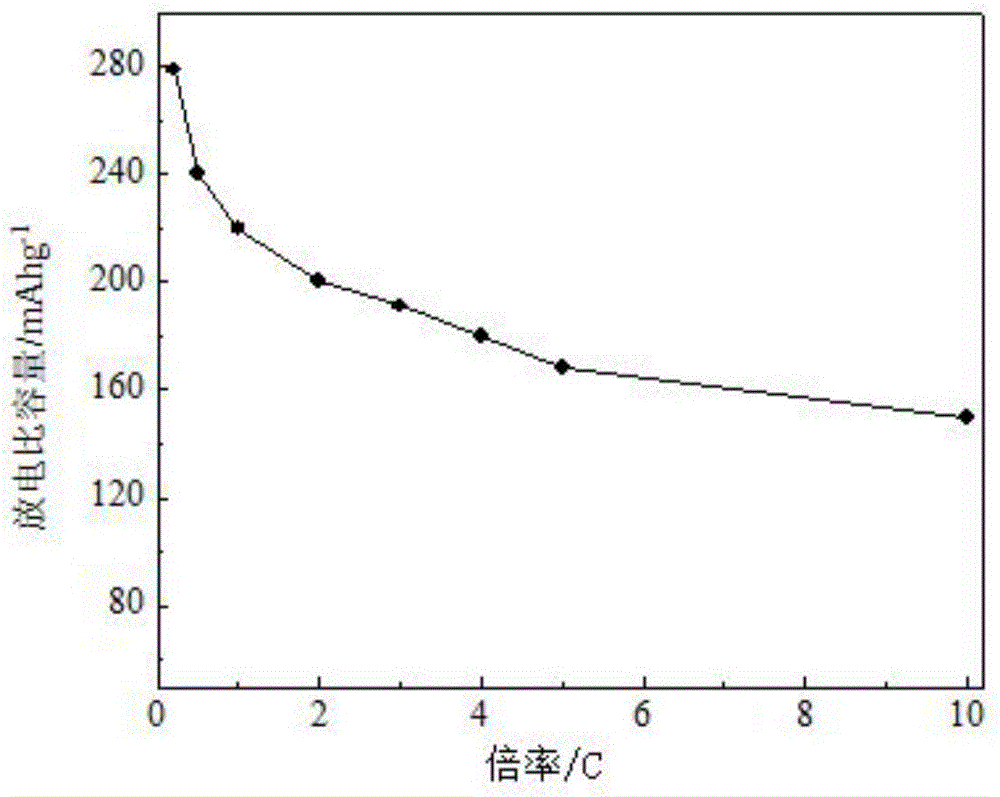
Figure 2 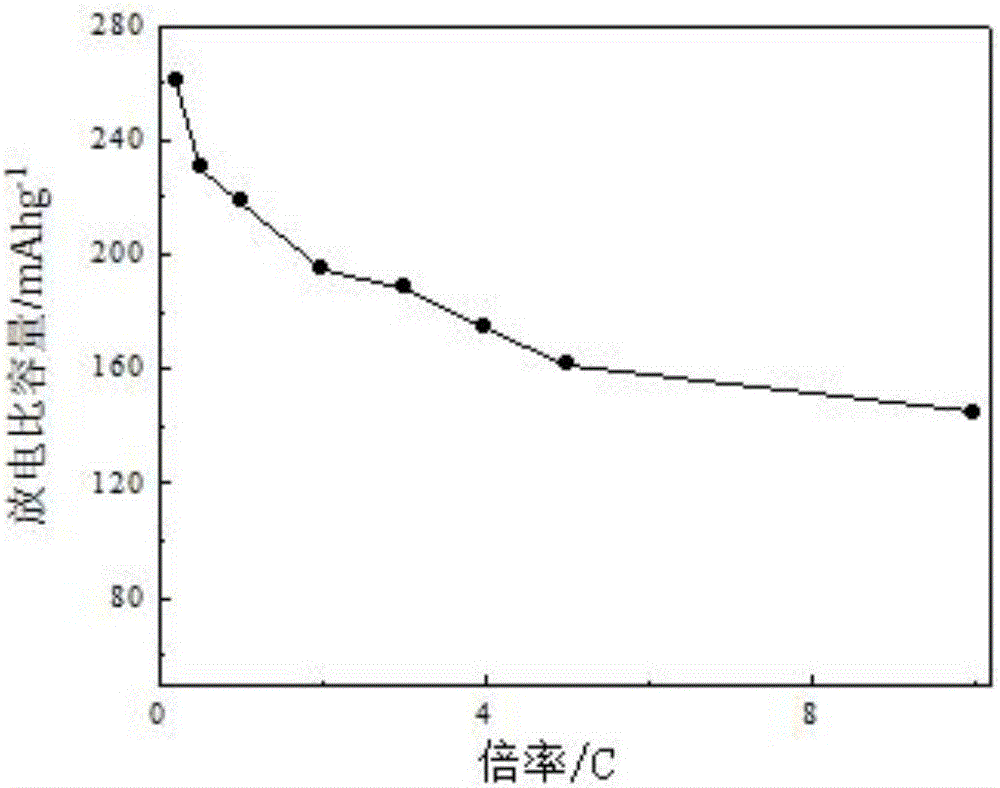
Figure 3
Abstract
Description
technical field
[0001] The invention relates to the technical field of lithium battery materials, in particular to a lithium-rich cathode material for a lithium ion battery and a preparation method thereof Background technique
[0002] Lithium-ion batteries have the advantages of long cycle life and high energy density, and are widely used in mobile phones, laptop computers and other electronic products, and are considered to be the most reliable energy storage and conversion devices at present. Lithium-ion battery cathode materials account for more than 40% of the total cost of lithium batteries. The performance of cathode materials directly affects the performance indicators of lithium batteries and occupies a core position in lithium batteries.
[0003] Lithium-rich cathode material Li 1+x A 1-x o 2 (A=Mn, Ni, Co, etc.) contains a certain amount of lithium in the transition metal layer, and the specific capacity is as high as 300mAh / g. It is an important candidate posi...
Examples
preparation example Construction
[0041] The present invention provides a method for preparing a lithium-rich positive electrode material for a lithium ion battery described in the above technical solution, comprising the following steps:
[0042] Water-soluble cobalt salt, water-soluble nickel salt, water-soluble manganese salt, water-soluble cerium salt and water are mixed according to the molar ratio of 1-x-y-z-α:y:z:α to obtain the first solution, wherein 0<x <1, 0≤y<1, 0≤z<1, 0<α≤0.3;
[0043] mixing oxalic acid, urea and water to obtain a second solution;
[0044] Under the protection of an inert gas, the first solution is mixed with the second solution, and a co-precipitation reaction is performed to obtain an oxalate precursor;
[0045] After mixing the lithium source with the oxalate precursor, ball milling is carried out to obtain a mixed powder;
[0046] The mixed powder is calcined to obtain the lithium-rich positive electrode material of the lithium ion battery with the chemical composition show...
Embodiment 1
[0060] Weigh MnSO according to the ratio of Mn element, Ni element, Co element and Ce element molar ratio of 0.50:0.13:0.13:0.04 4 ·H 2 O, NiSO 4 ·6H 2 O. CoSO 4 ·7H 2 O and Ce(NO 3 ) 3 ·6H 2 O is dissolved in deionized water to obtain the first solution, and the total concentration of Mn element, Ni element, Co element and Ce element in the control solution is 1mol / L;
[0061] Mix diethyl oxalate and urea, control the molar concentration of diethyl oxalate to 1mol / L, and the molar ratio of urea to diethyl oxalate to 20:1 to obtain a second solution;
[0062] Under the protection of an inert gas, the first and second solutions were mixed respectively by a peristaltic pump, and the pH value was controlled within the range of 11.5±0.5 to carry out coprecipitation reaction, the reaction temperature was controlled at 90°C, stirred at a speed of 1000r / min for 12h, and filtered. Washing and drying in vacuum at 110°C for 12 hours to obtain the precipitation of the oxalate pre...
Embodiment 2
[0068] Weigh MnCl according to the ratio of Mn element, Ni element, Co element and Ce element molar ratio of 0.25:0.1:0.25:0.1 2 ·H 2 O, Ni(NO 3 ) 2 ·6H 2 O. CoSO 4 ·7H 2 O and Ce(NO 3 ) 3 ·6H 2 O is dissolved in deionized water to obtain the first solution, and the total concentration of Mn element, Ni element, Co element and Ce element in the control solution is 1mol / L;
[0069] Mix ammonium oxalate and urea, control the molar concentration of ammonium oxalate to 1.1 mol / L, and the molar ratio of urea to diethyl oxalate is 30:1 to obtain the second solution;
[0070]Under the protection of an inert gas, the first and second solutions were mixed separately by a peristaltic pump, and the pH value was controlled within the range of 10.5±0.5 for coprecipitation reaction. The reaction temperature was controlled at 70°C, stirred at a speed of 500r / min for 10h, and filtered. Washing and drying in vacuum at 110°C for 12 hours to obtain the precipitation of the oxalate precu...