Lithium supplementation of negative electrode mainly uses lithium foil or lithium
powder to directly lithiate
graphite negative electrode, but lithium foil, especially lithium
powder, has serious safety hazards because of its smaller particle size and higher activity. There are many improvements to this method of lithium supplementation Technical reports, such as patent CN105702943A discloses a
lithium ion battery negative
electrode material lithium replenishment method, through the external lithium sheet, the battery test
system is used to form the lithium replenishment device to achieve negative electrode lithium replenishment; patent CN104577086A discloses a pre-lithiation method, Dissolve
metallic lithium in a non-aqueous
solvent, prepare a
graphene-coated mesoporous SiO negative electrode in this dispersion, and sinter to obtain a lithium-replenishing negative electrode; although it is
safer than directly using lithium foil or lithium
powder to replenish lithium However, on the whole, the improved lithium supplementation technology has high requirements on the
operating environment, and the battery is assembled after lithiation of the negative electrode, which is more cumbersome.
Positive electrode lithium supplementation is mainly to directly add a lithium supplementary sacrificial agent to the positive
electrode material, and irreversibly remove lithium ions during the first cycle of charging, thereby providing lithium ions consumed by the first cycle of negative electrodes. The method of replenishing lithium on the positive electrode sheet is to spray or drop an organic lithium solution on the surface of the positive electrode sheet in an
inert atmosphere, so that the lithium ions in the organic lithium solution are reduced to
metallic lithium and embedded in the positive electrode sheet to realize lithium replenishment. High requirements and toxic organic reagents have potential safety risks for operators and are not convenient for large-scale industrial production; patent CN110120493A provides a method of slurrying and smearing lithium-supplementing materials together with positive electrode materials, conductive agents, and binders Positive electrode lithium replenishment method, although this method avoids the safety problem of dry lithium replenishment, but the lithium replenishment sacrificial agent will have a certain
impact on the
mass transfer inside the entire electrode after the
decomposition of the positive electrode side; patent CN109755448A will include Li 5 FeO 4
Lithium-supplementing coatings such as lithium-containing compounds, nano-
inert inorganic fillers, and binders are coated on the separator substrate to prepare a
lithium battery separator with lithium-supplementing coatings, which can reduce the
thermal shrinkage of the diaphragm while supplementing lithium, but This technology is processed on a commercial diaphragm substrate. The entire diaphragm preparation process is cumbersome, and the reagents used are more, the cost is high, and there are many defects that are not conducive to commercialization and industrial production: 1. The thickness of the commercial diaphragm itself It is to match the battery, which is generally about 20 μm. If the
coating is coated with a lithium-supplementing agent, to achieve effective lithium supplementation, the thickness of the
coating should be more than 10 μm, and the overall thickness of the lithium-supplementing separator will be higher than 30 μm, which will make it difficult to assemble. Battery; Second, since the lithium-containing
coating is coated on the separator substrate through a lithium-containing
slurry and dried at 40-75°C, the separator will be blocked after
drying, resulting in a decrease in lithium
ion mobility, resulting in electrochemical performance Three, the obtained
lithium battery diaphragm, because the lithium replenishing agent is coated on the substrate, the adhesion is insufficient, causing the diaphragm to fall off during the folding and
curling process when the battery is assembled, and the efficiency of lithium replenishment is reduced; four, In this method, the lithium-containing
slurry must contain binders, conductive agents, etc., which is equivalent to introducing impurities, which will reduce the
energy density of the battery and also adversely affect the electrochemical performance.



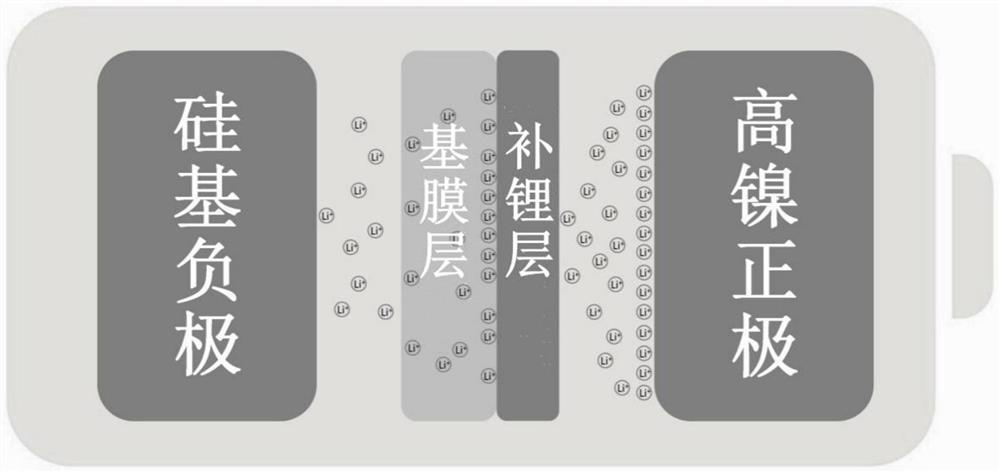
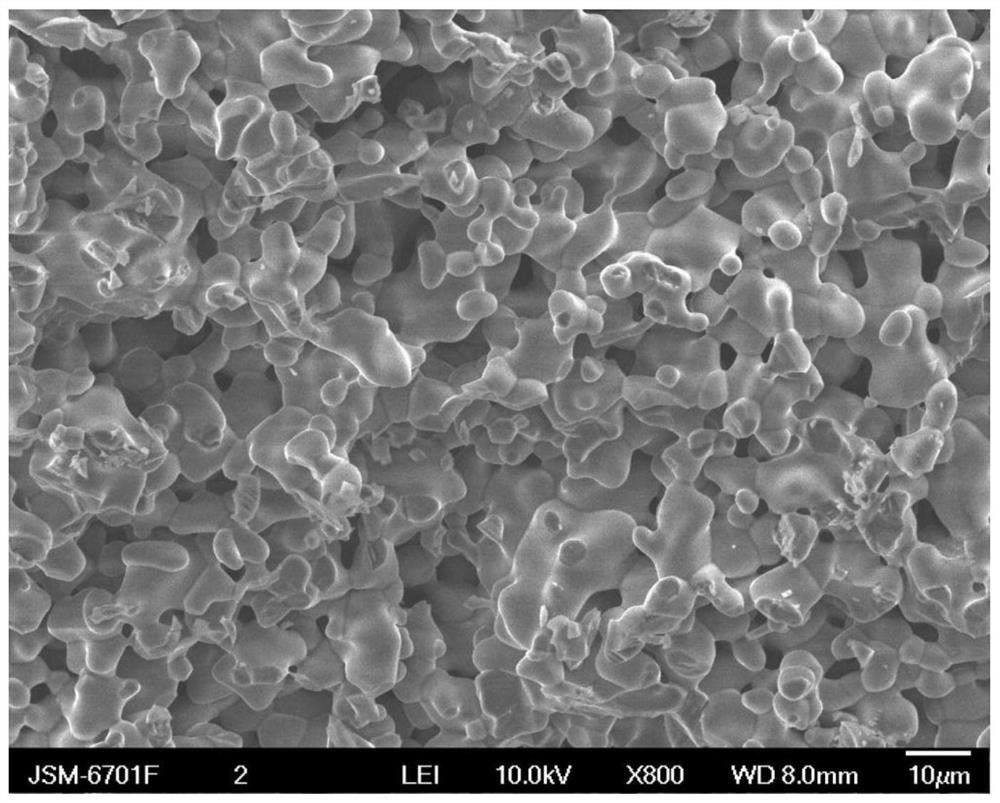
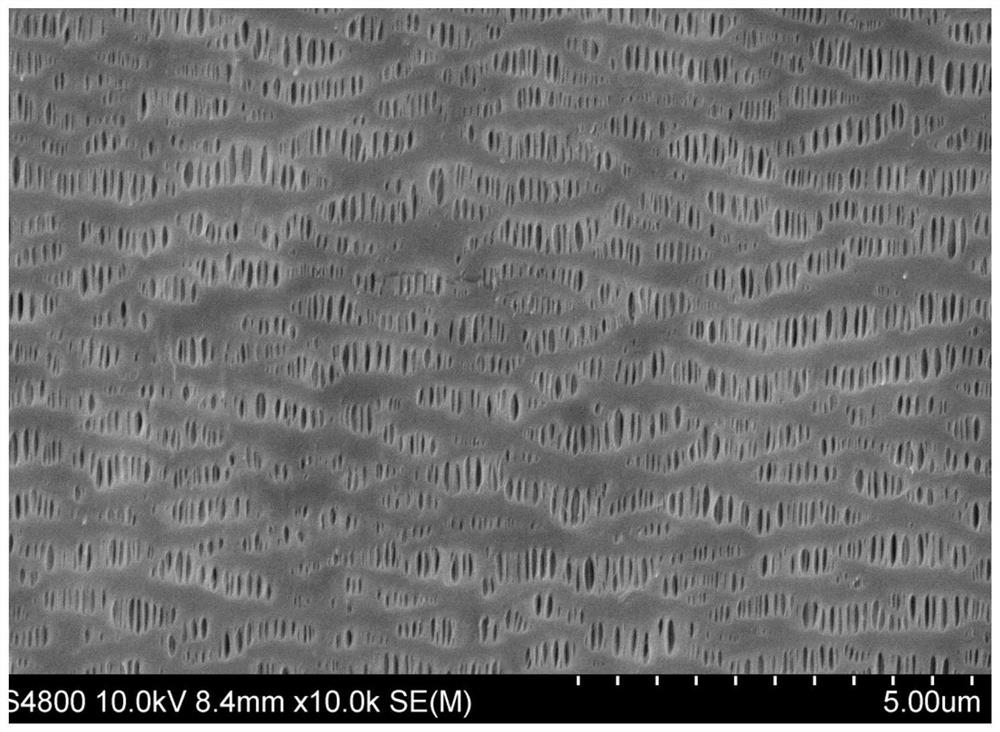
 Login to View More