
DNA immunization against chlamydia infection
a technology of chlamydia and immunization, applied in the field of dna immunization against chlamydia infection, can solve the problems of subunit vaccine failure and general failure of subunit vaccine, and achieve the effects of enhancing the efficacy of intranasal dna immunization experiments, and reducing the risk of infection
- Summary
- Abstract
- Description
- Claims
- Application Information
AI Technical Summary
Benefits of technology
Problems solved by technology
Method used
Image

Examples
example 1
[0052] This Example illustrates the preparation of a plasmid vector containing the MOMP gene.
[0053] pMOMP expression vector was made as follows. The MOMP gene was amplified from Chlamydia trachomatis mouse pneumonitis (MoPn) strain genomic DNA by polymerase chain reaction (PCR) with a 5' primer (GGGGATCCGCCACCATGCTGCCTGTGGGGAATCCT) (SEQ ID NO: 1) which includes a BamH1 site, a ribosomal binding site, an initiation codon and the N-terminal sequence of the mature MOMP of MoPn and a 3' primer (GGGGCTCGAGCTATTAACGGAACTGAGC) (SEQ ID NO: 2) which includes the C-terminal sequence of the MoPn MOMP, a Xhol site and a stop codon. The DNA sequence of the MOMP leader peptide gene sequence was excluded. After digestion with BamH1 and Xhol, the PCR product was cloned into the pcDNA3 eukaryotic II-selectable expression vector (Invitrogen, San Diego) with transcription under control of the human cytomegatovirus major intermediate early enhancer region (CMV promoter). The MOMP gene-encoding plasmid ...
example 2
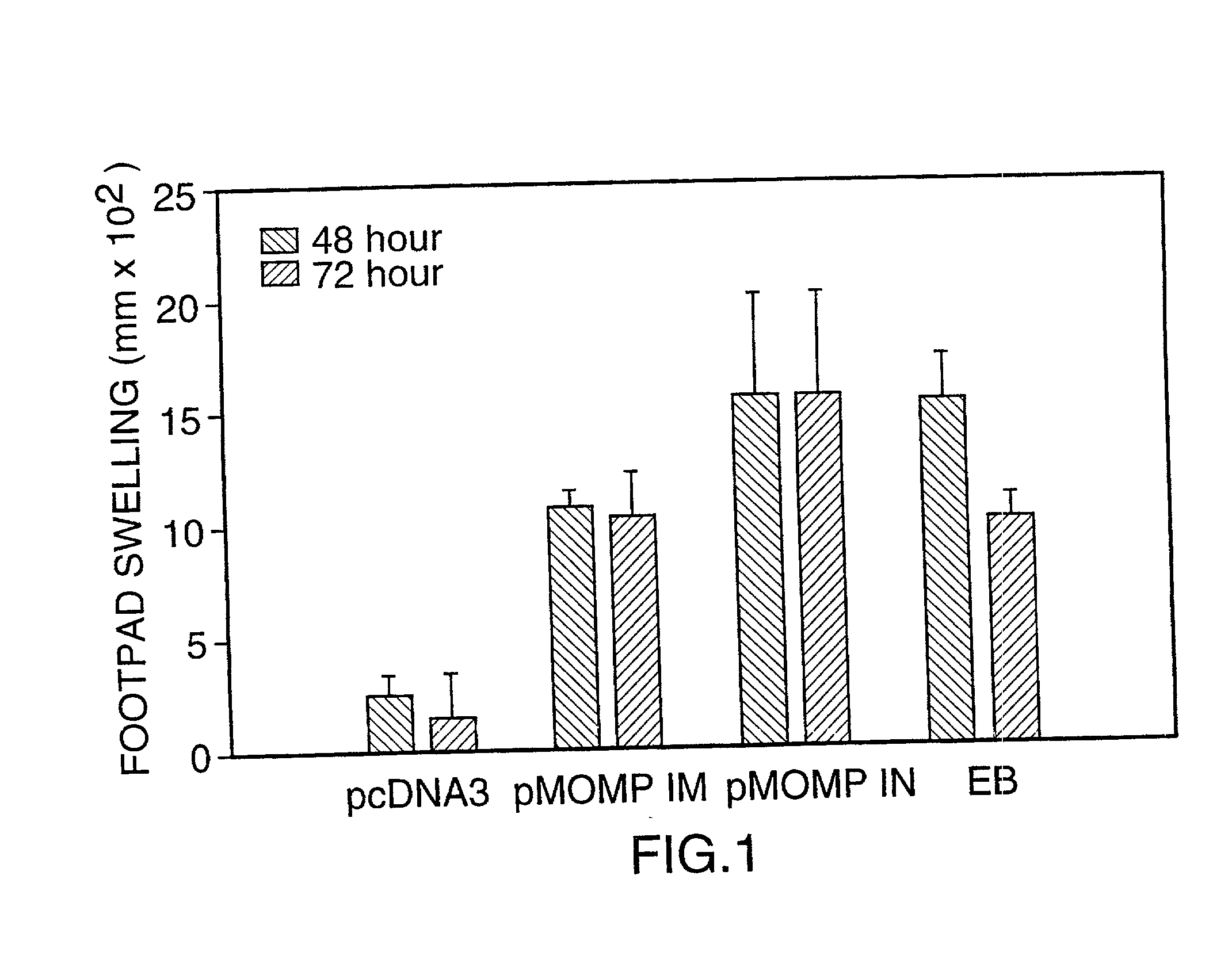
[0055] This Example illustrates DNA immunization of mice and the results of DTH testing.
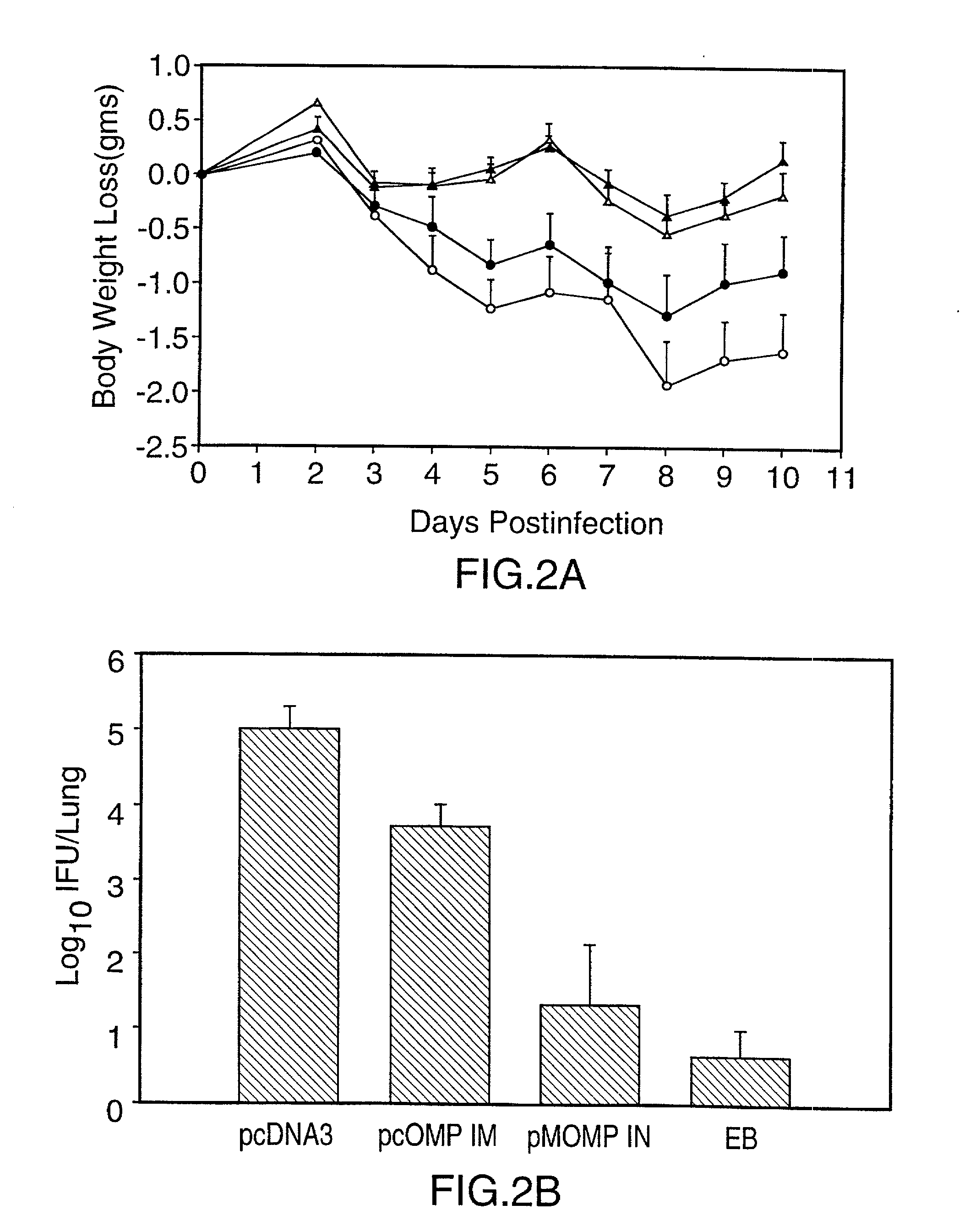
[0056] A model of murine pneumonia induced by the C. trachomatis mouse pneumonitis strain [MoPn] was used (ref. 11). Unlike most strains of C. trachomatis which are restricted to producing infection and disease in humans, MoPn is a natural murine pathogen. It has previously been demonstrated that primary infection in this model induces strong protective immunity to reinfection. In addition, clearance of infection is related to CD4 Th1 lymphocyte responses and is dependent on MHC class II antigen presentation (ref. 11).
[0057] For experimental design, groups of 4 to 5 week old female Balb / c mice (5 to 13 per group) were immunized intramuscularly (IM) or intranasally (IN) with plasmid DNA containing the coding sequence of the MoPn MOMP gene (1095 bp), prepared as described in Example 1, or with the coding sequence of the C. trachomatis serovar L.sub.2 CTP synthetase gene (1619 bp (refs. 10, 12), pre...
example 3
[0060] This Example illustrates DNA immunization of mice and the generation of antibodies.
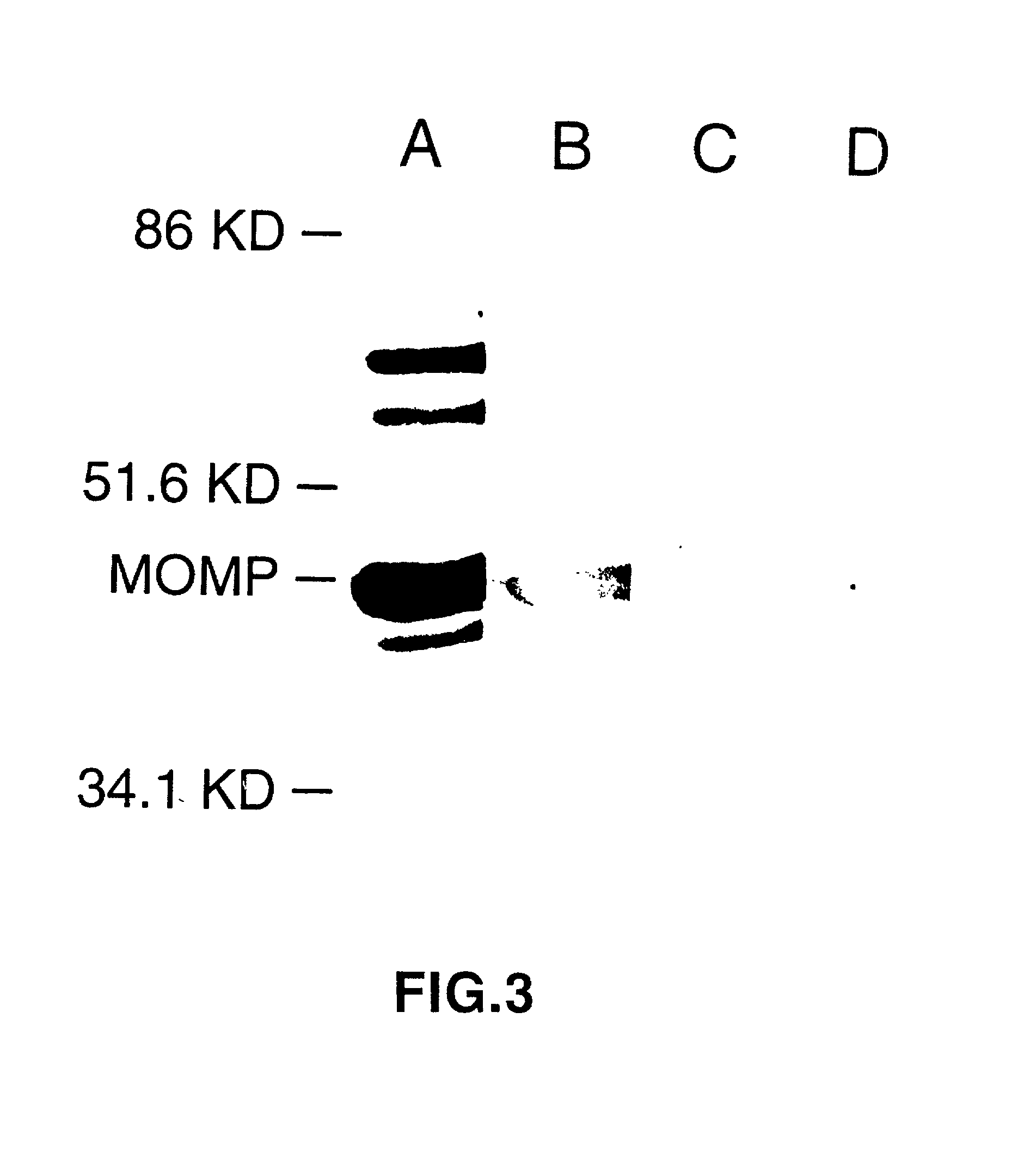
[0061] Injection of CTP synthetase DNA as described in Example 2 resulted in the production of serum antibodies to recombinant CTP synthetase (Table 1) (ref. 14). Antigen-specific serum Abs were measured by ELISA. Flat-bottom 96-well plates (Corning 25805, Corning Science Products, Corning, N.Y.) were coated with either recombinant chlamydial CTP-synthetase (1 .mu.g / ml) or purified MoPn EBs (6.times.10.sup.4 IFU / well) overnight at 4.degree. C. The Plates were rinsed with distilled water and blocked with 4% BSA PBS-Tween and 1% low fat skim milk for 2 hours at room temperature. Dilutions of sera samples were performed in 96-well round bottom plates immediately prior to application on the antigen coated plates. The plates were incubated overnight at 4.degree. C. and washed ten times. Biotinylated goat anti-mouse IgG1 or goat anti-mouse IgG2a (Southern Biotechnology Associates, Inc. Birmingham, Al...
PUM
| Property | Measurement | Unit |
|---|---|---|
| Length | aaaaa | aaaaa |
| Size | aaaaa | aaaaa |
| Pharmaceutically acceptable | aaaaa | aaaaa |
Abstract
Description
Claims
Application Information
 Login to View More