

Patents
Literature
51 results about "Trip distribution" patented technology
Efficacy Topic
Property
Owner
Technical Advancement
Application Domain
Technology Topic
Technology Field Word
Patent Country/Region
Patent Type
Patent Status
Application Year
Inventor
Trip distribution (or destination choice or zonal interchange analysis) is the second component (after trip generation, but before mode choice and route assignment) in the traditional four-step transportation forecasting model. This step matches tripmakers’ origins and destinations to develop a “trip table”, a matrix that displays the number of trips going from each origin to each destination. Historically, this component has been the least developed component of the transportation planning model.
Genetic-algorithm-optimization-based big data analysis system and method of urban regional traffic
ActiveCN108470444AImprove decision makingDetection of traffic movementEngineeringData analysis system
The invention, which belongs to the field of urban traffic design, particularly relates to a genetic-algorithm-optimization-based big data analysis system and method of urban regional traffic. The system is composed of an urban road network and pedestrian travel distribution analysis module, an urban road network traffic flow analysis module, an urban rail transit system analysis module, and an urban regional transportation system decision module. According to the invention, with urban road network and resident travel distribution as an object, a genetic-algorithm-based urban-road-network optimized dual-layer planning model is established by using a dual-layer planning model in a continuous network design and introducing the urban road network and resident travel distribution index into urban road network optimization; an optimal solution is calculated by using a genetic algorithm; and the decision-making configuration of the transportation system is realized based on the optimal solution. Therefore, the data analysis ability and decision-making ability of the urban regional traffic are enhanced substantially.


Owner:TERMINUSBEIJING TECH CO LTD
Layout optimization method for urban public bicycle rental stations
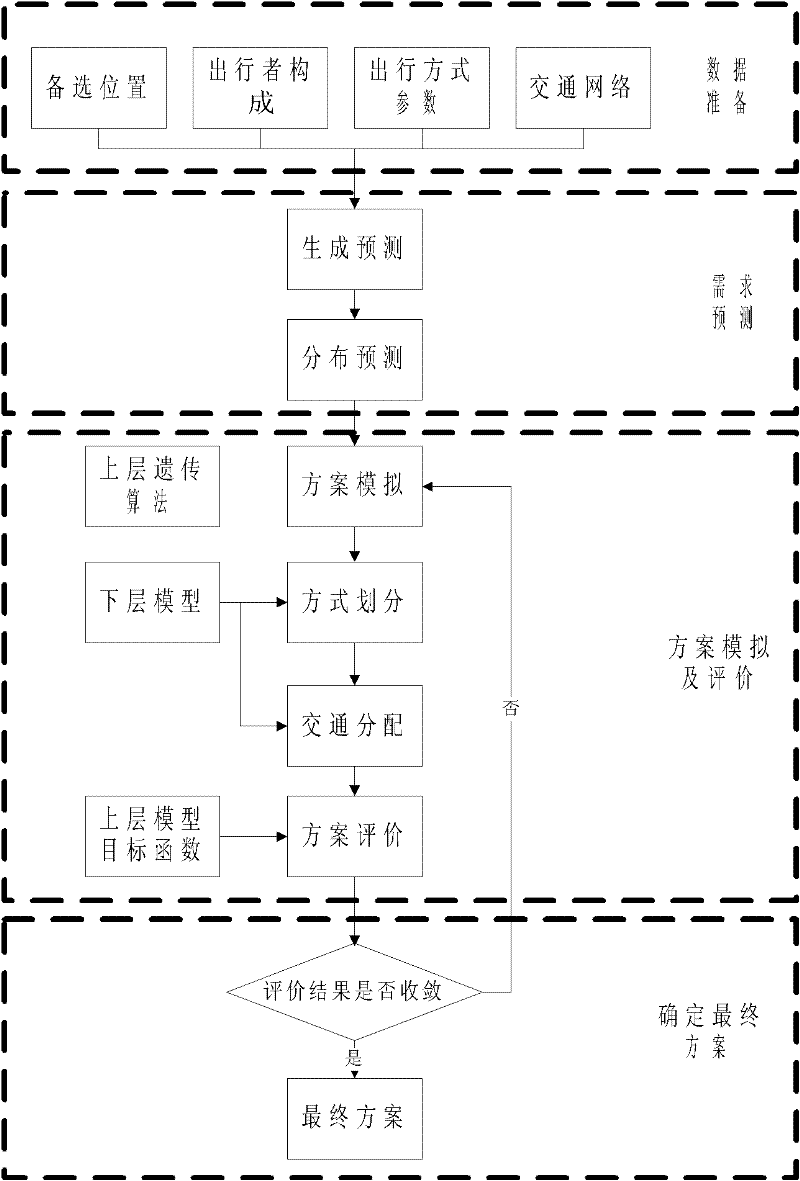
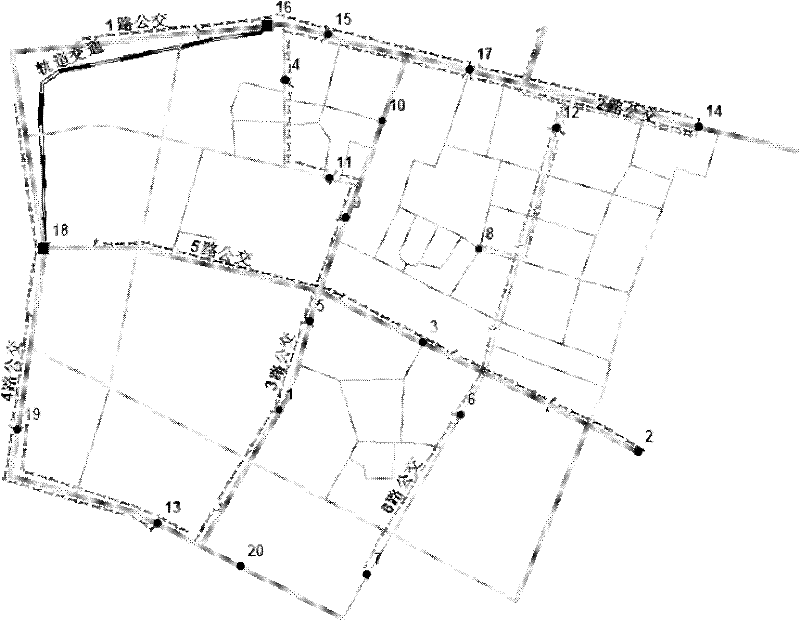
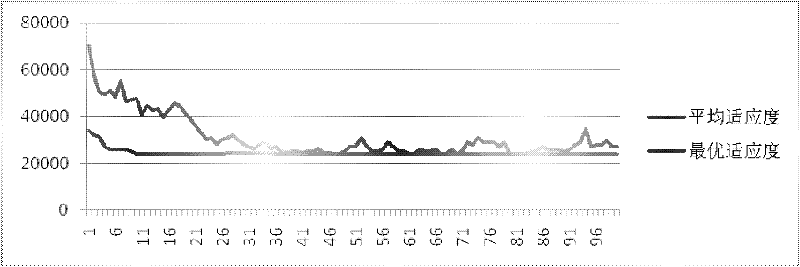
The invention relates to a layout optimization method for urban public bicycle rental stations. The method comprises the following steps of: firstly, establishing basic databases for regional lands, residential structures, trip modes and the like; then dividing traffic zones, and performing trip generation prediction and trip distribution prediction; and finally establishing a two-layer model which consists of an adaptive genetic algorithm and a mode sharing and traffic distribution combined feedback model for different layout schemes, solving, evaluating scheme results, and obtaining an optimal layout scheme after the final convergence of evaluated values to make regional trip cost and the construction cost of public bicycle system facilities the lowest. Compared with the prior art, in the method provided by the invention, the trip needs of residents and the supply of traffic facilities are coordinated, and the method has a wide application range and a high quantification extent, and can provide a scientific technical support for related decision making.
Owner:SOUTHEAST UNIV
Rush hour bus route station jumping running method based on passenger trip distribution
InactiveCN103198645AReduce the impactImprove efficiencyRoad vehicles traffic controlTrip distributionRush hour
The invention discloses a bus stop OD acquisition method based on a city intelligent transport system, and a bus station card swiping OD array is obtained through reasonable processing and right matching of bus running and passenger IC card swiping data which are provided by the city intelligent transport system. On the basis of card swiping numbers of city IC cards and running revenue of the bus transport system, sample expansion is performed according to the ratio of the card swiping numbers of the city IC cards and the running revenue of the bus transport system, and the OD array is finally obtained. According to the method, the effects the conditions that passengers swipe the cards for many times and changes routes and the like have on a station OD are fully considered, and data of an IC card swiping trip in one time can be well processed. The method is favorable for calculating, strong in practicability, capable of achieving real-time transformation, automation and rapidness of obtaining of the station OD by utilization of computer programs, and providing data supporting for optimization and planning of a city bus route net, and establishment of a bus vehicle scheduling scheme, and greatly significant for improvement of current situations of city buses.


Owner:SOUTHEAST UNIV
System and method for analysis of comprehensive information on vehicle trip distribution
InactiveCN101882374ARich traffic detection informationAccurately calculate travel timeDetection of traffic movementTrip distributionInformation analysis
The invention provides a system and a method for analysis of comprehensive information on vehicle trip distribution, which comprises a first ground induction coil, a second ground induction coil, a first detection module, a second detection module, an analysis and processing module and an information issuing module. The first ground induction coil and the second ground induction coil are respectively arranged on the two ends of a vehicle trip; the first detection module comprises a first camera and a first system control unit which are connected with each other; the second detection module comprises a second camera and a second system control unit which are connected with each other; the analysis and processing module is respectively connected with the first detection module and the second detection module through communication modules; and the information issuing module is connected with the analysis and processing module. The invention can enrich traffic detection information, realize accurate calculation of the time and space distribution of the vehicle trip, and provide better service for the traffic and public security.


Owner:SHANGHAI BAOKANG ELECTRONICS CONTROL ENG
Fusion data-based resident trip OD distribution extraction method
ActiveCN107958031AEvenly distributed tripsOvercoming the defect of uneven samplingData processing applicationsSpecial data processing applicationsDistribution matrixTrip distribution
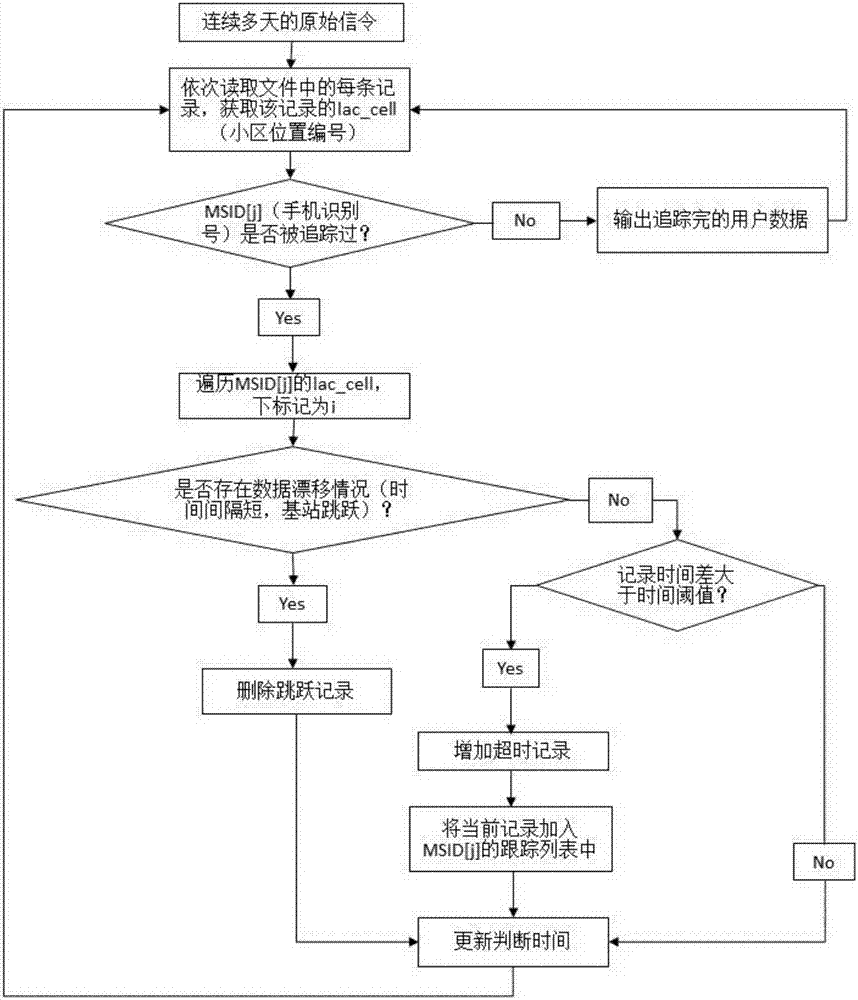
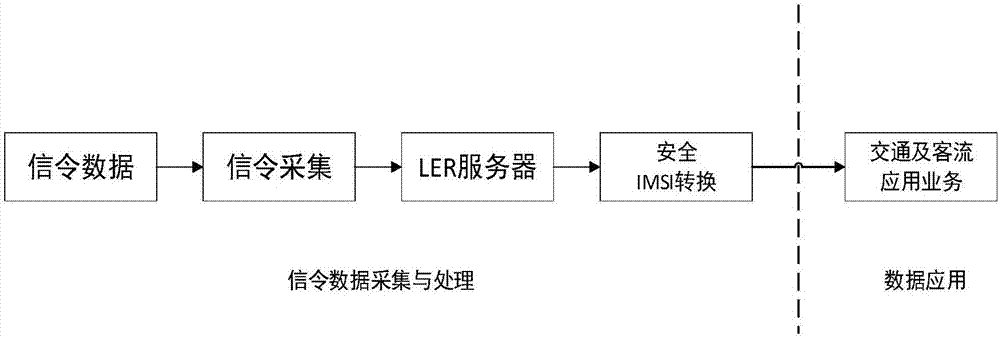
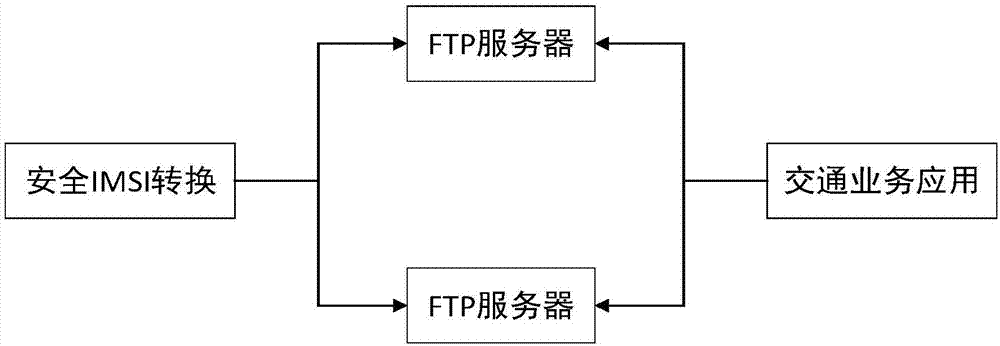
The invention discloses a fusion data-based resident trip OD distribution extraction method, and the method is realized through fusing mobile phone signalling data and traditional resident investigation data. The method comprises the following steps of: setting a related threshold value through resident trip feature information obtained through traditional resident investigation data on the basisof acquiring and preprocessing original mobile phone signalling data, and converting trip track information in the mobile phone signalling data into a preliminary trip OD distribution matrix; and obtaining a final resident trip OD distribution condition through gross sample expansion. According to the method, the targets of full-sample sampling and sample distribution uniformity are realized underthe condition that resident trip distribution grosses re highly consistent with real trip features, obtained resident trip distribution results are greatly enhanced when being compared with traditional methods, and important theoretical basis and support are provided for the construction of urban traffic facilities and the construction of transit systems.
Owner:SHANGHAI URBAN CONSTR DESIGN RES INST GRP CO LTD
Traveler destination preference-considered traffic distribution and traffic flow assignment combined model
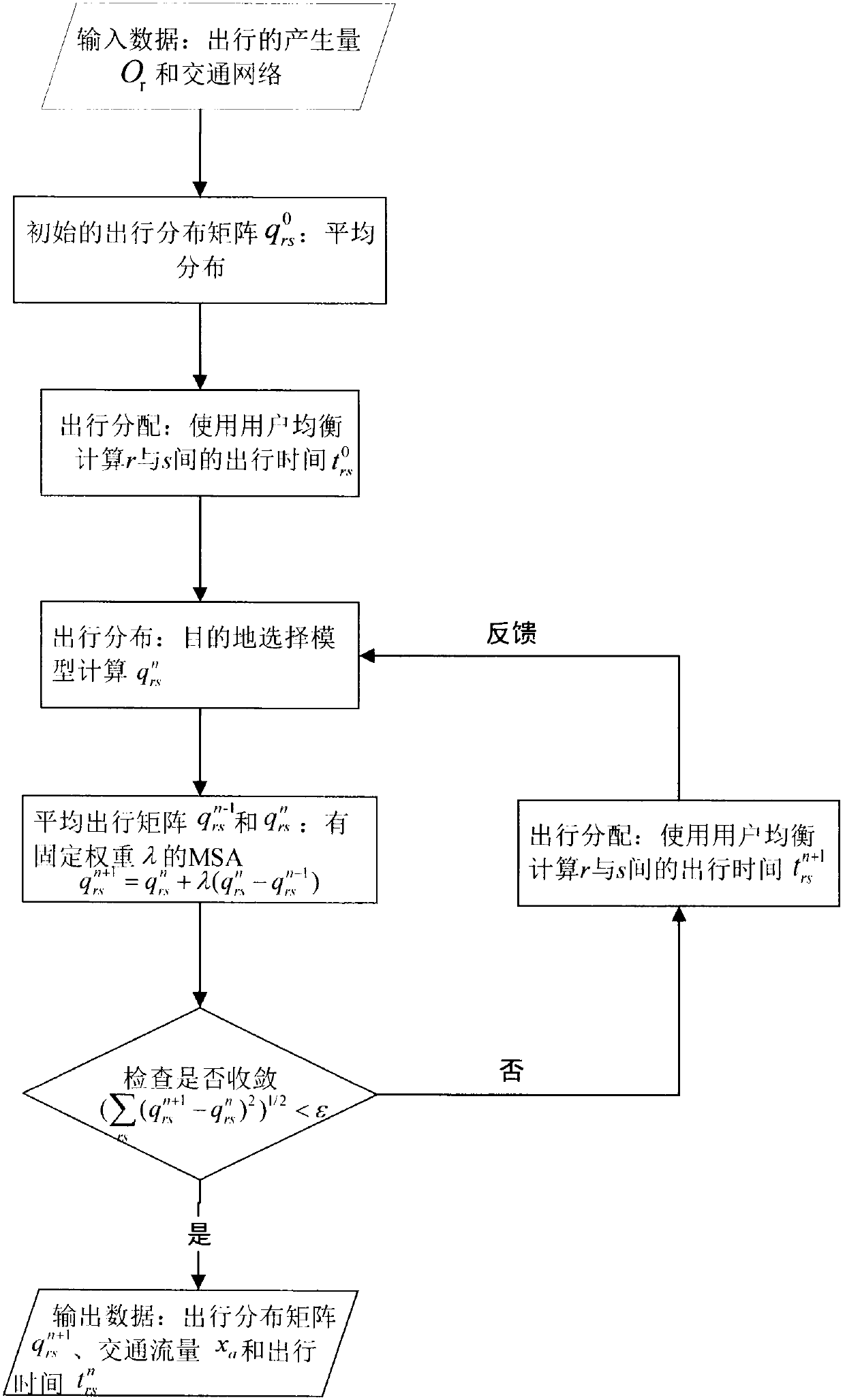
The invention establishes a traveler destination preference-considered traffic distribution and traffic flow assignment combined model. A four-stage travel demand forecasting model widely used in traffic planning has a problem of inconsistency; a conventional solution cannot fully reflect the decision-making behavior of a traveler and therefore has a great limitation on a gravity model adopted intraffic distribution; and some key variables which play important roles in destination selection are not contained, wherein the most prominent key variable is the traveler destination preference. Thetraveler destination preference-considered traffic distribution and traffic flow assignment combined model, established by the invention, comprises the main steps of: (1) establishing a traveler preference-considered travel distribution model; (2) establishing a travel assignment model under user equilibrium; (3) establishing a simplified four-stage model with feedback; (4) solving the models by adopting an iterative weighting method MSA (Method of Successive Averages) with constant weights; and (5) describing a specific implementation mode in combination with a Nguyen-Dupuis network commonlyused in traffic network analysis.


Owner:SOUTHEAST UNIV
R-language processing method for novel traffic distribution and traffic flow allocation combination model
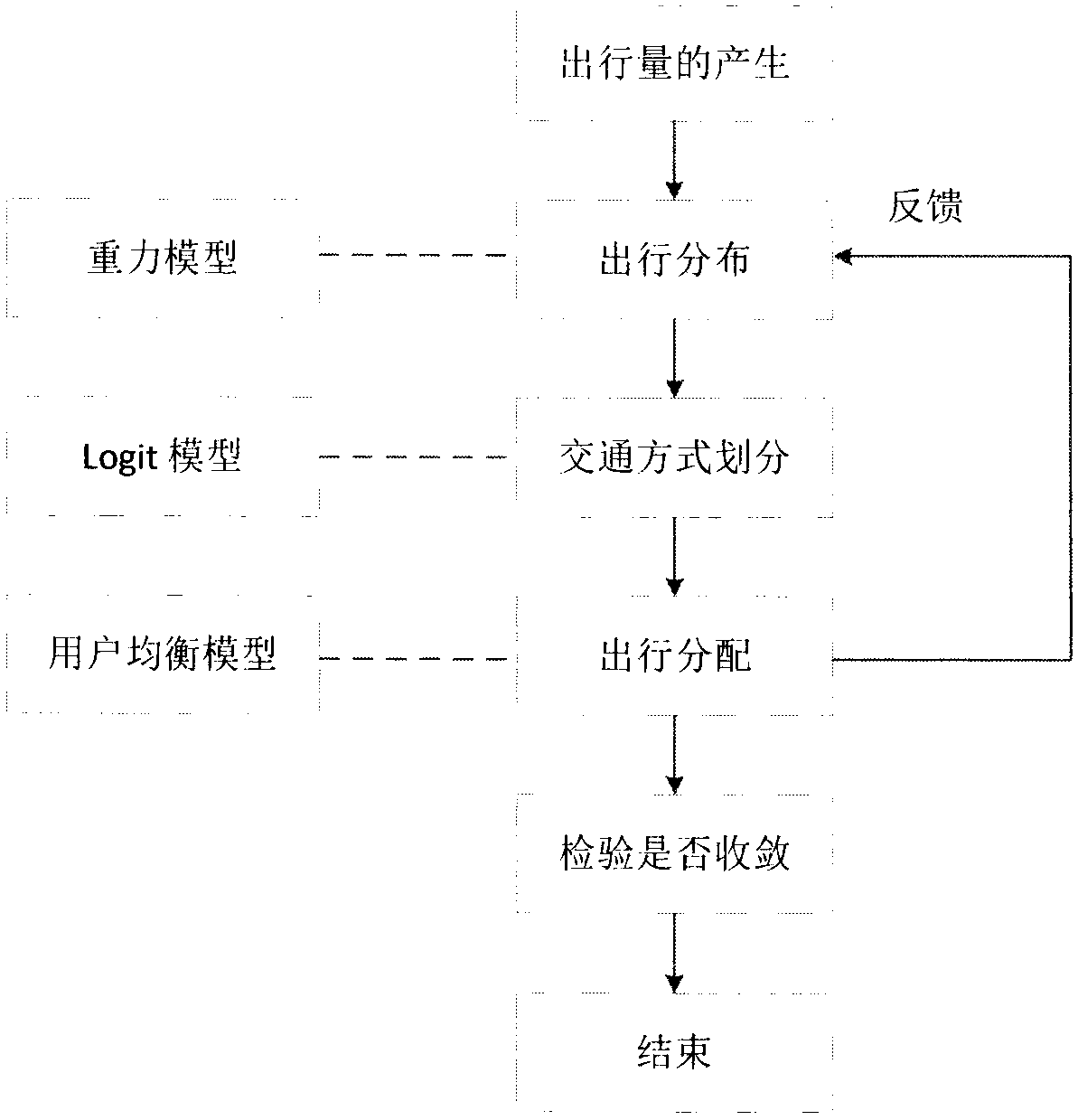
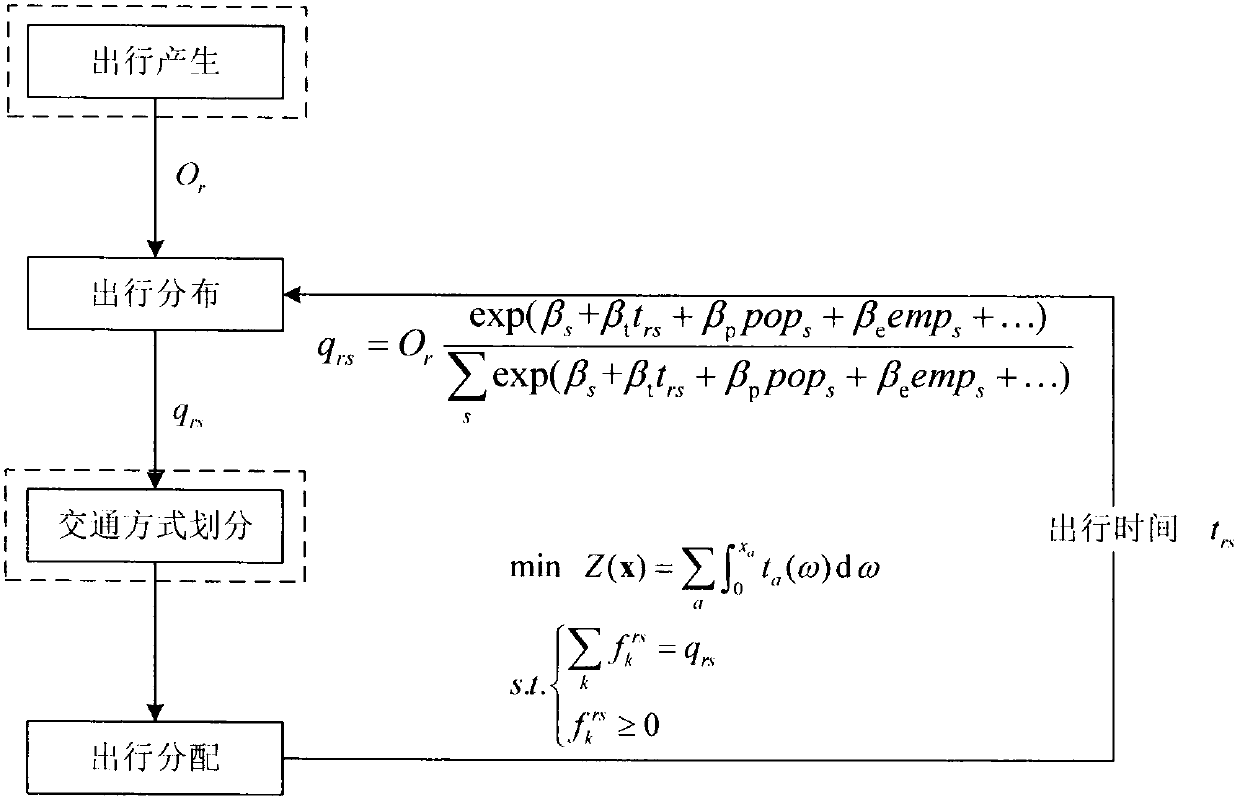
The invention provides a novel traffic distribution and traffic allocation combination model considering traveler destination preferences. According to the model, a solving algorithm is provided, andan R-language is used for processing. In order to fully reflect the decision of a traveler in travel distribution, the traveler destination preferences playing an important role in destination selection are considered; and according to a given traffic demand and traffic network information, a stable system balance solution can be quickly obtained through software, wherein the balance solution is more approximate to a real travel decision behavior compared with a traditional method. Main steps include that (1) a travel distribution model considering the traveler preferences is established; (2)a travel allocation model under user balance is established; (3) a simplified four-stage model with feedback is established; (4) an iterative weighting method (MSA) with a constant weight is adopted to perform model solving; (5) an R-language program is designed to realize a solving method; and (6) a specific execution mode is described in combination with a Nguyen-Dupuis network frequently used in traffic network analysis.
Owner:SOUTHEAST UNIV
Travel demand inference for public transportation simulation
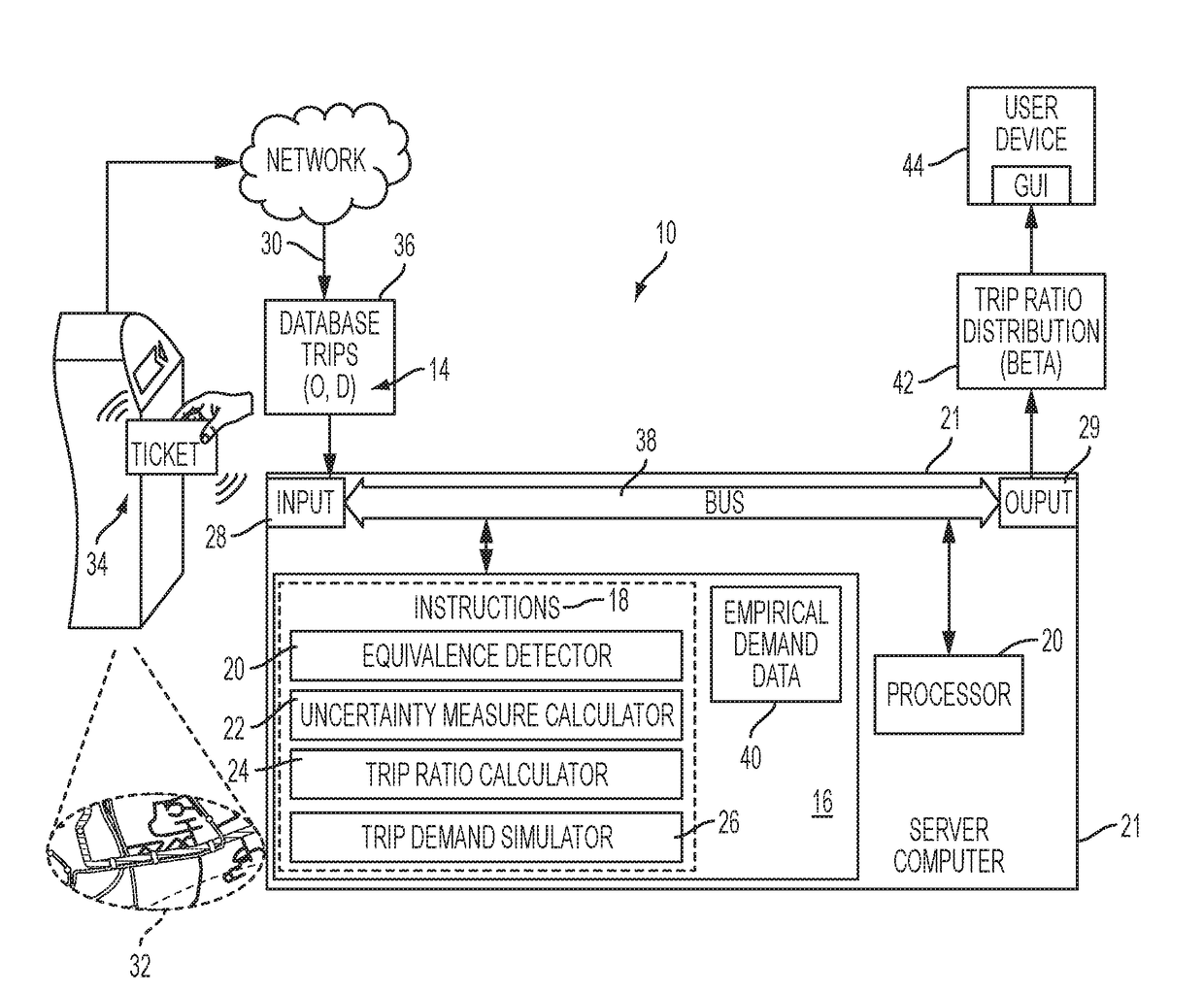
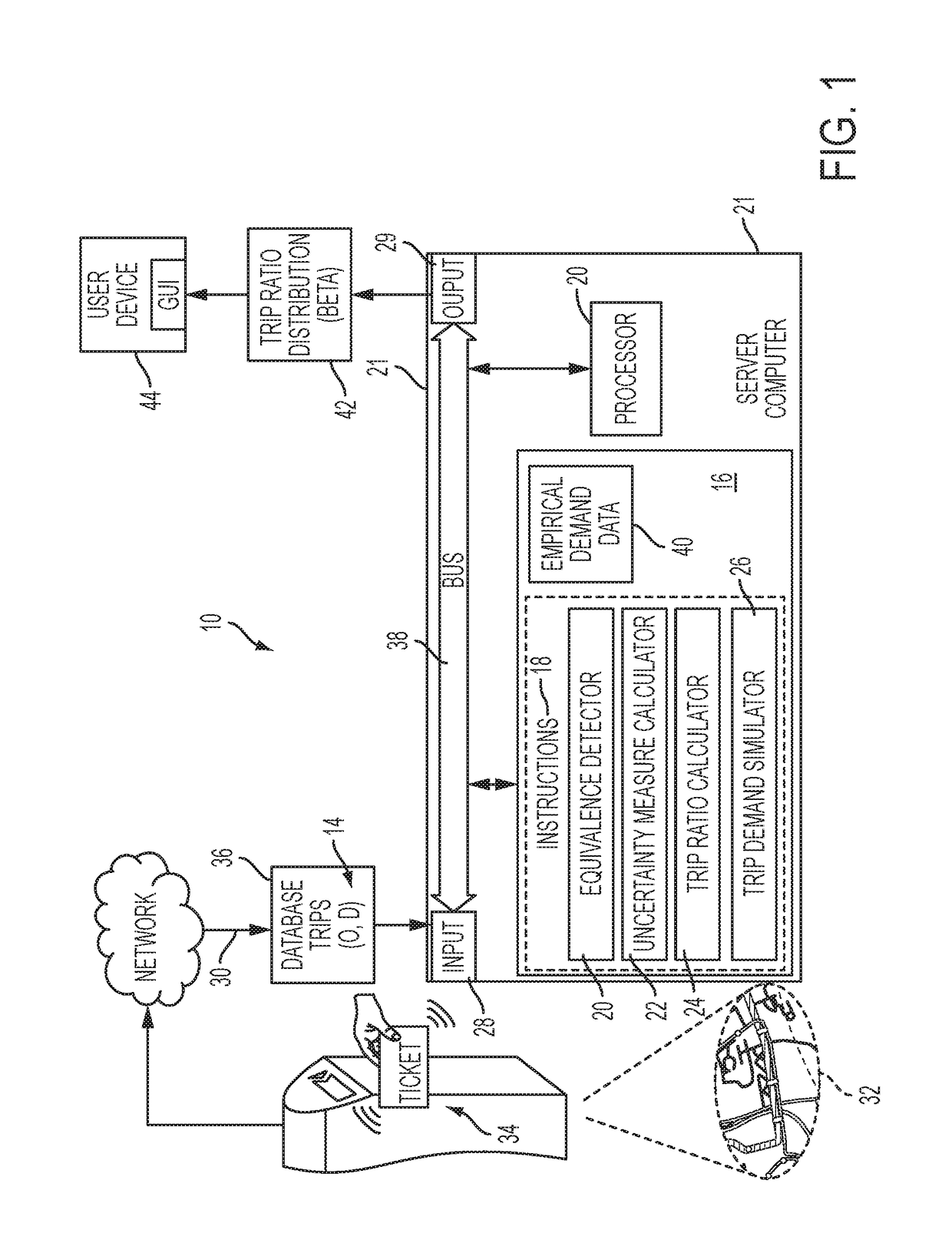
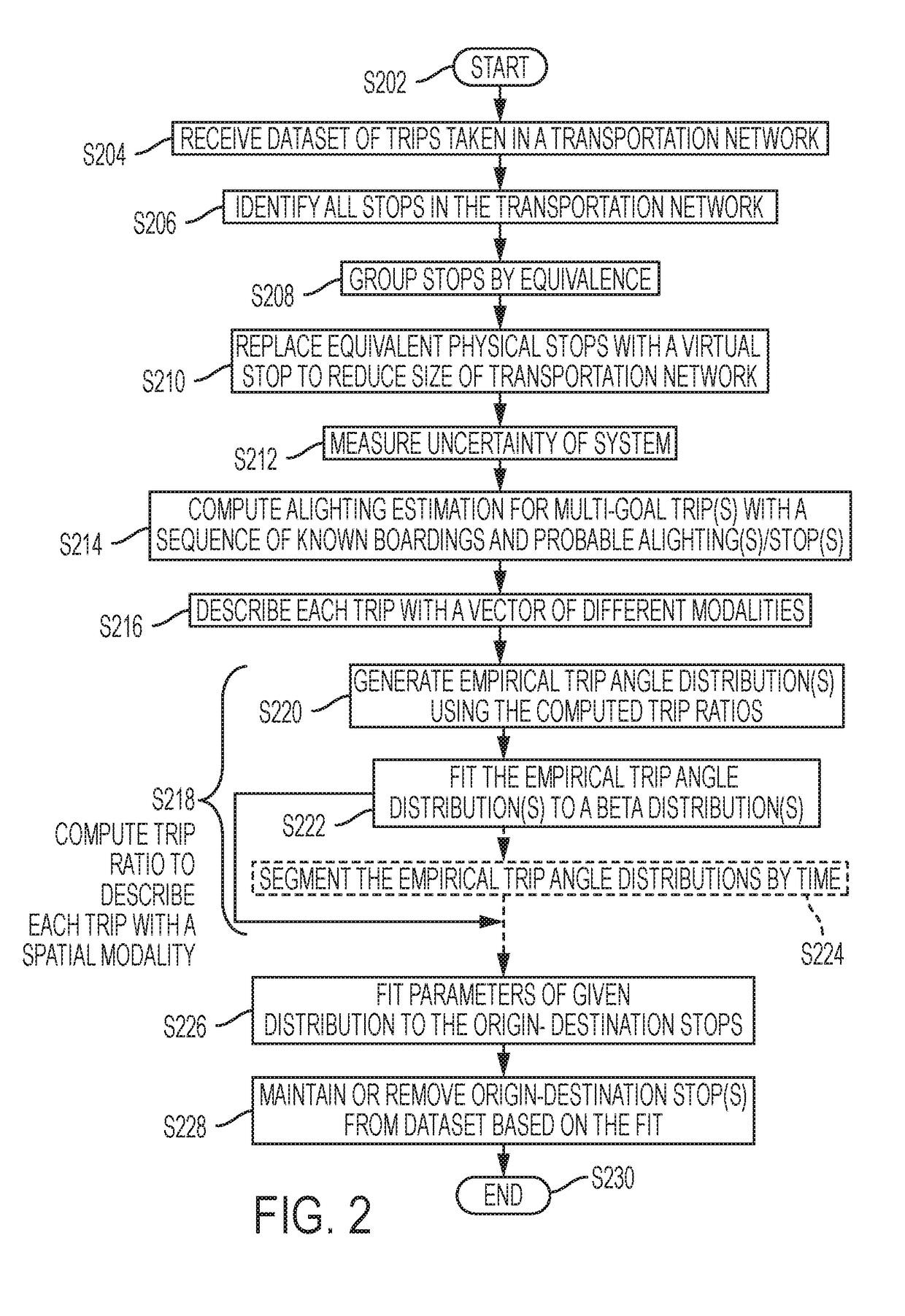
InactiveUS20170330112A1Instruments for road network navigationReservationsTrip distributionTraffic network
Owner:CONDUENT BUSINESS SERVICES LLC
Individual travel analysis system
InactiveCN110728454ALow costDigital data information retrievalResourcesTrip distributionAnalysis data
The invention discloses an individual travel analysis system, and relates to the technical field of traffic planning and management and urban planning and management. The system mainly comprises an individual travel OD analysis module used for analyzing and determining individual travel OD distribution data in target areas or among the target areas based on individual position data; an individualtravel feature analysis module used for analyzing and determining individual travel feature data in the target areas or among the target areas based on the individual position data; a dynamic population analysis module used for analyzing and determining dynamic population distribution data in the target areas or among the target areas on the basis of the individual position data; and a job-livingbalance analysis module used for analyzing and determining job-living population distribution data in the target areas or among the target areas on the basis of the individual position data. Accordingto the system provided by the invention, individual travel analysis data can be comprehensively acquired with low cost and high efficiency, and data support is provided for accurate traffic planningand management and urban planning and management.

Owner:CHINA ACAD OF URBAN PLANNING & DESIGN +1
Traffic travel carbon emission space-time prediction method based on land function evolution modeling
PendingCN120509585ADetection of traffic movementResourcesEnvironmental resource managementTrip distribution
The embodiment of the invention provides a traffic travel carbon emission space-time prediction method based on land function evolution modeling, and belongs to the technical field of data processing, and the method specifically comprises the steps: 1, constructing a multi-scenario land layout scenario constraint based on historical land function change data in a target region; step 2, utilizing the target model to predict urban land function space distribution of the target area under the constraint of the multi-scenario land layout scenario; 3, according to the urban land function space distribution, predicting the travel times of the passenger vehicles in each traffic zone, and according to the travel times, calculating the traffic travel distribution; and step 4, calculating the urban traffic travel carbon emission under the constraint of the multi-scenario land layout according to the traffic travel distribution. Through the scheme disclosed by the invention, the prediction efficiency, accuracy and adaptability are improved.

Owner:CENT SOUTH UNIV
Travel destination prediction method and system based on Logit model, and storage medium
The invention discloses a travel destination prediction method and system based on a Logit model, and a storage medium, and belongs to the technical field of intelligent traffic. The method comprises the following steps: S1, a data acquisition stage: acquiring POI, a basic OD matrix and a distance matrix of each traffic zone based on big data; s2, a feature selection stage: constructing a lasso regression model between the travel occurrence amount of the cell and the POI to perform feature selection; s3, a selection model construction stage: constructing a multivariate Logit destination selection model based on the POI type after feature selection; s4, a parameter calibration stage: performing parameter calibration on the multivariate Logit destination selection model by using the basic OD matrix; and S5, in a travel prediction stage, a calibrated multivariate Logit destination selection model is utilized to predict the travel occurrence amount and the travel distribution after the POI scale is changed. And feature selection is performed by using the lasso regression model, so that the problem of collinearity among various POI quantities can be effectively solved, the dimensionality of parameter solution of the Logit model is reduced, and the model prediction precision is improved.

Owner:CHENGDU SHIZHENG ENG DESIGN RES YUAN
Periodic train stop scheme optimization modeling method considering passenger space-time travel distribution
PendingCN112231796AMeet passenger demandGeometric CADCAD network environmentTrip distributionSimulation
The invention belongs to the field of train stop scheme design and optimization, and particularly relates to a periodic train stop scheme optimization modeling method considering passenger space-timetravel distribution. A periodic train stop scheme optimization model based on an alternative set and a set coverage problem is constructed, so that the complexity of the model and the solving difficulty are reduced; not only can the space travel requirements of passengers be met, but also the time travel requirements of the passengers can be met, and the solved periodic train stop scheme more structurally meets the passenger flow requirement characteristics; the train with the time window information is obtained through model solving, the running sequence of the train can be determined, and reference is provided for the drawing sequence of the train in the train running chart.


Owner:BEIJING JIAOTONG UNIV
SEM-Logit tourist railway passenger flow prediction model construction method
ActiveCN114037160AImprove analysis accuracyForecastingComplex mathematical operationsTravel modeTrip distribution
The invention discloses an SEM-Logit tourist railway passenger flow prediction model construction method. The construction method comprises the following steps of: 1, performing traffic generation prediction based on scenic spot grouping characteristics; 2, conducting travel distribution prediction based on tourism traffic area features; and 3, constructing an SEM-Logit mixed travel mode selection model. Compared with the prior art, the method has the positive effects that the prediction of the change of the tourism resources of the scenic spot in the year is considered, and the analysis precision of the traffic distribution characteristics can be effectively improved; and the influence of latent variables such as personal social economic characteristics and traffic mode attributes which are easy to observe and comfort, convenience and the like which are difficult to directly measure on traveler mode selection decision is comprehensively considered, an SEM-Logit travel mode selection model is constructed, and the travel mode division prediction effect is optimized and improved.


Owner:SOUTHWEST JIAOTONG UNIV +1
Transportation mode prediction method considering parking lot charging and related equipment thereof
The invention provides a traffic mode prediction method considering parking lot charging and related equipment thereof. The method comprises the following steps: acquiring a grid map of a target area, parking lot data and resident trip chain data; calculating the grid parking fee of each grid unit in the grid map based on the parking lot data and the resident trip chain data; based on the resident trip chain data and the grid parking fee, constructing a private car generalized trip cost expression; constructing a multivariate utility selection model according to the private car generalized travel cost expression and a plurality of preset other travel cost expressions; generating a travel distribution matrix among the grid units according to the grid map and the resident travel chain data; and carrying out traffic mode prediction on the travel distribution matrix according to a multivariate utility selection model to obtain a refined travel distribution matrix considering traffic mode selection. According to the invention, by considering the influence of the parking fees on resident travel mode selection, the accuracy of urban traffic travel prediction is improved.

Owner:PEKING UNIV SHENZHEN GRADUATE SCHOOL
Extraction method of residents' travel od distribution based on fusion data
ActiveCN107958031BEvenly distributed tripsOvercoming the defect of uneven samplingDigital data information retrievalData processing applicationsDistribution matrixTrip distribution
The invention discloses a method for extracting OD distribution of resident trips based on fusion data, which is realized through fusion of mobile phone signaling data and traditional resident survey data. Based on the collection and preprocessing of the original mobile phone signaling data, the travel characteristic information obtained through the traditional resident survey data is used to set relevant thresholds, and the travel trajectory information in the mobile phone signaling data is transformed into a preliminary travel OD distribution matrix; Afterwards, the final OD distribution of residents' trips is obtained through total sample expansion. Under the condition of ensuring that the total amount of resident travel distribution is highly consistent with the actual travel characteristics, the present invention achieves the goals of full sample sampling and sample distribution uniformity. The construction of facilities and the construction of public transport system provide important theoretical basis and support.


Owner:SHANGHAI URBAN CONSTR DESIGN RES INST GRP CO LTD
A method for constructing full-volume trip OD based on integer solutions
ActiveCN118504800BThe purpose of travel is accurateReduce computing power requirementsForecastingTrip distributionBehavioral analytics
The present invention provides a method for constructing a total travel OD based on integer solutions: (1) obtaining the total personal information data, resident travel survey and mobile phone signaling data, and a list of sequence correspondences at a specified time; (2) converting the travel chain station sequence into a travel chain station type sequence; (3) classifying the population according to personal information; (4) initializing the personal travel chain station type sequence by probability sampling; (5) updating the sequence of traffic districts where the travel chain station is located; (6) calculating the probability distribution from the departure traffic district to the destination traffic district; (7) updating the traffic district number of the station type as a living station or other station index position. This method is based on a small sample feature survey and mobile phone signaling big data travel behavior analysis, and uses a stratified probability sampling method to mine and obtain personal life travel destinations and other destinations, thereby achieving the acquisition of a travel distribution feature library for the total population of the city.

Owner:GUANGZHOU TRANSPORTATION PLANNING & RES INST CO LTD
A Multi-source Data-Driven Travel Recognition Method for Urban Crowds
ActiveCN112288048BWeb data indexingCharacter and pattern recognitionTrip distributionMulti source data
The invention discloses a multi-source data-driven urban crowd identification method, the method is as follows: S1, crawling urban POI data and clustering the POI data of bus stops, determining the center point of the cluster cluster to construct the city Voronoi Figure; S2, divide the functional area of the city based on the data in step S1; S3, obtain the urban crowd travel data and perform clustering, and determine the cluster center point of the urban crowd travel cluster; S4, cluster the urban crowd travel The cluster center points of the class are displayed on the city Voronoi map, and the travel distribution law of the city population is identified. The invention utilizes urban POI data to divide city functional areas, obtains travel data of urban crowds in different time periods based on the functional areas of the city, thereby identifying the travel distribution rules of the city's crowds in different time periods, and provides a basis for the construction of smart cities.


Owner:HUNAN NORMAL UNIVERSITY
OD matrix-based specific time multi-traffic-mode travel distribution analysis method
PendingCN114372182ATightly fusedAccurate distributionInternal combustion piston enginesOther databases clustering/classificationDistribution matrixTrip distribution
The invention discloses a specific time multi-traffic-mode travel distribution analysis method based on OD matrix backstepping, and belongs to the field of traffic planning. The method comprises the following steps: (1) selecting a research area and a specific time period; (2) dividing traffic zones of the research area; (3) carrying out questionnaire survey and establishing a travel database; (4) calculating an initial matrix of travel distribution of various traffic modes; (5) collecting motor vehicle traffic volume data of key road sections; (6) calculating the equivalent total traffic volume of motor vehicles on the key road section; (7) calculating a motor vehicle traffic mode equivalent total travel distribution initial matrix; (8) calculating a motor vehicle traffic mode equivalent total travel distribution matrix; and (9) calculating a travel distribution matrix of various traffic modes. According to the method, questionnaire survey and road section traffic volume data acquisition are closely combined in the aspects of traffic occurrence time, space, traffic modes and the like, and spatial distribution of various traffic modes in a specific time period can be analyzed more accurately.


Owner:SOUTHEAST UNIV
A car od extraction method based on signaling and floating car data
ActiveCN106875686BRealization of dynamic OD estimationSolve the problem that the dynamic prior OD is difficult to obtainDetection of traffic movementTrip distributionSimulation
The invention discloses a car OD extraction method based on a signaling and floating car data, and belongs to the technical field of transportation. In view of the problem that there is no dynamic priori OD for the existing dynamic OD estimation, the invention provides a dynamic priori OD acquisition method based on mobile phone signaling data and traffic investigation data. In view of the problem that the traffic flow observed in the dynamic OD process is of limited coverage and insufficient constraints, the invention provides travel distribution characteristic constraints based on floating car data, and provides travel distribution characteristic calculation methods under different sample sizes. In order to bring both link flow constraints and travel distribution characteristic constraints into the OD estimation process, the invention builds a maximum entropy OD estimation model based on double constraints, and provides a solution. The problem that it is difficult to acquire dynamic priori OD in the existing dynamic OD estimation can be solved. Adequate constraints can be provided under the condition of existing data in order to realize car dynamic OD estimation.


Owner:BEIJING UNIV OF TECH
Core node priority and structure similar multi-level community identification method for population flow network
PendingCN122066562Aachieve objective assessmentavoid dependenceData processing applicationsClimate change adaptationTrip distributionTheoretical computer science
The invention relates to a multi-level community identification method with a priority core node and a similar structure in a population flow network, and belongs to the technical field of community detection and complex network processing. The method comprises the following steps: quantizing the significance of a flow edge weight through an exceeding probability, and repeatedly extracting core node pairs to combine and form a microscopic community; identifying a core node by adopting a C-index centrality measurement index, and performing label alignment on the microscopic community and the core node; based on the node destination travel distribution sequence, calculating structural similarity by using a dynamic programming algorithm; and carrying out label propagation by combining with structure similar neighbors to generate a final macroscopic community. According to the method, the diversity of flow directions, the relative importance of flow edges and the distribution characteristics of travel structures in a flow network are comprehensively considered. Compared with a traditional algorithm, the method can more accurately describe the central distribution and the multi-layer structure of the population flow network, and can provide a scientific basis for urban agglomeration evolution analysis, traffic planning and sustainable city development.

Owner:FUZHOU UNIV
A Spatial Location-Based Method and System for Predicting Passenger Travel in Urban Agglomerations
This invention discloses a method and system for predicting passenger traffic in urban agglomerations based on spatial location. The method includes dividing the urban agglomeration into several cities, further dividing each city into several traffic zones, and then further dividing the traffic zones into central and suburban areas based on the proportion of intercity trips. Linear regression models for intercity trip generation and attraction are then fitted to the suburban and central areas of each city. A dual-constraint gravity model is used to construct an intercity trip distribution matrix for each traffic zone, and then binomial Logit-based sharing models are constructed for the suburban and central areas of each city. This invention improves the refinement and accuracy of intercity passenger traffic prediction in urban agglomerations through spatial location-differentiated segmentation modeling, achieving accurate prediction of intercity passenger flow at multiple spatial scales.

Owner:SHENZHEN URBAN PLANNING & LAND RES CENT +1
Characterization similarity analysis method for dynamically identifying influence of land use factors on bus travel demand
PendingCN120047297AData processing applicationsGeographical information databasesCorrelation coefficientTrip distribution
The invention provides a characterization similarity analysis method for dynamically identifying the influence of land use factors on bus travel demands, and the method comprises the steps: obtaining bus travel data, and carrying out the space-time partitioning of the bus travel data, so as to obtain a plurality of pieces of partitioned travel data; constructing a trip RDM (Remote Data Management) based on the partitioned trip data, and constructing a functional attribute RDM based on POI (Point of Interest) data in the partitioned trip data; and according to the trip RDM and the function attribute RDM, calculating to obtain a correlation coefficient corresponding to trip data after each partition, and based on the correlation coefficient, carrying out land use factor dynamic identification to obtain an identification result. According to the method, the interest point data around the station can be fully utilized, and meanwhile, the time heterogeneity of the influence of each factor on the bus travel demand is considered, so that the rationality and reliability of the land use influence factor identification of the bus dynamic travel distribution are relatively high.

Owner:BEIJING JIAOTONG UNIV
A Traffic Distribution Prediction Method Combining Gravity Model and Fratar Model
ActiveCN106504535BImprove accuracyImprove applicabilityDetection of traffic movementTrip distributionRoad networks
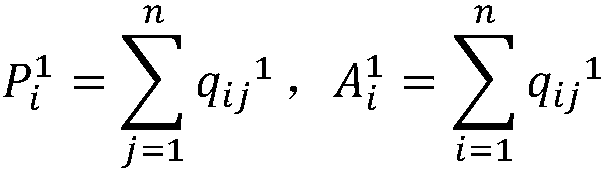
The invention discloses a traffic distribution prediction method according to a gravity model and a Fratar model. The method comprises the following steps of firstly acquiring generation attraction traffic of each cell and a current OD distribution; secondly, calibrating a nonrestraint gravity model parameter and predicting the generation attraction traffic of each cell in future years; calculating the OD distributions of future years through the calibrated nonrestraint gravity model; operating the Fratar model once for obtaining new predicted OD distributions of future years; and performing convergence determination on an operation result and a previous circulation result, and obtaining the OD distribution which satisfies a convergence determining condition, namely a final prediction result for the OD distribution of each cell in future years. The traffic distribution prediction method has advantages of combining advantages of the gravity model and the Frastar model, sufficiently utilizing the current outgoing distribution information, considering effects of road network change and land utilization to outgoing of the people, and improving prediction result accuracy and applicability of the prediction model.
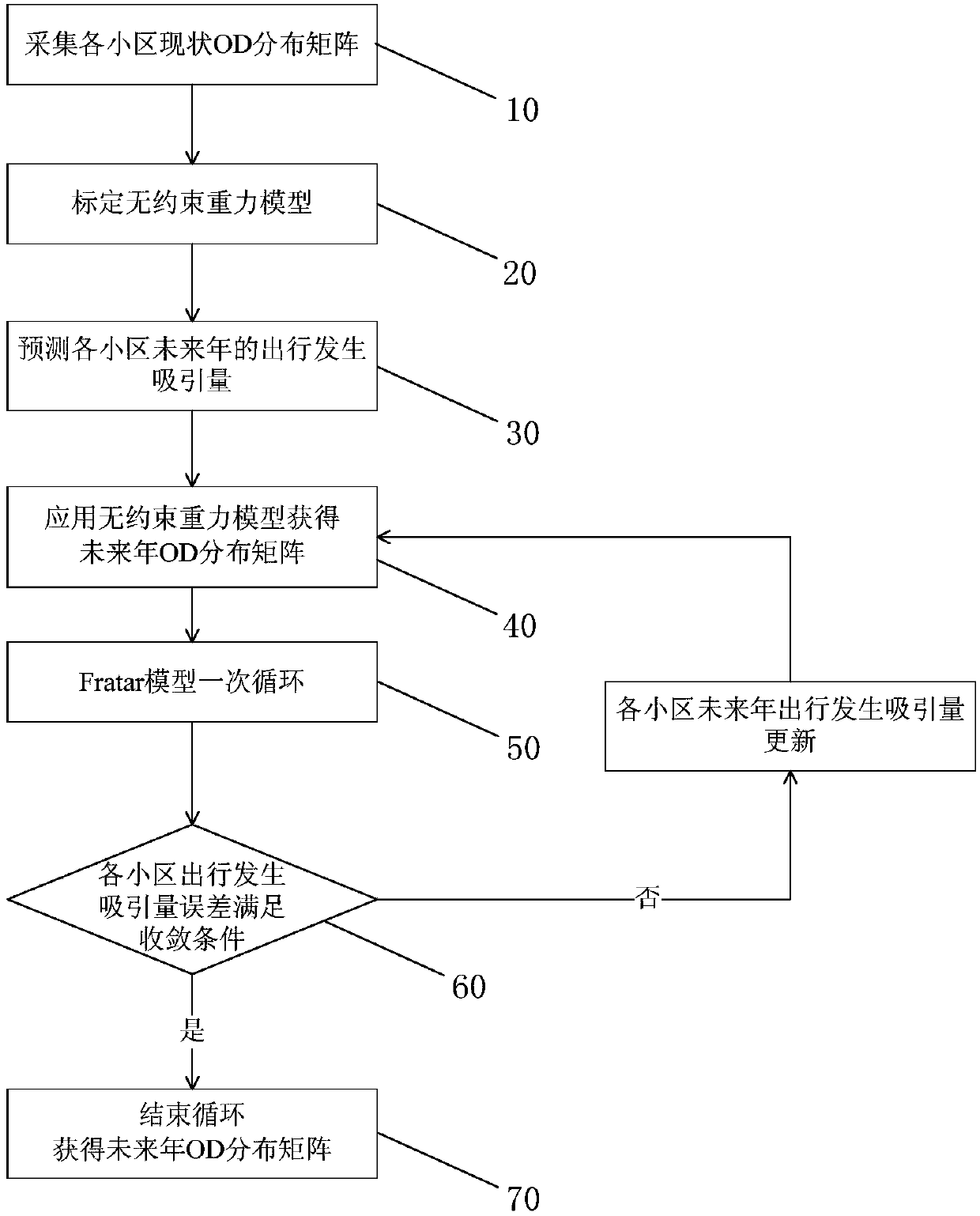

Owner:SOUTHEAST UNIV
A travel characteristics analysis system
The present invention relates to a travel characteristics analysis system, belonging to the field of traffic planning, the system comprises: a travel distribution characteristics module, used to obtain the travel volume, departure volume and arrival volume of various travel modes in the target area; a travel statistics characteristics module, used to obtain the average travel distance, average travel duration, travel time, peak travel ratio and travel ratio of various travel modes in the target area; a data statistics analysis module is used to display the data obtained by the travel distribution characteristics module, travel statistics characteristics module, job-residence characteristics statistics module and job-residence balance analysis module in the target area within a custom time period. The present invention can more comprehensively obtain and display various travel status data.

Owner:CHINA ACAD OF URBAN PLANNING & DESIGN
Rush hour bus route station jumping running method based on passenger trip distribution
InactiveCN103198645BMitigate the impact of runningThe implementation effect is goodRoad vehicles traffic controlTransport systemTrip distribution
The invention discloses a bus stop OD acquisition method based on a city intelligent transport system, and a bus station card swiping OD array is obtained through reasonable processing and right matching of bus running and passenger IC card swiping data which are provided by the city intelligent transport system. On the basis of card swiping numbers of city IC cards and running revenue of the bus transport system, sample expansion is performed according to the ratio of the card swiping numbers of the city IC cards and the running revenue of the bus transport system, and the OD array is finally obtained. According to the method, the effects the conditions that passengers swipe the cards for many times and changes routes and the like have on a station OD are fully considered, and data of an IC card swiping trip in one time can be well processed. The method is favorable for calculating, strong in practicability, capable of achieving real-time transformation, automation and rapidness of obtaining of the station OD by utilization of computer programs, and providing data supporting for optimization and planning of a city bus route net, and establishment of a bus vehicle scheduling scheme, and greatly significant for improvement of current situations of city buses.


Owner:SOUTHEAST UNIV
Resident travel rule assessment method, device and equipment and storage medium
The invention discloses a resident trip rule assessment method, device and equipment and a storage medium, and the method comprises the steps: obtaining trip data sets of a plurality of individuals in a to-be-analyzed region, and dividing the trip data set of each individual into a commuting trip data set and a non-commuting trip data set; extracting a first feature representation representing the distribution rule of the commuting trip in the time dimension from the commuting trip data set, and extracting a second feature representation representing the distribution rule of the non-commuting trip in the time dimension and the space dimension from the non-commuting trip data set; and clustering all the individuals by taking the first feature representation as a commuting feature value of each individual to obtain a commuting travel distribution rule of all the individuals, and clustering all the individuals by taking the second feature representation as a non-commuting feature value of each individual to obtain a non-commuting travel distribution rule of all the individuals. According to the invention, regular quantification can be carried out on individual trips from commuting trips and non-commuting trips, and the accuracy is higher.

Owner:SHENZHEN INST OF ADVANCED TECH CHINESE ACAD OF SCI
Collaborative optimization method and device for time table and time period ticket price of urban rail transit
The invention provides an urban rail transit timetable and time period ticket price collaborative optimization method and device. The method comprises the following steps: constructing an initial scheme based on an operation constraint condition; inputting a simulation module of the collaborative optimization model, and determining passenger travel distribution; the carbon emission is distributed and input into a carbon emission calculation module, and the carbon emission is determined; inputting the distribution and the carbon emission into a carbon emission reduction calculation module to determine the carbon emission reduction; inputting the distribution and the carbon emission reduction into an optimization model, and obtaining an optimized scheme based on business constraint conditions and a heuristic algorithm; and inputting the optimization module into the simulation module again, carrying out iteration according to the sequence of the optimization module, the simulation module, the carbon emission calculation module and the carbon emission reduction calculation module, and determining a scheme which has the highest carbon emission reduction and meets the business constraint condition after iteration for a preset number of times as a target optimization result. Therefore, through the constructed collaborative optimization model, the time table and the time period ticket price can be collaboratively optimized according to the passenger travel distribution output by simulation, so that the carbon emission reduction benefit is maximized.

Owner:BEIJING URBAN RAIL TRANSIT CONSULTING CO LTD
Comprehensive traffic system dominant travel distance calibration method
PendingCN114462310AImprove accuracyIncrease credibilityInternal combustion piston enginesForecastingTravel modeSimulation
The invention discloses a comprehensive traffic system dominant travel distance calibration method, which comprises the following steps of: collecting travel selection data and travel distribution data among cities in a region range needing to be calibrated, and counting travel proportions of various travel modes for each linear distance; a macroscopic traffic simulation platform is established based on macroscopic traffic simulation software to fit and form a dominant travel distance function, on this basis, OD traffic distribution of different travel modes is carried out, the precision of a distribution result is continuously optimized, and finally parameter calibration results of different travel modes among cities in the dominant travel distance function are obtained. The method takes actual data as support, considers dominant travel distances of various travel modes among cities, is clear in thought in the whole process, has very high practicability and operability, provides a reasonable basis for formulating a construction plan adapting to urban traffic development requirements, makes up for the defects of a common traffic mode division method, promotes optimal configuration of resources, and has a good application prospect. And good economic benefit development of the urban traffic network is realized.


Owner:SOUTHEAST UNIV
Method for destination selection of non-commuting activities of urban residents based on data fusion
The application discloses a city resident non-commuting activity destination selection method based on data fusion, comprising the following steps: based on mobile signaling data with activity destination labels, resident travel survey data, city POI data and city 500m*500m grid data, extracting activity attribute features and built environment features required for city resident non-commuting activity destination selection probability prediction; using multiple mathematical models to model city resident non-commuting activity destination selection probability prediction, and extracting an optimal model; putting the trained city resident non-commuting activity destination selection probability model into a non-commuting activity destination selection algorithm considering activity time constraints, and realizing non-commuting activity destination selection; the method provided by the application can not only make up for the limitation of time scale and coverage range in previous research, but also can more effectively control the future travel distribution structure of city residents, so as to provide more reliable city planning decision basis.

Owner:TONGJI UNIV
A method for clustering shared bicycle stations
InactiveCN109543752AEfficient clusteringCharacter and pattern recognitionMarketingTrip distributionReturn ratio
The invention discloses a method for clustering shared bicycle stations, which comprises the following steps: (1) constructing a station travel distribution curve, setting a period of time as a time window, and dividing a day time of a station into a plurality of time periods; 2, dividing that time window according to the trip distribution curve, and simultaneously judging the change trend of thedebit-return ratio in the time window of the next time period; if the change trend is judged to be ascending, the ascending ratio is determined and quantified; if the change trend is judged to be descending, the descending ratio is determined and quantified; 3, determining a character string according to the quantized ascending proportion and descending proportion obtained in the step 2; Step 4, classifying and clustering the sites according to the determined strings. The shared bicycle station clustering method of the invention can effectively realize the cluster operation of the shared bicycle station by using the time division mode through the settings of the steps 1 to 4.

Owner:WENZHOU POLYTECHNIC