
Kitchen waste destructive compound microbial bactericide, its preparation method and application thereof
A technology of composite bacterial agent and kitchen waste, which is applied in the field of microorganisms, can solve the problems of unsatisfactory treatment effect, reduced decomposition ability, and easy generation of odor, so as to achieve great practical and promotional value, reduce treatment cost, and eliminate foul smell Effect
- Summary
- Abstract
- Description
- Claims
- Application Information
AI Technical Summary
Problems solved by technology
Method used
Image

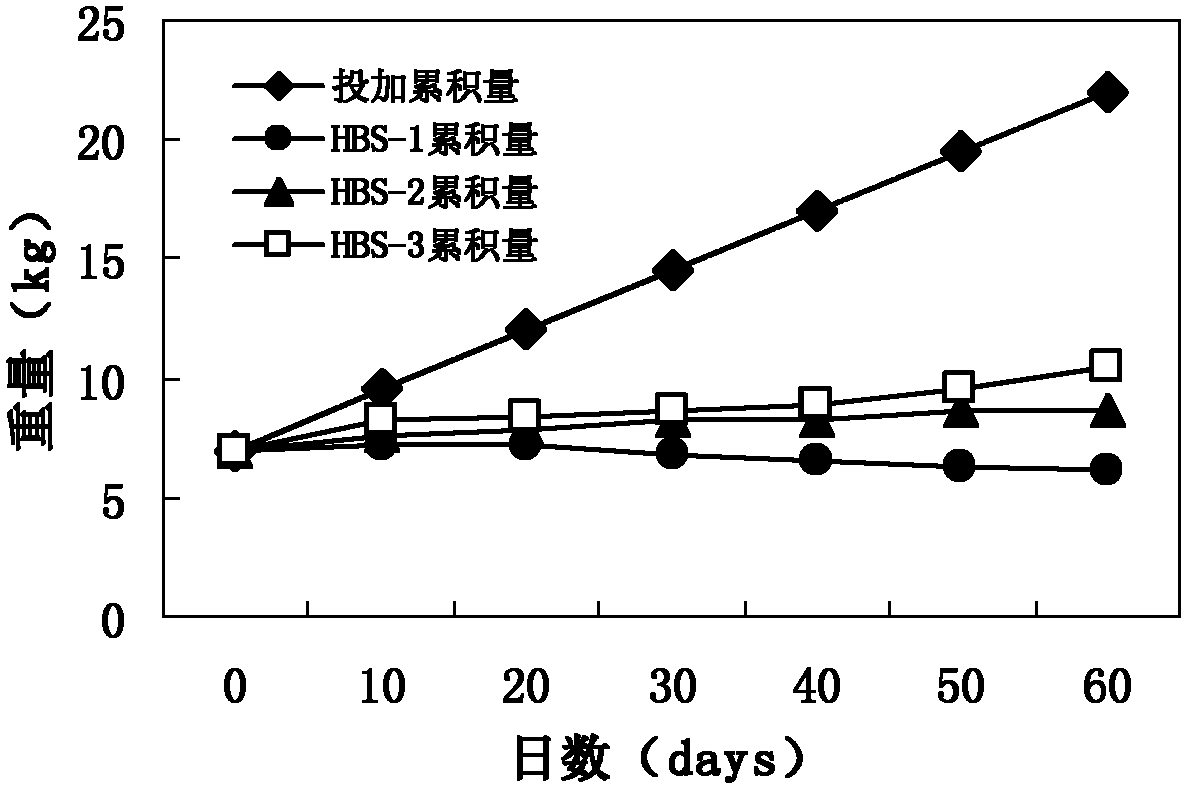

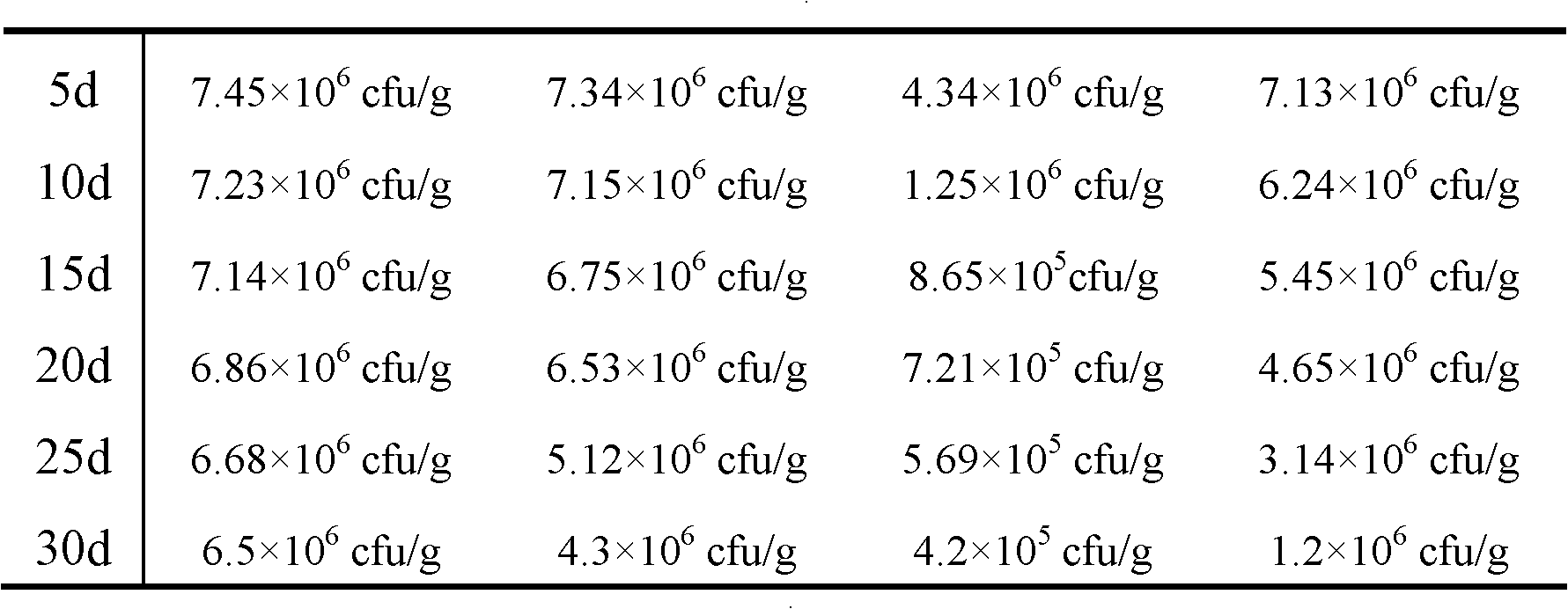
Examples
Embodiment 1
[0032] Both the lactic acid bacteria and the yeast are separated from food residues. The invention discloses a Pediococcus acidilactici with a preservation name of HBS-RS and a preservation number of CGMCC No.5959. The invention also discloses a Pichia pastoris, the preserved name is HBS-Hab, and the preserved number is CGMCC No.5960. Preservation Unit: General Microbiology Center of China Microbiological Culture Collection Management Committee, Preservation Address: No. 3, Yard No. 1, Beichen West Road, Chaoyang District, Beijing, Institute of Microbiology, Chinese Academy of Sciences; Preservation Date: April 9, 2012.
Embodiment 2
[0033] Example 2 Kitchen waste reduction type microbial composite bacterial agent
[0034] 1) Slant culture: inoculate the yeast and lactic acid bacteria original strains in Example 1 on the solid medium under aseptic conditions, and cultivate them at 37° C. for 2 days;
[0035] 2) Primary seed cultivation: inoculate the strains cultivated in step 1) into liquid medium under aseptic conditions, and culture them on a shaker at 150 r / min at 42°C for 1 day. When the culture ends, the optical density of the yeast and lactic acid bacteria suspension is OD600 The value reached 4.0;
[0036]3) Secondary seed cultivation: the volume ratio of the liquid medium is 10% inoculum, inoculate the primary seeds into a 1000L fermenter respectively, the total volume of the culture solution in the fermenter is 500L, and yeast and lactic acid bacteria are kept at 42°C Under the conditions, the stirring speed is 150r / min, the aeration volume is 1:1, cultivated for 1 day, and the secondary seeds a...
example 2
[0042] Propagate bacterial classification according to the liquid fermentation method among the example 2.
[0043] Wherein, the medium used by yeast and lactic acid bacteria in steps 1) and 2) is 1.5g of protease peptone, 0.5g of concentrated beef extract, 1g of glucose, 3g of sodium acetate, And sodium citrate (ammoni acitrate) 2g.
[0044] Step 3) The formula of the medium used is by mass percentage: corn flour 1%, soybean flour 1%, peptone 1%, yeast powder 1.5%, K 2 HPO 4 0.5%, MgSO 4 0.005%, Tween 801%, sodium acetate 0.5%, the balance is water, pH6.4.
[0045] The fermentation and cultivation process includes: within the first 12 hours, aerate at intervals, keep fermentation under aerobic conditions, aeration rate 1:1, control fermentation dissolved oxygen 10%, stirring speed 180r / min, stirring interval time 2 hours, stirring 2 minutes, Temperature 41°C; stage of slightly dissolved oxygen and anaerobic culture: after 12 hours, keep the state of slightly dissolved o...
PUM
 Login to View More
 Abstract
Description
Claims
Application Information
 Login to View More