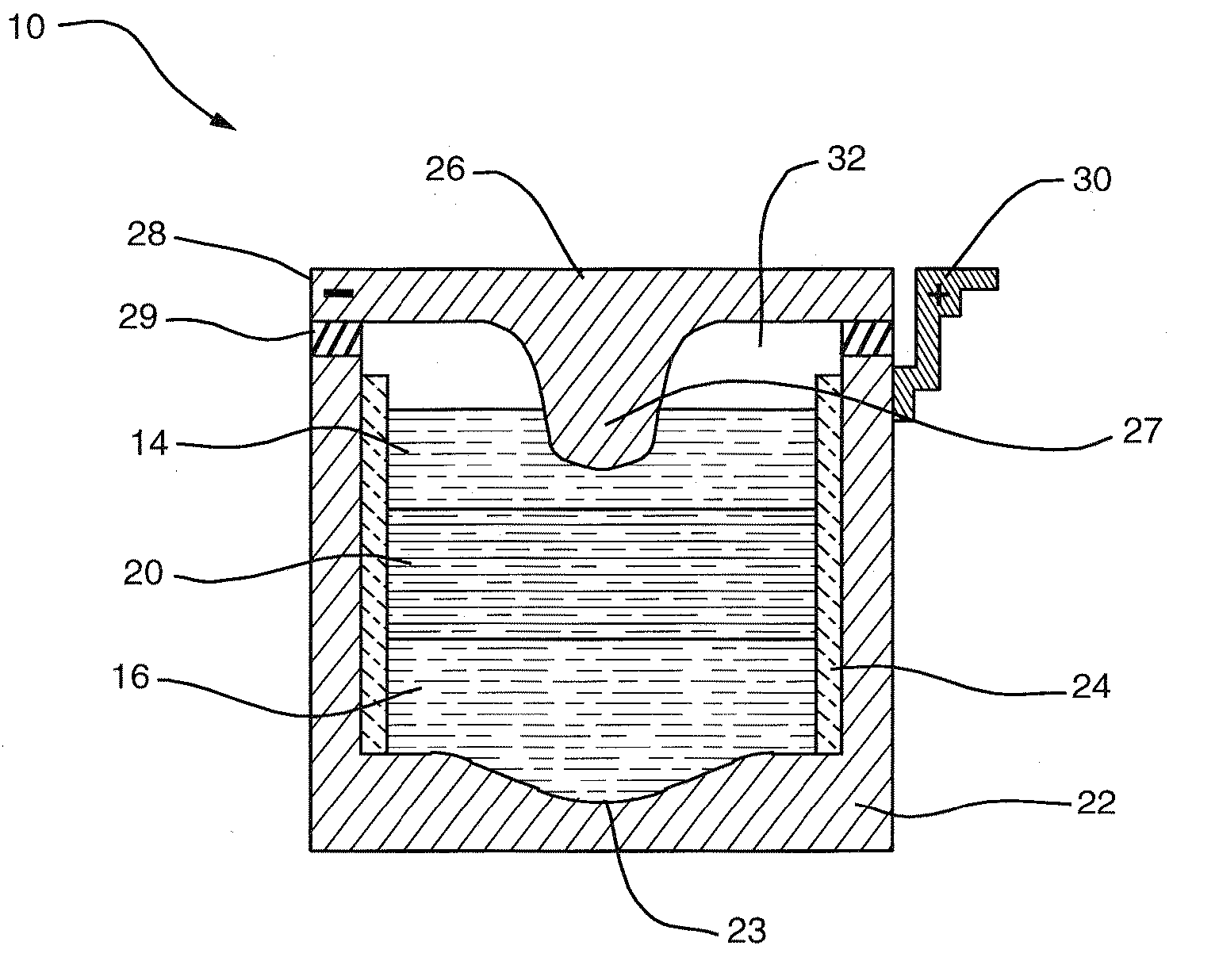
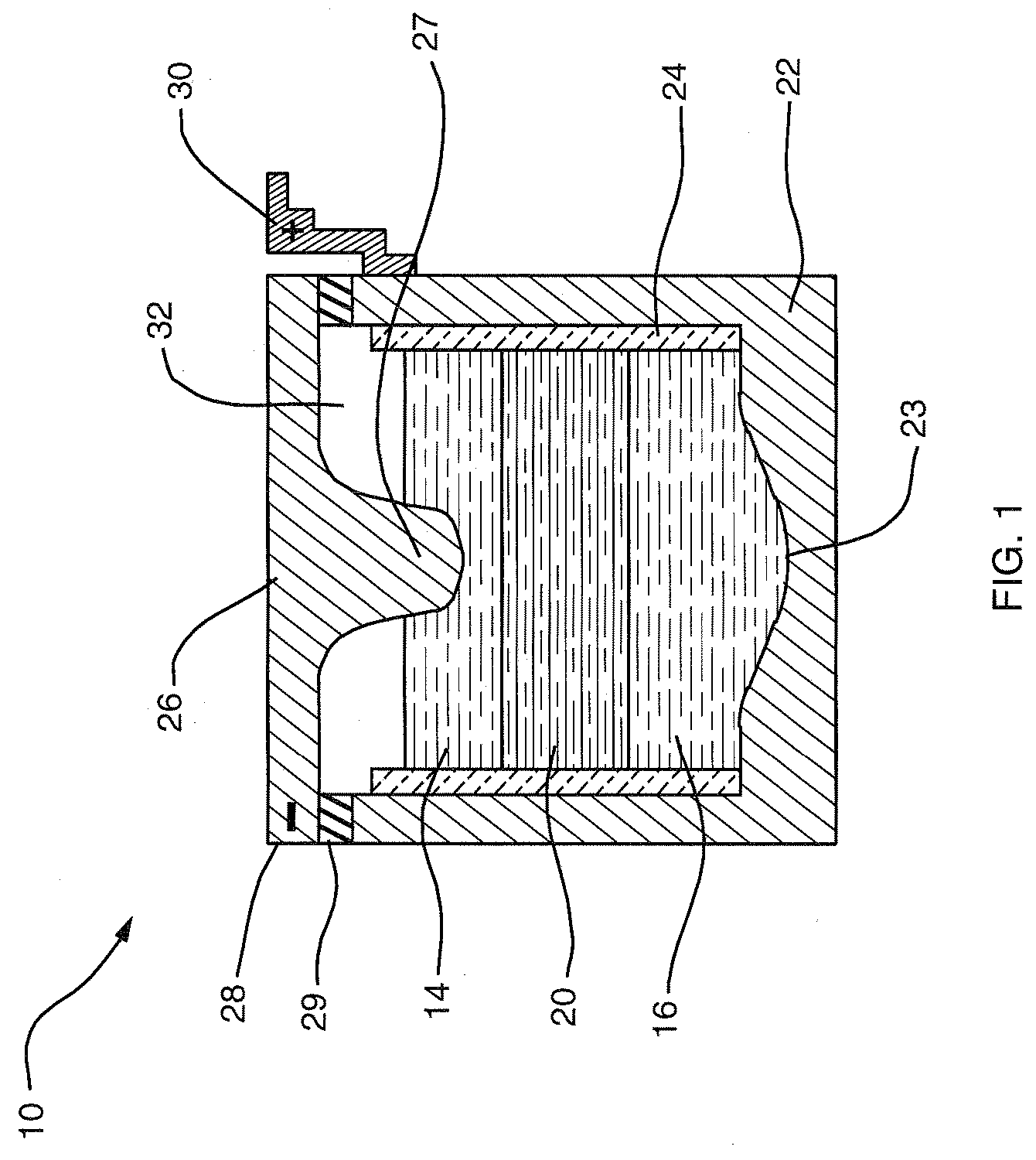
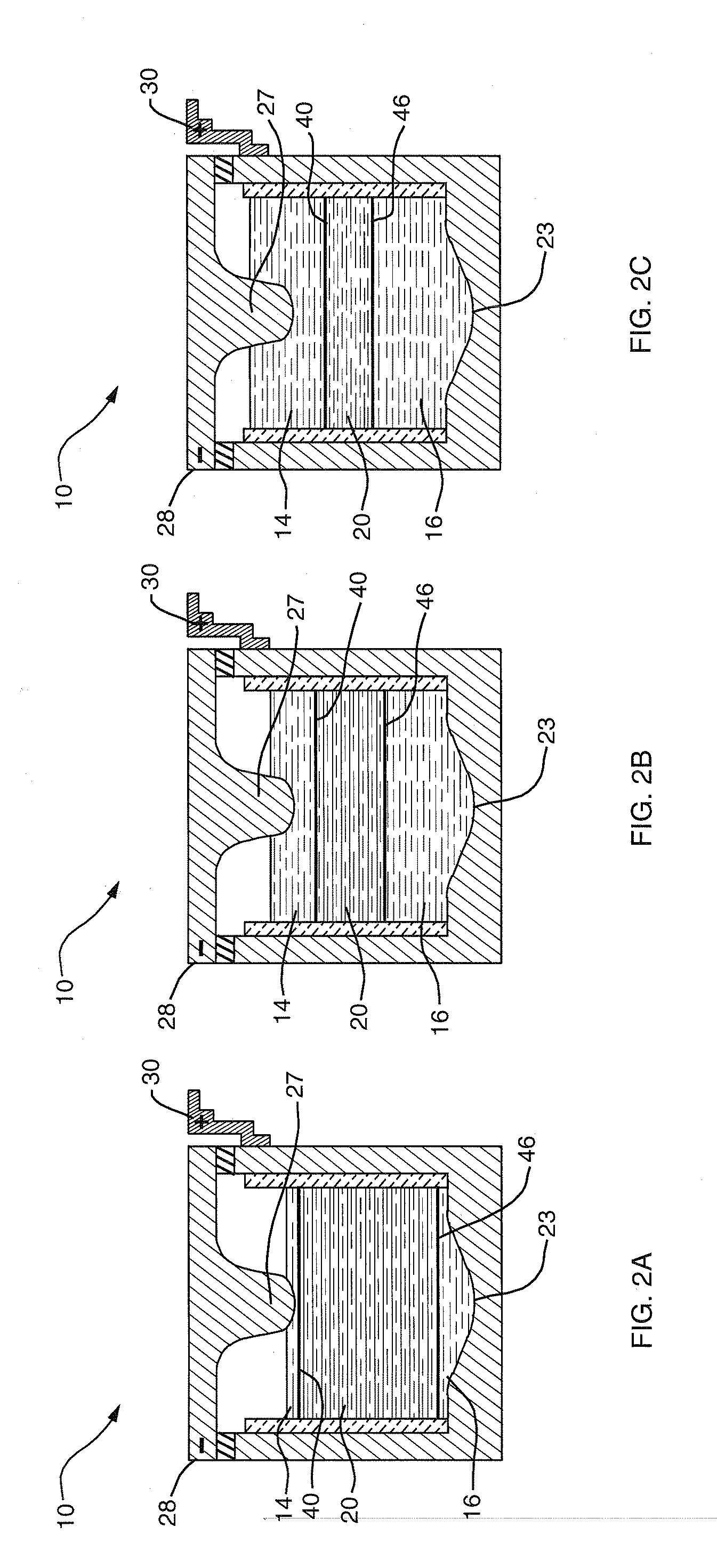
[0012] An aspect of this invention is that liquid-phase materials not heretofore used as components in an
electrochemical cell can be anodically deposited. These anodically deposited liquid materials have
electronic properties capacitating them to serve as an
electrode in a
cell. Namely, a
metalloid—such as
tellurium,
antimony or
bismuth—behaves as a
nonmetal in forming compounds with metals. In the
liquid phase, however, these metalloids behave as liquid metals in that they are electronic conductors. This confluence of properties makes possible the extraction of a liquid-phase electronic conductor from a
molten salt by oxidation as part of ambipolar electrochemical
metal extraction in which
metal is also extracted by reduction at the electrode of opposite polarity.
[0019] The fact that the reactions at both electrodes occur entirely in the
liquid state results in exceptionally
high rate of reactions. When an electrochemical reaction involves species of different states of matter the
kinetics of the reaction are constrained by the
nucleation of products. For example, when a gas is produced there is an
activation energy associated with the generation of gas on a
solid substrate. Remedies include the use of catalysts in order to accelerate the rate of reaction. In stark contrast, the generation of
liquid product from a liquid electrolyte without even the presence of a
solid substrate at the site of reaction occurs at the highest reaction rates known to
electrochemistry. The reaction is unimpeded by the
nucleation of a foreign phase in a different state of matter. Furthermore,
electronic conductivity of the liquid electrodes imparts fast
kinetics to the cells of the invention through two means. In the first place, it enables
electron transfer reactions to occur over the entire liquid element-electrolyte interfaces rather than being limited to triple-phase intersections. Secondly, it eliminates product
diffusion away from the electrode, which is often a rate-limiting step in conventional batteries: when a metal
ion in the melt gains electrons from the molten electrode, it instantly becomes part of the electrode. Furthermore, the
high cell operating temperatures, greater than 500° C., or even greater than 700° C., necessary to
exploit these chemistries facilitate reaction
kinetics and
ion migration. The accumulated contributions of these features are expected to produce current densities on the order of several amperes per
square centimeter, rivaling those of electrochemical aluminum smelters, with efficiencies on the order of 80%.
[0026] The high-amperage
energy storage technology of the invention is able to operate at extreme temperatures, such as
arctic cold and desert heat, without restriction on geographical location and is realizable in a mobile structure. The all-
liquid system is durable, avoiding common failure mechanisms experienced by systems that use a
solid electrolyte or electrodes and / or involve a
phase change. The
power capacity is large and scalable for
adaptation to a variety of large-scale and commercial
power management applications.


 Login to View More
  Login to View More