[0023]Most devices including
satellite low noise amplifiers, pump
laser diodes, and computers generate
excess heat and require cooling. The thermoelectric nano coolers enabled by the present invention represent an innovative approach in cooling with much improved efficiency by using nano-
engineering materials. Compared with conventional vapor-compression refrigerators or gas-based engines, such
solid-state devices are much lighter in weight, much smaller in size, have no
moving parts, are environmentally benign, and are much more efficient in cooling. At NASA Ames Center for
Nanotechnology, this type of thermoelectric nano cooler has been targeted for
satellite low noise amplifier applications. Many more civil, military, and space applications will significantly benefit from these nano coolers. For examples, they can be used to cool
electronics,
optoelectronics, computer chips, instruments and probing systems. They can also be used as
energy recycling units for
recovery of
waste heat from instruments, automobiles, aircrafts, and space shuttles. They can be heat exchangers, compact chillers, and temperature controllers on space stations, exploration vehicles and habitats.
[0024]All thermoelectric coolers are based on the Peltier effect, where an
electric current flowing across
thermocouple junctions produces cooling. A key measure of the efficiency of this cooling
system is called the
coefficient of performance (COP), which is directly related to the materials properties that are evaluated by a dimensionless
figure of merit ZT. The ZT values of the best bulk
thermoelectric materials are low and have remained at a value of about 1 for many decades. The low ZT values severely limit the uses of thermoelectric coolers, in order for thermoelectric coolers to be as efficient as a gas- or vapor-based
system, for example, a kitchen refrigerator, a ZT value larger than 3 is needed. Recent advances in
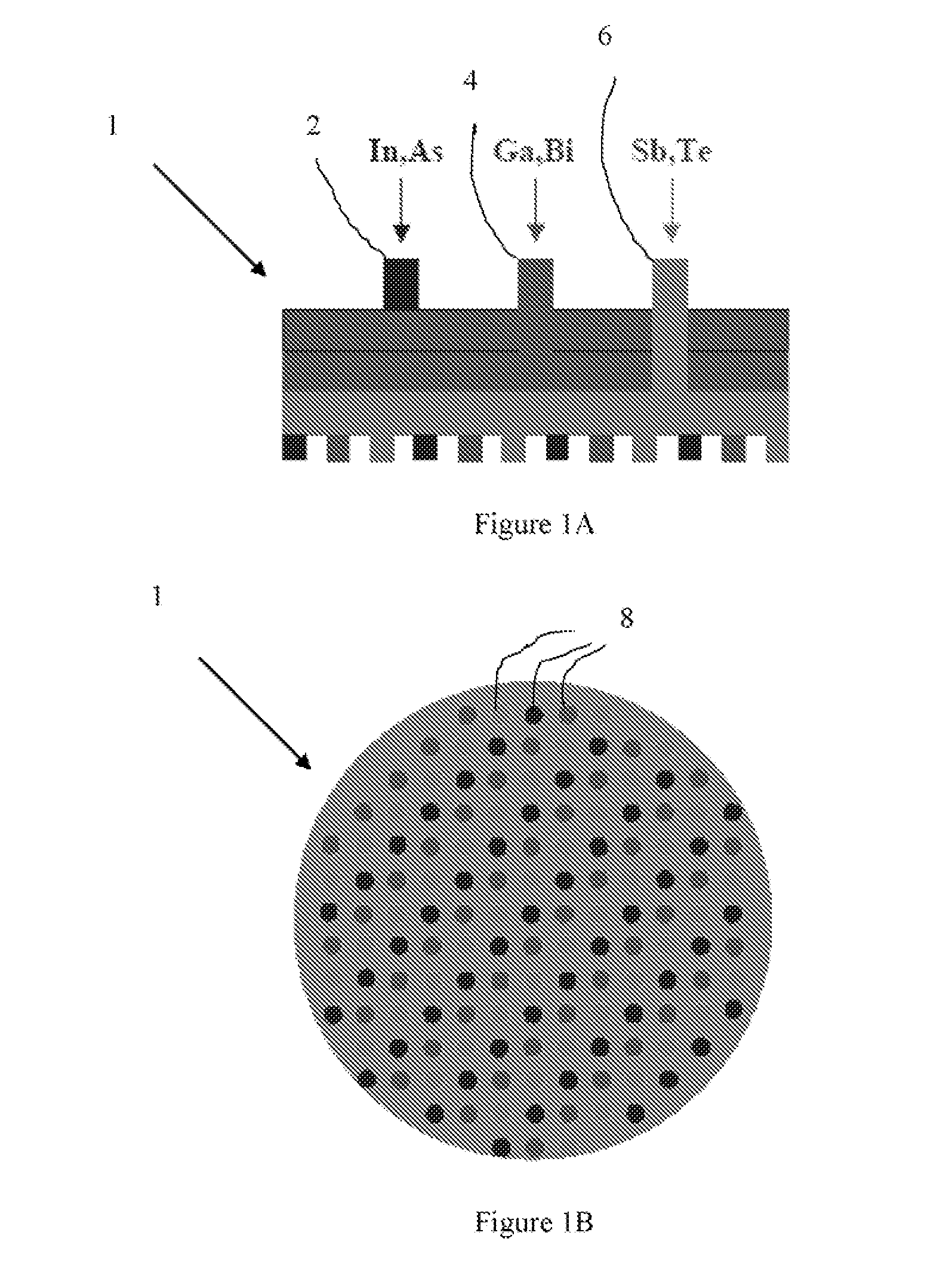
Nanotechnology create new opportunities to increase ZT drastically by designing new nano-structured materials that
exploit the
quantum confinement effect.
Nanotechnology allows us to maximize the Peltier effect by charge confinement in one-dimensional structures and structures with
high surface to volume ratio. These
new materials provide the basis for a new generation of
solid-state
refrigeration with high efficiency and excellent
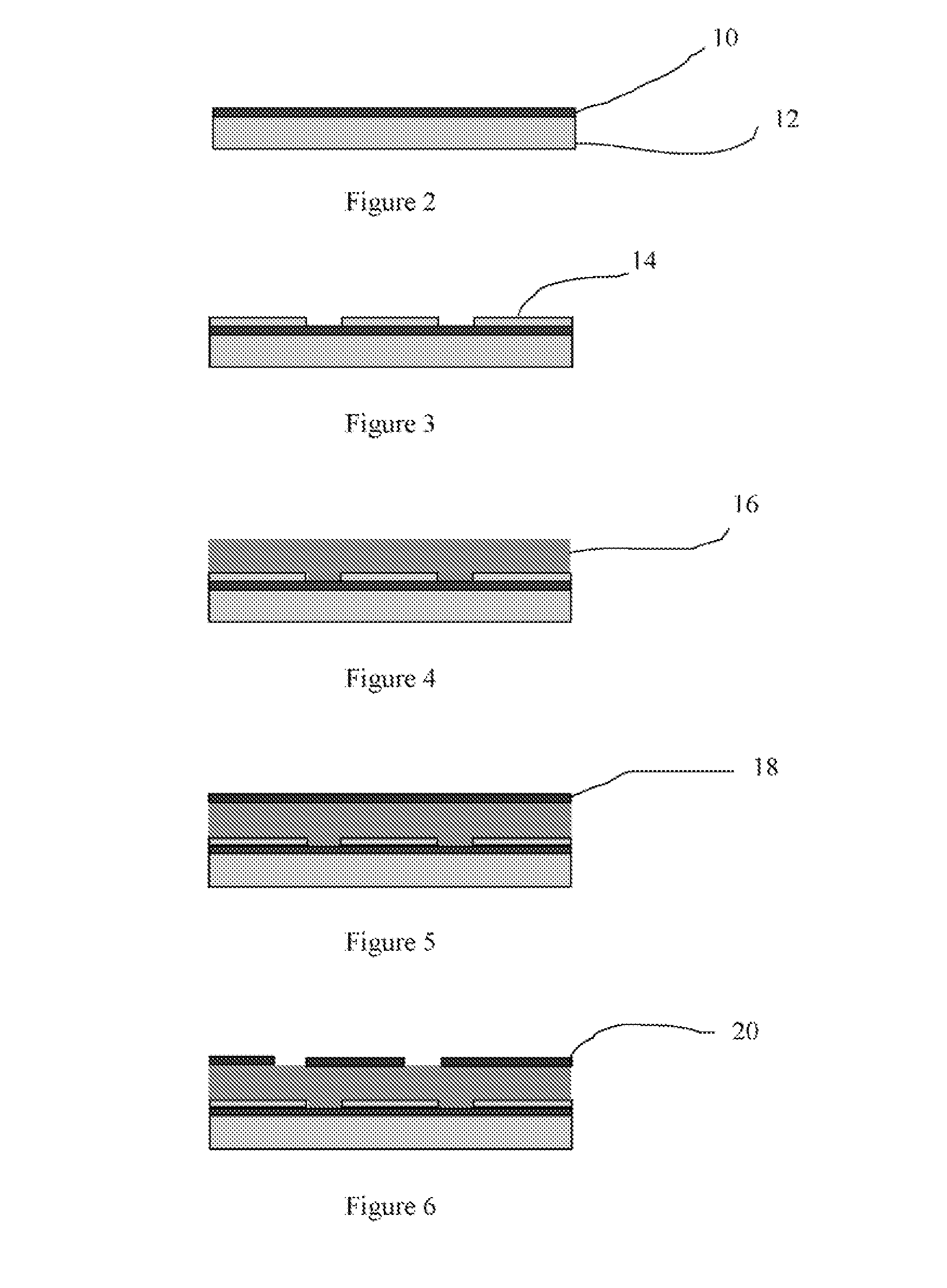
scalability. The present invention addresses the key steps of fabricating nanowire-based thermoelectric coolers with a much improved
figure of merit.
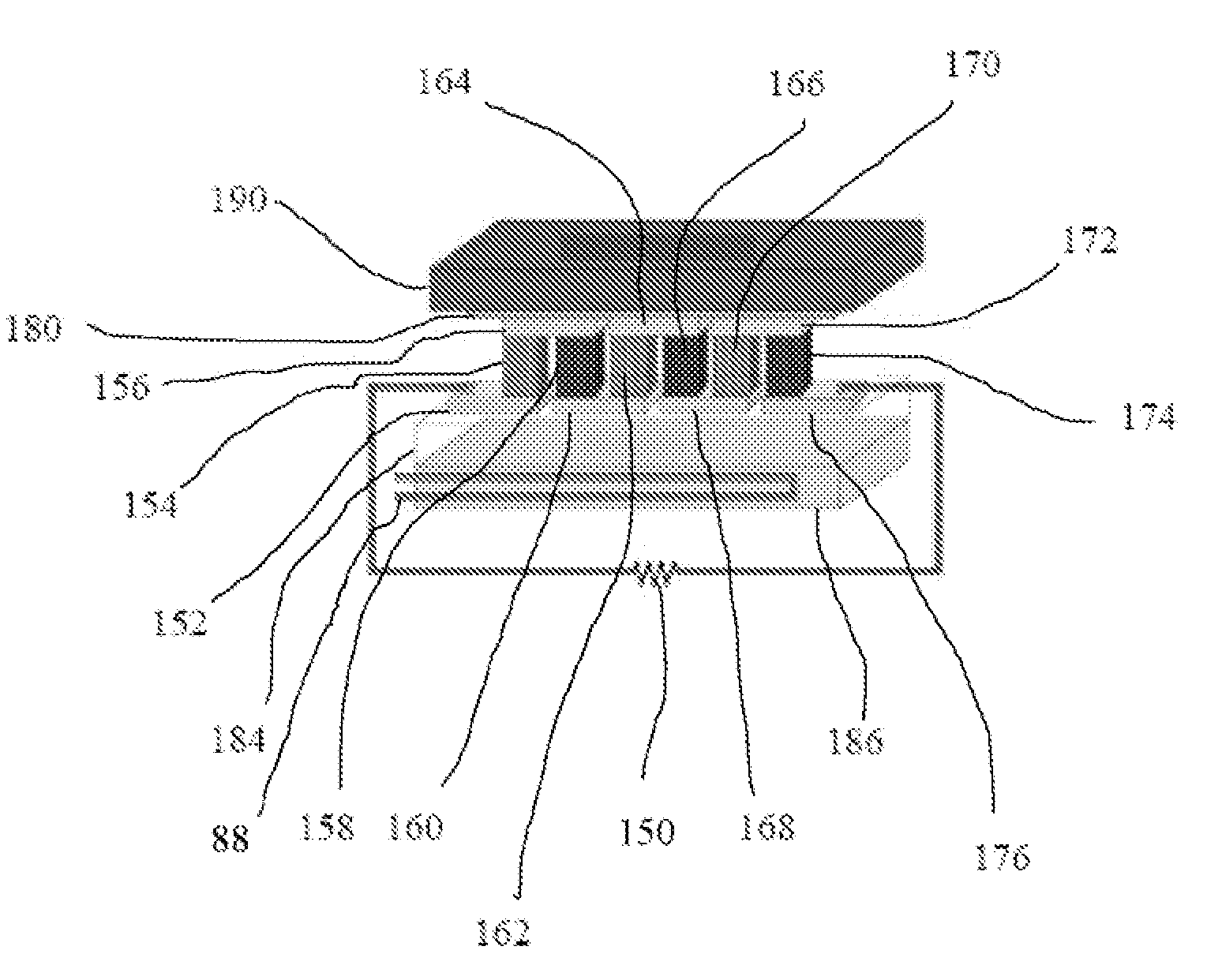
[0026]The 1 cm by 1 cm cooler engines can be coated with thin film
dielectric passivation layers on surfaces (e.g., PECVD
silicon nitride) and then deposited with a thin film
metal layer (e.g., gold) for
wire bonding. An array of such cooler engines can be aligned on
satellite low noise amplifier module pads for packaging and testing. This process can be achieved by conventional
semiconductor packaging techniques. The packaging materials and processes are selected based on optimizing the interface resistances (both thermal and electrical) and the process temperature limits in order to achieve high reliability and high thermal
management efficiency.
[0027]The
impact of this nano cooler on NASA's future space missions and to the nation's economy will be significant. Thermal management of
spacecraft and space
station environments is an important issue for both crewed and un-crewed Exploration missions. These new thermoelectric coolers will be much lighter than the current ones. Compared with the current liquid cooling systems, these new coolers are expected to be at least 30% lighter. Because these new nano coolers are much more efficient than the existing ones, significant power reduction is possible. This reducing
power consumption can be taken
advantage of either to reduce the size and weight of power sources, or to improve the
system performance by employing the low
noise amplifiers at both RF front-end transmit and receive channels.
[0028]Current methods for transporting heat away from
spacecraft components and bringing heat to other systems often employ liquid-based heat exchange systems or radiator, pump, motor and
motor drive,
heat sink or
cold plate, fins,
heat pipe or conductive tubing, and fluid for liquid cooling. Such systems not only add weight to the
spacecraft, affecting maximum
payload, but also
impact mission lifetime because their complex structures are prone to component malfunction. Thermoelectric nano coolers of the present invention involve no
moving parts and can be packed in much more reliable ways than the current cooling systems. With improved efficiency such
solid-state devices will be well suited for NASA's future Human and Robotic missions. These innovative new cooling devices are also useful for a wide range of applications in both civil and military platforms.


 Login to View More