[0009]The next step is that the
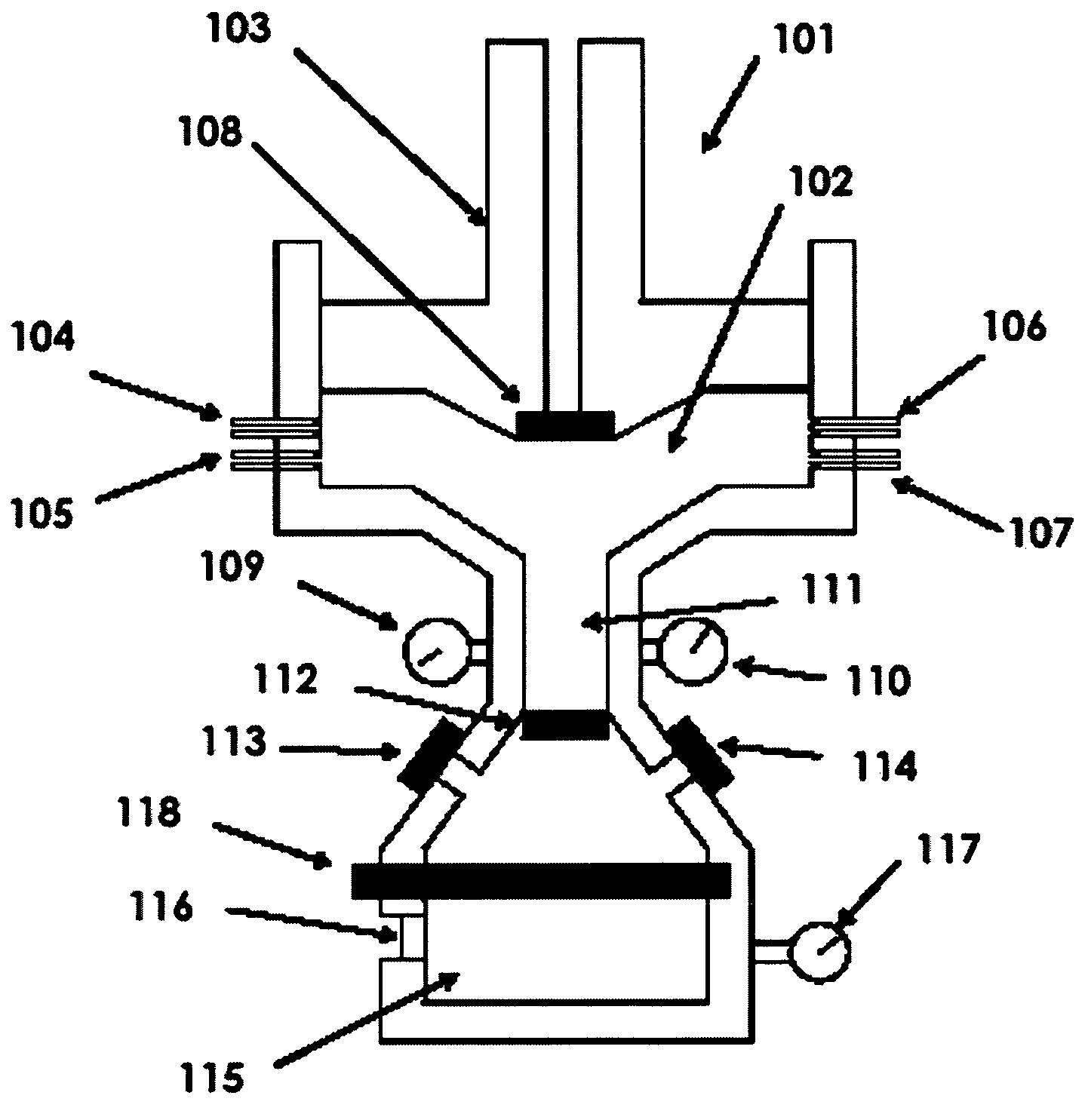
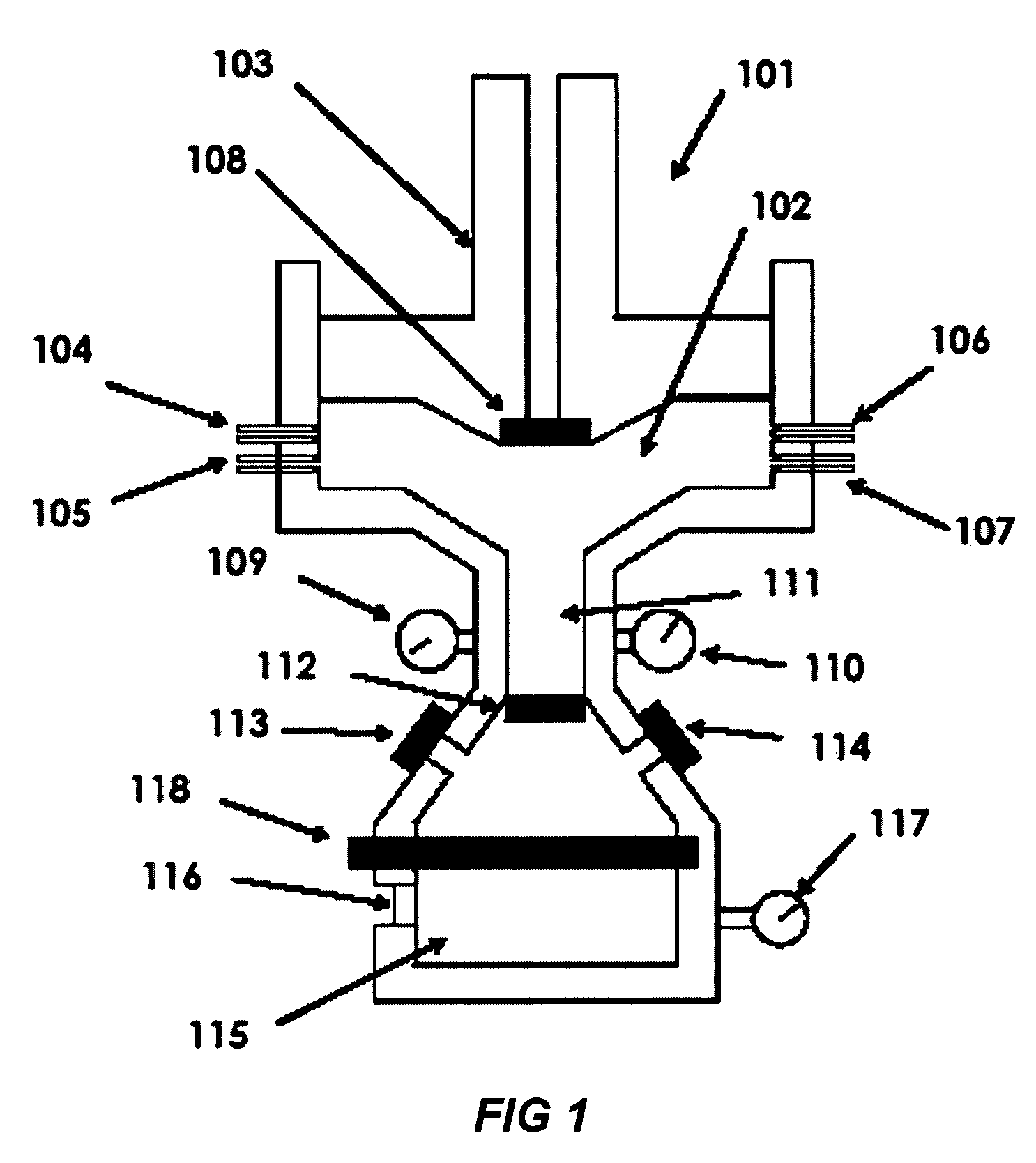
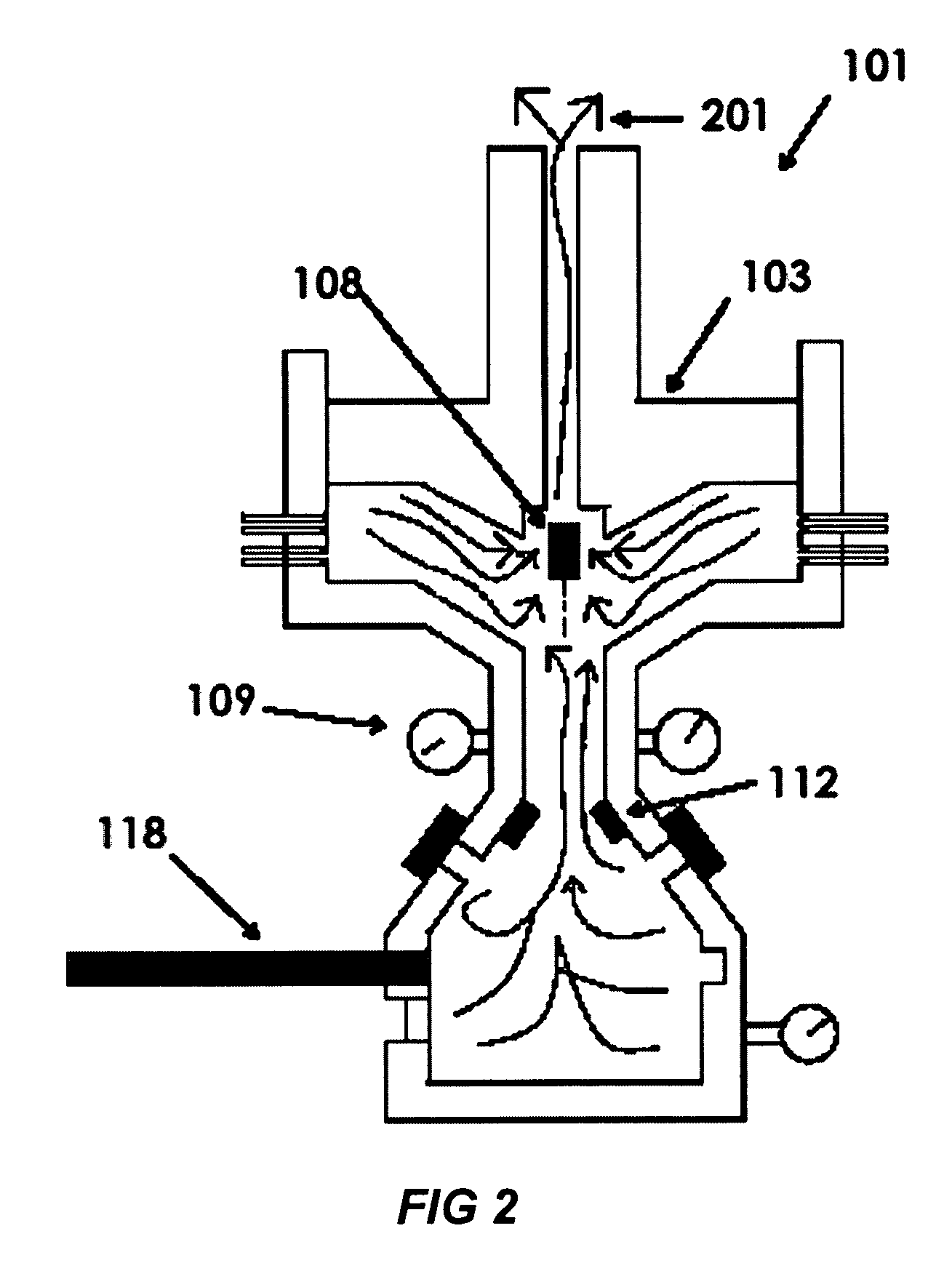
small particles are transported into another isolated chamber by a reciprocating
piston motion. By applying appropriate pressure caused by the downward
piston motion and temperature to the chamber, the solution particles with calcium
ion collide with those with
phosphate ion, which induces
chemical reaction between calcium and phosphate ions in combination with water molecules to formulate various calcium phosphate precipitates, such as hydroxyapatite (HAP),
tricalcium phosphate (TCP),
octacalcium phosphate (OCP), and
dicalcium phosphate dihydrate (DCDP). One of the equilibrium chemical reactions is expressed as:Ca3(PO4)2 (
solid)3Ca2+ (aq)+2(PO4)3− (aq) (2) equilibrium shift to left in presence of excessive
phosphate ion.The phosphorous contents of the minerals are very similar, and therefore accurate chemical analysis is required to distinguish between these minerals from changes in the
solution composition during
crystal growth. At high supersaturations, it is difficult to precipitate HAP alone because of the spontaneous formation of precursor phases, such as amorphous DCDP, TCP and OCP. At lower supersaturations, it has been found possible to nucleate HAP in pH conditions where the solutions are slightly under-saturated with respect to amorphous TCP and OCP. The shape
growth curve can provide the
process information of the percentage crystalline HAP growth on the seeds through progressive amorphous and precursor phases such as TCP, OCP and DCDP. More significantly, the ratio of crystalline to amorphous structures is closely related, not only to mechanical properties, but also to osteoconductive and osteoinductive activities during the fusion process with natural bone. The precipitates of calcium
phosphate minerals in both amorphous and crystalline structures move to a final chamber and are finally deposited on the
substrate surface, preferably,
calcium carbonate. They are accumulated in thickness with the formation of porous structures. The pore size is determined by the solution particle size during the spraying process. More significantly, the production device presented here enables control of various ratios of amorphous to crystalline structures in calcium
phosphate minerals by adjusting pressure, temperature, a solution particle size, concentration of chemicals and amount of
solvent (
distilled water), i.e., pH, based on the shape
growth curve.
[0010]For the
simulation of mechanical properties of
protein, which provides elastic property and strength of natural bone, biocompatible
polymer fibers, preferably, PEEK (polyetheretherketone), are added to reinforce calcium
phosphate minerals during the calcium phosphate
mineral deposition.
Biocompatible polymers, such as PEEK, have excellent flexural,
impact and tensile characteristics. Especially, PEEK is insoluble in all common solvents and, being crystalline, is extremely resistant to
attack by a very wide range of organic and inorganic chemicals. It has excellent
hydrolysis resistance in boiling water (
autoclave sterilization) and good
radiation resistance (
irradiation sterilization).
[0012]The slip lines as weak interfaces can represent a degree of
toughness and
viscoelasticity to bone substitute material. This is an
advantage using composite laminar structure. To further increase the
compressive strength and rigidity of the bone substitute, thinner
calcium carbonate mineral
layers, compared to calcium phosphate mineral
layers, can be deposited to simulate the natural
bone cement slip lines. Also, in order to improve osteoinductive activities, blood vessels which nourish the tissue in natural bone (i.e., Haversian canals and Volkmann's canals) are simulated by introducing mechanical through-hole device that allows incorporation of a finite number of through holes perpendicular or parallel to laminated directions depending on the application. These features in combination with
bone morphogenetic protein (BMP) can significantly increase an osteoinductive activity. Furthermore,
extracellular matrix scaffolds (ECM) can be added in combination with the polymer fibers or into transition
layers (
calcium carbonate layers) between the laminated calcium phosphate mineral layers. Various ECM proteins including collagen,
laminin,
fibronectin, and glycodaminiglcans, can be added for excellent biological scaffolds. These proteins have the advantages of supporting the migration and differentiation of osteoblastic
progenitor cells, facilitate the binding of growth factors responsible for osteogenesis, and resorbing within a reasonably short period time. At the
cellular level, ECM molecules exhibit a variety of activities, including acting as a substrate for
cell migration, an
adhesive for
cell anchorage, a ligand for ions, growth factors, and other bioactive agents. ECM molecules are ideal to form layers or substrates for
cell delivery to provide high local concentrations of osteoinductive biomolecules.



 Login to View More