Catalyst used for coupling reaction of carbon dioxide and epoxy compound

A technology of epoxy compounds and carbon dioxide, which is applied in the direction of organic compound/hydride/coordination complex catalysts, physical/chemical process catalysts, catalyst activation/preparation, etc., can solve the difficulty of separating products from catalysts, high catalytic costs, and technical problems. Complicated and other issues, to achieve the effect of no heavy metal pollution, simple preparation steps, and low cost

A technology of epoxy compounds and carbon dioxide, which is applied in the direction of organic compound/hydride/coordination complex catalysts, physical/chemical process catalysts, catalyst activation/preparation, etc., can solve the difficulty of separating products from catalysts, high catalytic costs, and technical problems. Complicated and other issues, to achieve the effect of no heavy metal pollution, simple preparation steps, and low cost

CN101972674AActive Publication Date: 2011-02-16HEBEI UNIV OF TECH

Image

Smart Image Click on the blue labels to locate them in the text.
Viewing Examples
Smart Image
  • Catalyst used for coupling reaction of carbon dioxide and epoxy compound
  • Catalyst used for coupling reaction of carbon dioxide and epoxy compound
  • Catalyst used for coupling reaction of carbon dioxide and epoxy compound

Examples

Experimental program
Comparison scheme
Effect test

Embodiment 1

[0033] Embodiment 1: (ligand II 1 synthesis)

[0034] Take a 50mL three-necked flask, pump it three times under an argon atmosphere, and add 0.018mol 3-tert-butyl-5-(methylene-chloro(nitromethylimidazole)) salicylaldehyde (III 1 ), 30ml of ethanol was dissolved, 0.009mol cyclohexanediamine was added to the system, reacted at reflux temperature for 12 hours, stopped the reaction, cooled to room temperature, concentrated under a vacuum of 0.1MPa until the quality of the crude product was constant, and the concentrate was added with 15mL of ethyl acetate A light yellow precipitate appears, filter, collect the filter cake, and drain the filter cake under a vacuum of 0.1MPa to obtain Ligand II 1 , yield 82%.

Embodiment 2

[0035] Embodiment 2: (II 2 )

[0036] With 3-tert-butyl-5-(methylene-chloride (tri-n-butylamine)) salicylaldehyde (III 2) (0.018mol) instead of 3-tert-butyl-5-(methylene-chlorination (nitromethylimidazole)) salicylaldehyde (III 1 ), other operations are with embodiment 1, get II 2 , yield 73%.

Embodiment 3

[0037] Embodiment 3: (II 3 )

[0038] With 3-tert-butyl-5-(methylene-N-imidazole) salicylaldehyde (III 3 ) (0.018mol) instead of 3-tert-butyl-5-(methylene-chlorination (nitromethylimidazole)) salicylaldehyde (III 1 ), other operations are with embodiment 1, get II 3 , yield 80%.

the structure of the environmentally friendly knitted fabric provided by the present invention; figure 2 Flow chart of the yarn wrapping machine for environmentally friendly knitted fabrics and storage devices; image 3 Is the parameter map of the yarn covering machine
Login to View More

PUM

No PUM Login to View More

Abstract

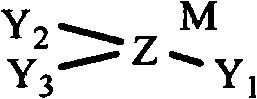
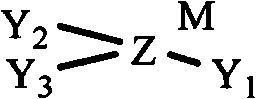
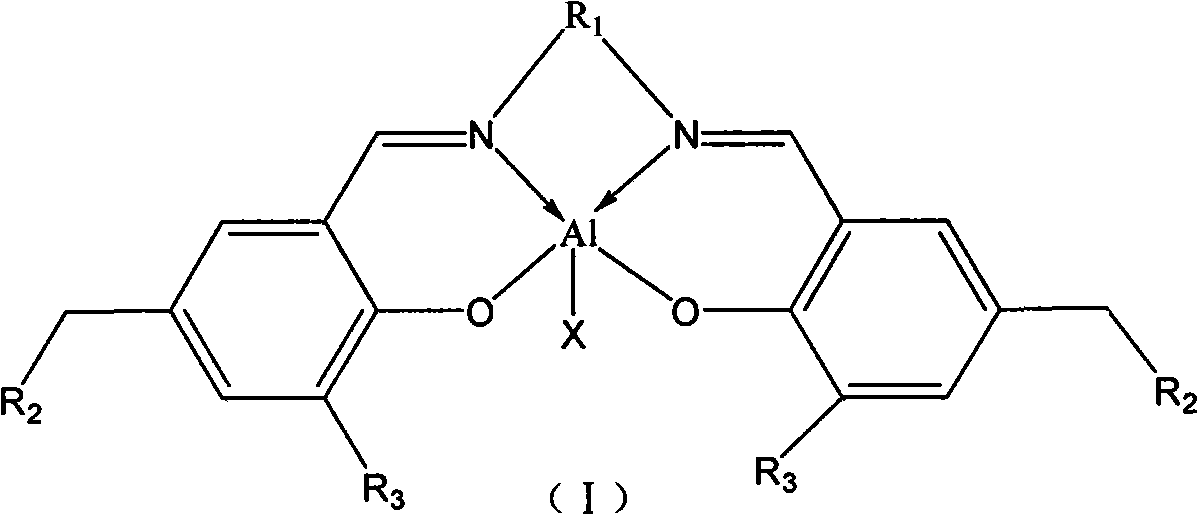
The invention relates to a catalyst used for coupling reaction of carbon dioxide and an epoxy compound. The catalyst is a Salen-metal complex (I) which has a structural formula shown in the specifications, wherein R1 is 1,2-disubstituted diamine; when R2 is a substituent group with a formula shown in the specifications or nitrogen substituted heterocyclic compound, R3 is tertiary butyl, hydrogen, alkyl or alkoxy; or when R2 is the tertiary butyl, hydrogen, alkyl or alkoxy, R3 is the substituent group with the formula shown in the specifications or nitrogen substituted heterocyclic compound; M is chlorine or bromine, Z is nitrogen or phosphorus, and Y1, Y2 and Y3 are alkane with 1 to 16 carbon atoms respectively; and X is nitrate, boron tetrafluoride, trichloroacetic acid, azide or 2,4-dinitrophenol. For the Salen-metal complex, preparation steps are simple and convenient to operate, cost is low and heavy metal pollution is avoided; 1 mol of catalyst catalyzes 3750mol of cyclic carbonate ester; a cocatalyst and a solvent are not needed; and the cyclic carbonate ester content of a product is over 99 percent.

Description

Technical field: [0001] The invention relates to the reaction of carbon dioxide and epoxy compounds, in particular to a catalyst for the coupling reaction of carbon dioxide and epoxy compounds. Background technique: [0002] carbon dioxide (CO 2 ) is the main gas that causes the "greenhouse effect", but it is also one of the carbon resources with the largest reserves on the earth. Its reserves on the earth are more than the sum of natural gas, oil and coal. In view of the harm of carbon dioxide gas to the environment, human beings have been exploring ways to use carbon dioxide scientifically. [0003] Cyclic carbonate is a high boiling point advanced organic solvent with excellent performance, widely used in organic synthesis, gas separation, battery dielectric, metal extraction and other fields. Cyclic carbonate is a green solvent dimethyl carbonate synthesized by transesterification Intermediates, the market demand is greater. The synthesis methods of cyclic carbonates ...

Claims

the structure of the environmentally friendly knitted fabric provided by the present invention; figure 2 Flow chart of the yarn wrapping machine for environmentally friendly knitted fabrics and storage devices; image 3 Is the parameter map of the yarn covering machine
Login to View More

Application Information

Patent Timeline
16 Feb 2011
Publication
CN101972674A
IPC
C07D317/36; B01J31/22; B01J37/00; B01J31/24
Inventors
刘宾元; 田大伟