
Alkyd resin modified polymer electrolyte as well as preparation method and application thereof
An alkyd resin and polymer technology, applied in the directions of graft polymer adhesives, amide/imide polymer adhesives, polyether adhesives, etc., can solve the problem of inability to prepare high lithium conductivity and good Mechanical properties of polymer electrolytes, etc.
- Summary
- Abstract
- Description
- Claims
- Application Information
AI Technical Summary
Problems solved by technology
Method used
Image

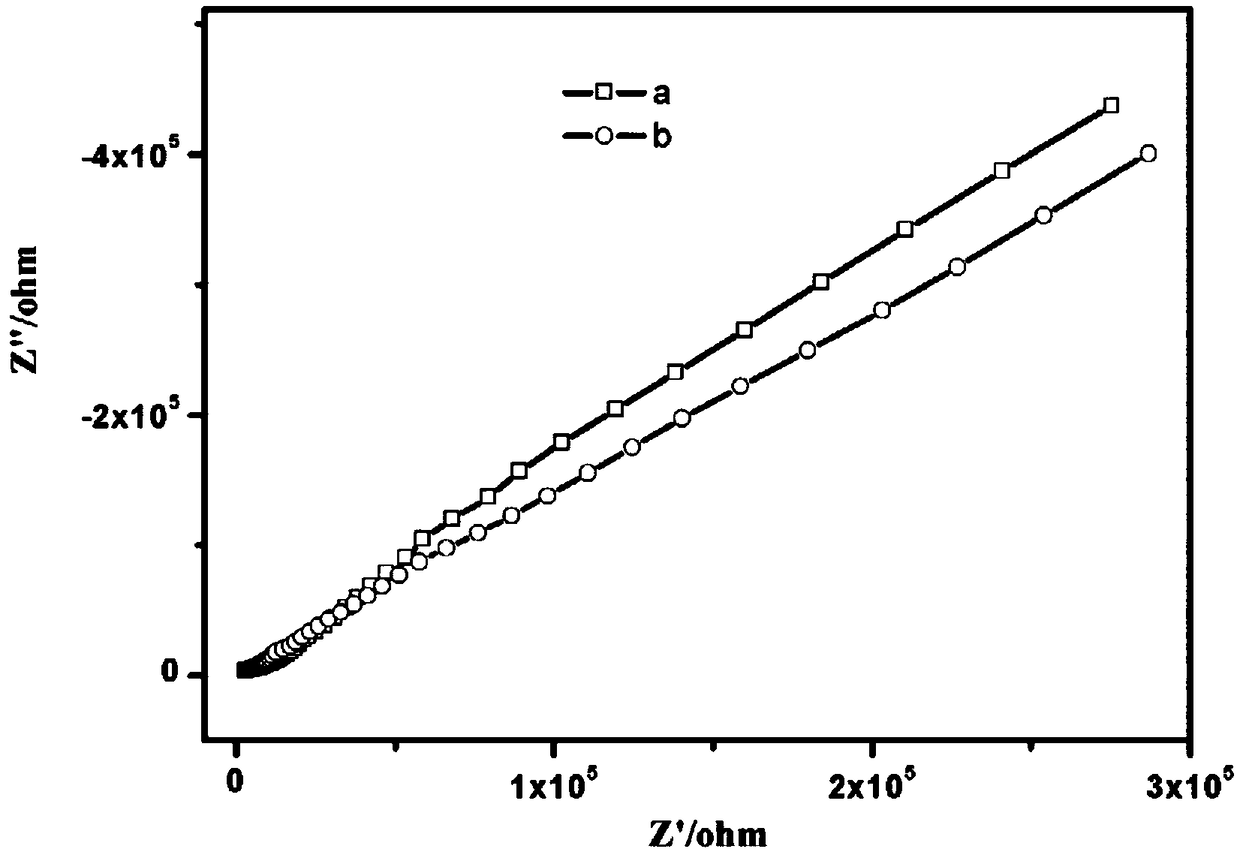
Examples
preparation example Construction
[0042] In one embodiment, a method for preparing an alkyd resin modified polymer electrolyte, comprising:
[0043] Alkyd resin with acrylamide, methacrylamide, acrylonitrile, methyl acrylate, methyl methacrylate, monofunctional or multifunctional polyethylene glycol acrylate, monofunctional or multifunctional poly One or more monomers in ethylene glycol methacrylate are copolymerized in an organic solvent under the action of a thermal initiator or a photoinitiator, and then an electrolyte, a plasticizer, an ion non-conductive or Ion-conductive inorganic nanoparticles or nanofibers are uniformly mixed, coated on the surface of the substrate or electrode sheet, and finally heated and cured in the air to obtain an alkyd resin-modified polymer electrolyte;
[0044] Alternatively, dissolve the alkyd resin and the ion-conducting polymer in an organic solvent, add electrolytes, plasticizers, ionically non-conductive or ion-conductive inorganic nanoparticles or nanofibers for blending...
example 1
[0061] A kind of polymer electrolyte modified by alkyd resin, prepared by the method of copolymerization:
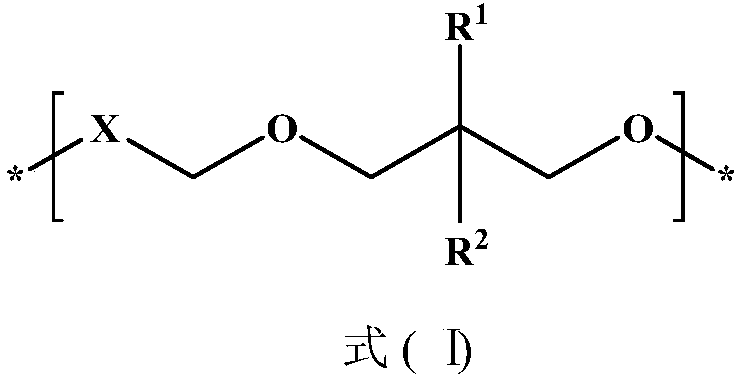
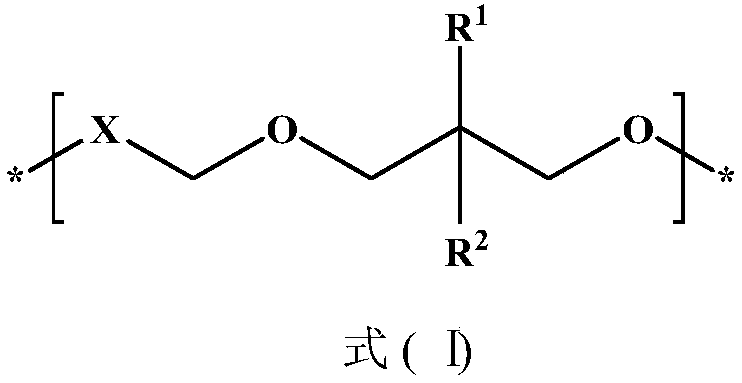
[0062] According to the weight ratio, 20 parts of alkyd resin (purchased from Jining Tainuo Chemical Co., Ltd., which is equivalent to X in formula (I) comes from phthalic acid, R 1 is an acrylate group, R 2 α-linolenic acid), 20 parts of methoxy polyethylene glycol acrylate (purchased from Arkema Co., Ltd.) and 1 part of azobisisobutyronitrile initiator were dissolved in 20 parts of tetrahydrofuran, at 60 ° C under nitrogen Reaction in the air for 10h. After cooling to room temperature, add 5 parts of LiClO to the copolymer solution 4 , 4 parts of dioctyl phthalate plasticizer and 30 parts of 200nm silicon dioxide, stirred evenly, scraped and coated on a polytetrafluoroethylene board, cured at 80°C for 5h, and prepared a self-supporting alcohol with a thickness of 100μm Acid resin modified polymer electrolyte. The prepared polymer electrolyte membrane is used in lit...
example 2
[0071] A kind of polymer electrolyte modified by alkyd resin, prepared by the method of copolymerization:
[0072] According to the weight ratio, 15 parts of alkyd resin (purchased from Jining Tainuo Chemical Co., Ltd., which is equivalent to X in formula (I) comes from phthalic acid, R 1 is a methacrylate group, R 2 α-linolenic acid), 30 parts of acrylonitrile (purchased from Arkema Co., Ltd.) and 2 parts of tert-butyl peroxybenzoate initiator were dissolved in 20 parts of acetonitrile, and reacted at 70° C. for 5 h in a nitrogen atmosphere. After cooling to room temperature, add 10 parts of LiClO to the copolymer solution 4, 8 parts of diisodecyl phthalate plasticizer and 20 parts of 50nm zinc oxide, stirred evenly and then scraped onto a polytetrafluoroethylene board, cured at 90 ° C for 8 hours to prepare a self-supporting alcohol with a thickness of 100 μm Acid resin modified polymer electrolyte. The prepared polymer electrolyte membrane is used in lithium ion batterie...
PUM
| Property | Measurement | Unit |
|---|---|---|
| thickness | aaaaa | aaaaa |
| tensile strength at break | aaaaa | aaaaa |
| tensile strength at break | aaaaa | aaaaa |
Abstract
Description
Claims
Application Information
 Login to View More