Check patentability & draft patents in minutes with Patsnap Eureka AI!

Electrode and catalytic materials

a technology applied in the field of electrochemical and catalytic materials, can solve the problems of catalyst typically needing replacement, substantial pressure drop through the reaction vessel, and deactivation of catalyst activity, so as to prevent interfacial reaction, reduce coking or preventing coking, and facilitate fabrication

Active Publication Date: 2006-12-14
MASSACHUSETTS INST OF TECH
View PDF38 Cites 46 Cited by
  • Summary
  • Abstract
  • Description
  • Claims
  • Application Information

AI Technical Summary

Benefits of technology

[0081] Typically, during use, the electrochemical device may be attached to a fuel supply (e.g., hydrocarbons, hydrogen, etc). In one embodiment, the fuel supply comprises a hydrocarbon, such as methane. In some cases, the fuel supply comprises dry methane (i.e., methane which does not comprise steam). Other examples of suitable fuel supplies include, but are not limited to, hydrocarbons mixed with carbon dioxide, hydrocarbons mixed with steam, methane mixed with carbon dioxide, methane mixed with steam, fuel supplies which contain sulfur impurities (e.g., H2S), and / or fuel supplies which may typically undergo coking at elevated temperatures using conventional techniques. One advantage of the present invention is that coking may be limited using such fuels.
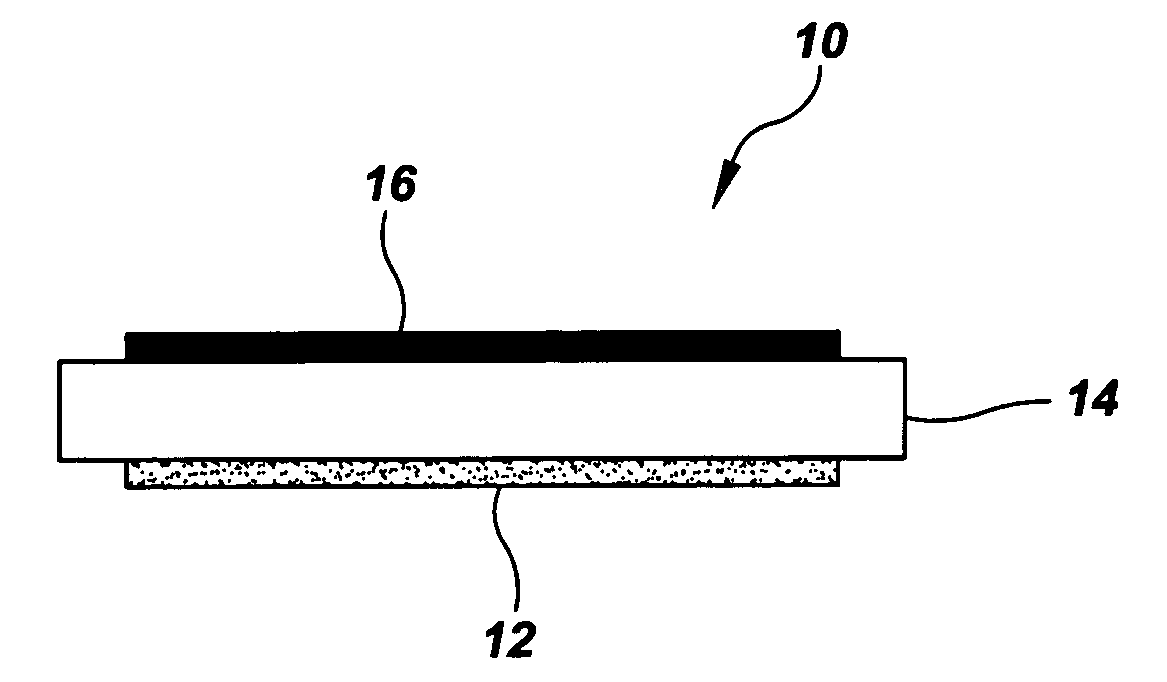
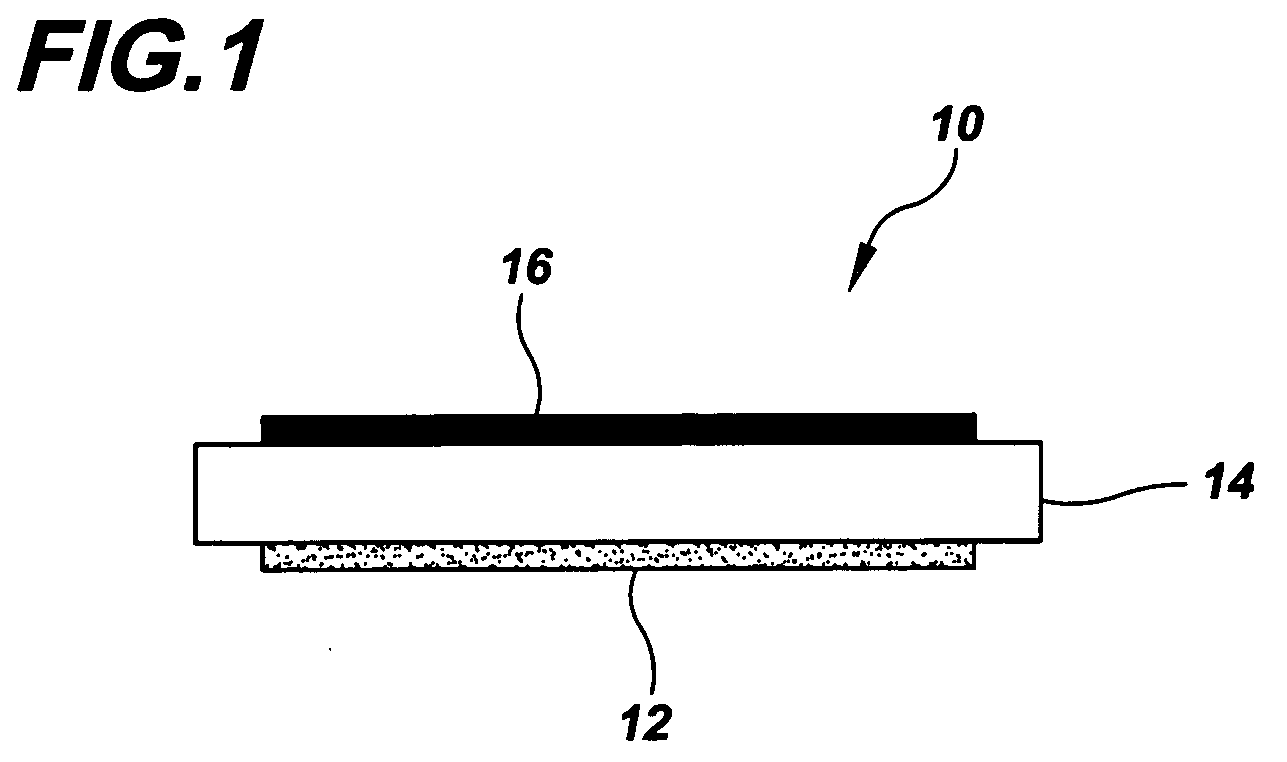
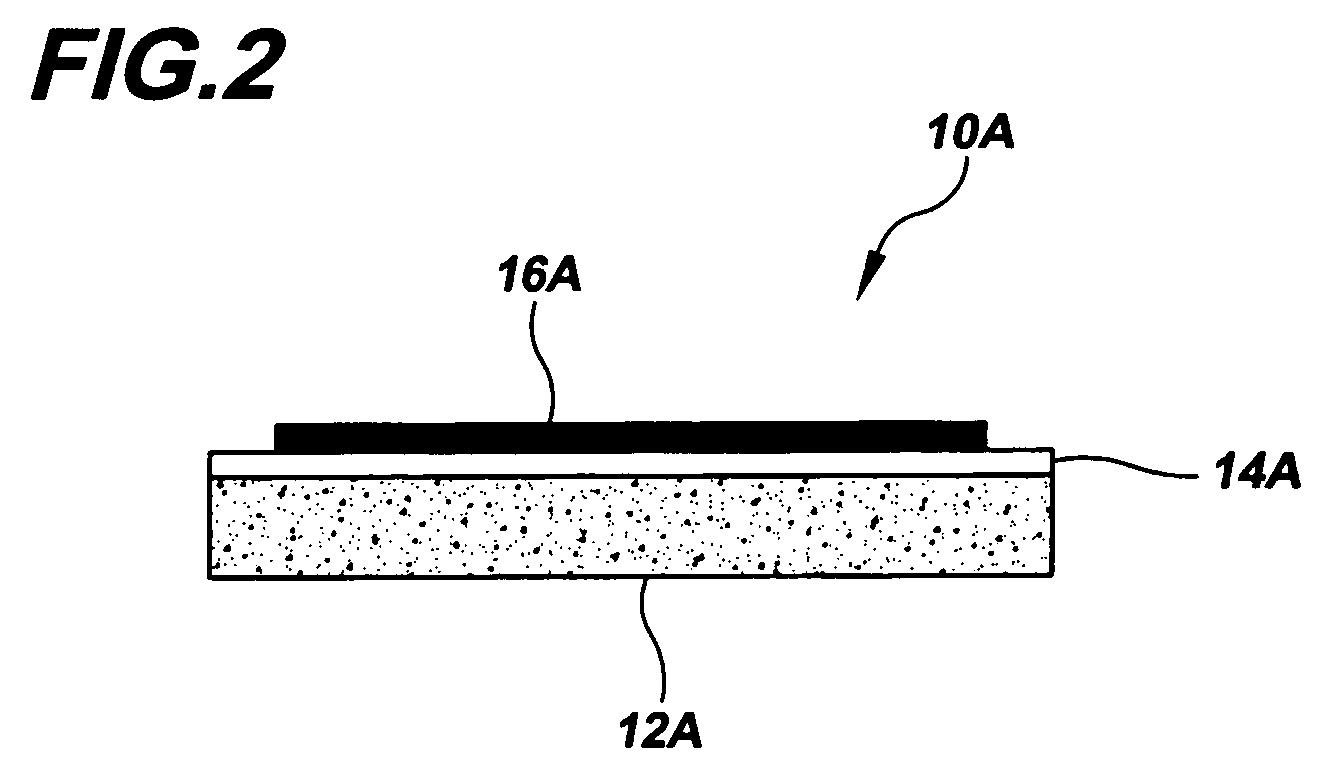
[0082] Advantageously, fuel cells of the present invention may be easily fabricated. For example, in the fabrication of an anode-supported fuel cell shown in FIG. 2, the anodes can be co-fired to the sintering temperature of the electrolyte (e.g. YSZ) without undesired interfacial reactions. The cathode may be subsequently applied at a lower temperature to prevent interfacial reactions. Other advantages of fuel cells of the present invention include minimization or prevention of coking and tolerance to sulfur impurities.
[0083] Furthermore, fuel cells of the present invention may be useful in preventing the formation of crystalline, filamentous, or graphitic carbon from a hydrocarbon feed or supply stream on the electrodes. For example, at high temperatures, crystalline carbon (e.g., coke) can be formed on the surface of a metal electrode, for example, in a fuel cell. In some cases, at least some of the crystalline carbon may also be formed beneath the surface of the metal electrode. The coke is subsequently expelled from the metal electrode as a crystalline or filamentous carbon whisker. Typically, crystalline carbon is more difficult to remove (e.g. gasify) from metal surfaces and is more damaging to the mechanical integrity of the electrode structure than amorphous carbon.
[0084] In some embodiments, electrodes of the present invention (e.g., Ni—Sn intermetallic compounds) substantially suppress the formation of crystalline carbon over a transition metal surface used for catalyst or electrode purposes. In one embodiment, fuel cells of the present invention may minimize the formation of crystalline carbon on the surface of nickel. In another embodiment, fuel cells of the invention promote the formation of amorphous carbon over crystalline carbon such that the amorphous carbon can be easily removed or gasified. In certain embodiments, electrochemical devices (e.g., fuel cells) of the invention exhibit improved coking resistance.
[0085] Another aspect of the present invention provides methods for catalytic processes. In some cases, materials of the invention may be useful for catalysts for high-temperature reactions (e.g., 600° C. or higher) that are prone to coke formation. Accordingly, methods of the invention may comprise contacting a reactant gas with a catalytic material comprising an alloy or an intermetallic compound, the alloy or the intermetallic compound comprising a transition metal and a metal additive selected from among at least one of Sn, Ge, In, Tl, Ga, Pb, As, Sb and Bi, or any combination of one or more of these, wherein the additive is present in an amount less than 50 mol % of the alloy or the intermetallic compound and wherein the contacting takes place at 600° C. or higher, and allowing the reactant gas to undergo a chemical reaction with the catalytic material to produce a desired product.
[0086] For example, alloys and intermetallic compounds as described herein may be used as catalysts for dry reforming, steam reforming, cracking, dehydrogenation, methane coupling, oxidation of hydrocarbons (e.g., partial oxidation), conversion of synthesis gas, production of synthesis gas, and the like. It should be understood that the catalytic materials of the invention may also be used in other catalytic applications at both high temperatures and low temperatures. For example, the catalytic materials may be used in Fischer-Tropsch synthesis. Catalyst materials of the invention may employ dopants or promoters, as known to those of ordinary skill in the art. Further, the intermetallic portion of the catalyst materials may include additives as described herein to improve the textural properties, sulfur tolerance, and oxidation resistance of the catalyst.

Problems solved by technology

Coking of hydrocarbons over a heterogeneous, solid catalyst often leads to a deactivation of the catalyst activity.
Further, coke formation may cause mechanical damage to the catalyst particle leading to substantial pressure drop through the reaction vessel.
Once the mechanical integrity of a catalyst is damaged, the catalyst typically needs to be replaced even if the catalyst activity could be recovered through a regeneration event.
Although this is useful for the manufacture of carbon nanotubes, this dissolution and crystallization process can be damaging to the mechanical integrity of the catalyst.
Graphitic coke is also more challenging to gasify than amorphous species.
Similar coking problems often arise in the metal reactor tubes and heat exchangers used to process the reaction chemistry.
Coking on these surfaces lowers the heat transfer into the reaction medium and can lead to both metal embrittlement as well as metal loss through dusting.
Beyond chemical transformations over heterogeneous catalysts and respective process equipment, coking may also be problematic for high temperature fuel cells that process hydrocarbon feed stocks.
The presence of hydrocarbons at elevated temperatures also leads to the propensity to coke, which may limit such fuel cells to the use of hydrogen as the fuel source.
However, a hydrogen fuel distribution network currently does not exist, and hydrogen storage has been a major materials and engineering challenge.
The main obstacle to utilizing a hydrocarbon feed for SOFC power generation is the high nickel content in the traditional anode cermets such as Ni / YSZ.
This material undergoes rapid coking which impairs performance and often causes mechanical damage to the electrolyte and / or fuel cell assembly.
Whereas efforts by others have accomplished this to some extent by replacement of nickel with other metals, it has required modification of standard synthetic techniques that may have deleterious effects on both durability and cost of the fuel cell.

Method used

the structure of the environmentally friendly knitted fabric provided by the present invention; figure 2 Flow chart of the yarn wrapping machine for environmentally friendly knitted fabrics and storage devices; image 3 Is the parameter map of the yarn covering machine
View more

Image

Smart Image Click on the blue labels to locate them in the text.
Viewing Examples
Smart Image
  • Electrode and catalytic materials
  • Electrode and catalytic materials
  • Electrode and catalytic materials

Examples

Experimental program
Comparison scheme
Effect test

example 1

Selection of Metal Additives to Improve Coke Tolerance of Ni / YSZ Cermets as Employed as an Anode-Supported Architecture

[0099] As known cathode materials typically react with YSZ under electrolyte densification conditions and it was preferable to employ only traditional fabrication techniques, an anode-supported solid oxide fuel cell architecture was prepared. As such, the precursor oxide used to later form the intermetallic compounds must remain solid to temperatures around 1400° C. Therefore, the relevant properties of the precursors of Sn, Ga, In, Tl, Ge, Pb, As, Sb, and Bi were investigated and reported in Table 1.

TABLE 1Material properties of potential anode additivesto improve the coke tolerance of Ni / YSZ cermets.ElementSnGaInTlGePbAsSbBiOxide Melting Point (° C.)16301795850s717937886312656860Metal Melting Point (° C.)232301573041086328613s631271

[0100] Tin and gallium oxide presented sufficiently high melting points for some embodiments, including application in a traditiona...

example 2

Design of Ceramic Anode Systems to Improve Coke Tolerance of Anode-Supported Architecture and Minimize Oxidation Damage

[0103] Conductive ceramics may also be used within the scope of the invention. Chromate and titanate perovskites may be employed, for example, as they exhibit minimal dimensional changes upon reduction and oxidation. Chromate and titanate perovskites also possess appropriate thermal expansion coefficients and possess high electronic conductivity. These conductors may be mixed with ceria instead of yttria-stabilized zirconia to form a composite anode. Ceria has demonstrated sufficient electrochemical activity and may be preferred in certain applications. If required, transition metals may be added at low levels to enhance electrode performance.

[0104] To avoid interfacial reactions with yttria-stabilized zirconia and ceria, strontium content in the ceramic conductors may be minimized. For example, a lanthanum chromate may utilize magnesium doping at the B-site rathe...

example 3

General Synthesis of SOFC Test Cells

[0109] Nickel oxide and tin oxide were obtained from J. T. Baker and Alfa Aesar, respectively. (La0.8Sr0.2)0.98MnO3, LSM and La-doped calcium titanate (La0.2Ca0.8TiO3.1) were obtained from Praxair Specialty Oxides with a median particle size of 0.8 μm. Alfa Aesar glassy carbon particles (20-50 μm) were used as the porogen for the support. Carbon black, Cabot BP-120, was used to create fine porosity in the electrochemical active layer of the all ceramic cells. YSZ powders were obtained from Unitec and Tosoh (see Table 2). Tosoh powders are hard agglomerates of fine crystallites, whereas Unitec powders are dense fragments with higher tapping densities. High tapping density would facilitate a high green density for wet-coated laminates, reducing their shrinkage during densification. The densification temperatures listed in Table 2 referred to those observed for thin films deposited on anode supports that were not pre-sintered. The shrinkage resultin...

the structure of the environmentally friendly knitted fabric provided by the present invention; figure 2 Flow chart of the yarn wrapping machine for environmentally friendly knitted fabrics and storage devices; image 3 Is the parameter map of the yarn covering machine
Login to View More

PUM

PropertyMeasurementUnit
Temperatureaaaaaaaaaa
Thicknessaaaaaaaaaa
Thicknessaaaaaaaaaa
Login to View More

Abstract

The invention relates to materials used as electrodes and / or catalysts, as well as methods associated with the same. The materials may comprise an alloy or intermetallic compound of a transition metal (e.g., Ni) and a metal additive (e.g., Sn). The transition metal and additive are selected to provide improved electrode and / or catalytic performance. For example, the materials of the invention may have a high catalytic activity, while being less susceptible to coking than certain conventional electrode / catalytic materials. These performance advantages can simplify the equipment used in certain applications, as well as reducing energy and capital requirements. Furthermore, the materials may be manufactured using traditional ceramic processing methods, without the need for complex, unconventional fabrication techniques. The materials are particularly suitable for use in fuel cells (e.g., SOFCs electrodes) and in reactions that use or produce synthesis gas.

Description

FIELD OF INVENTION [0001] The present invention relates to materials used as electrodes and / or catalysts, as well as methods associated with the same. BACKGROUND OF THE INVENTION [0002] Coking refers to the decomposition of a hydrocarbon species into a solid mass consisting largely of carbon. This process can be promoted under conditions where a hydrocarbon is heated to elevated temperatures in the absence of hydrogen or an oxidant such as carbon dioxide, steam, or oxygen. The decomposition can be detrimental for various materials, such as catalysts, and can occur homogeneously or can be promoted over a heterogeneous catalytic surface. [0003] Catalysts are materials used to promote a chemical reaction without being consumed. Commonly, a solid catalyst is used in the transformation of a liquid or gases species. Coking of hydrocarbons over a heterogeneous, solid catalyst often leads to a deactivation of the catalyst activity. Further, coke formation may cause mechanical damage to the ...

Claims

the structure of the environmentally friendly knitted fabric provided by the present invention; figure 2 Flow chart of the yarn wrapping machine for environmentally friendly knitted fabrics and storage devices; image 3 Is the parameter map of the yarn covering machine
Login to View More

Application Information

Patent Timeline
no application Login to View More
IPC IPC(8): H01M4/90H01M8/12H01M8/06
CPCB01J23/002B01J23/10Y02E60/525Y02E60/521H01M2008/1293H01M8/1253H01M8/1206H01M8/0612H01M4/9066H01M4/905H01M4/90C22C30/04C22C30/00C22C29/12B01J23/26B01J23/835B01J2523/00C01B3/38C01B2203/0238C01B2203/0283C01B2203/067C01B2203/1041C01B2203/1058C01B2203/1082C01B2203/1241C01B2203/82C22C1/0491C22C19/03B01J2523/32B01J2523/36B01J2523/48B01J2523/847B01J2523/54B01J2523/33B01J2523/43B01J2523/42B01J2523/52B01J2523/34B01J2523/3706B01J2523/3712B01J2523/67B01J2523/23B01J2523/3737B01J2523/47B01J2523/53B01J2523/44H01M8/1231Y02P20/52Y02E60/50Y02P70/50C22C1/047
Inventor YING, JACKIE Y.WEISS, STEVEN E.
Owner MASSACHUSETTS INST OF TECH
Features
  • R&D
  • Intellectual Property
  • Life Sciences
  • Materials
  • Tech Scout
Why Patsnap Eureka
  • Unparalleled Data Quality
  • Higher Quality Content
  • 60% Fewer Hallucinations
Social media
Patsnap Eureka Blog
Learn More